



Your Story Matters: Reflections from the Adobe Education Summit
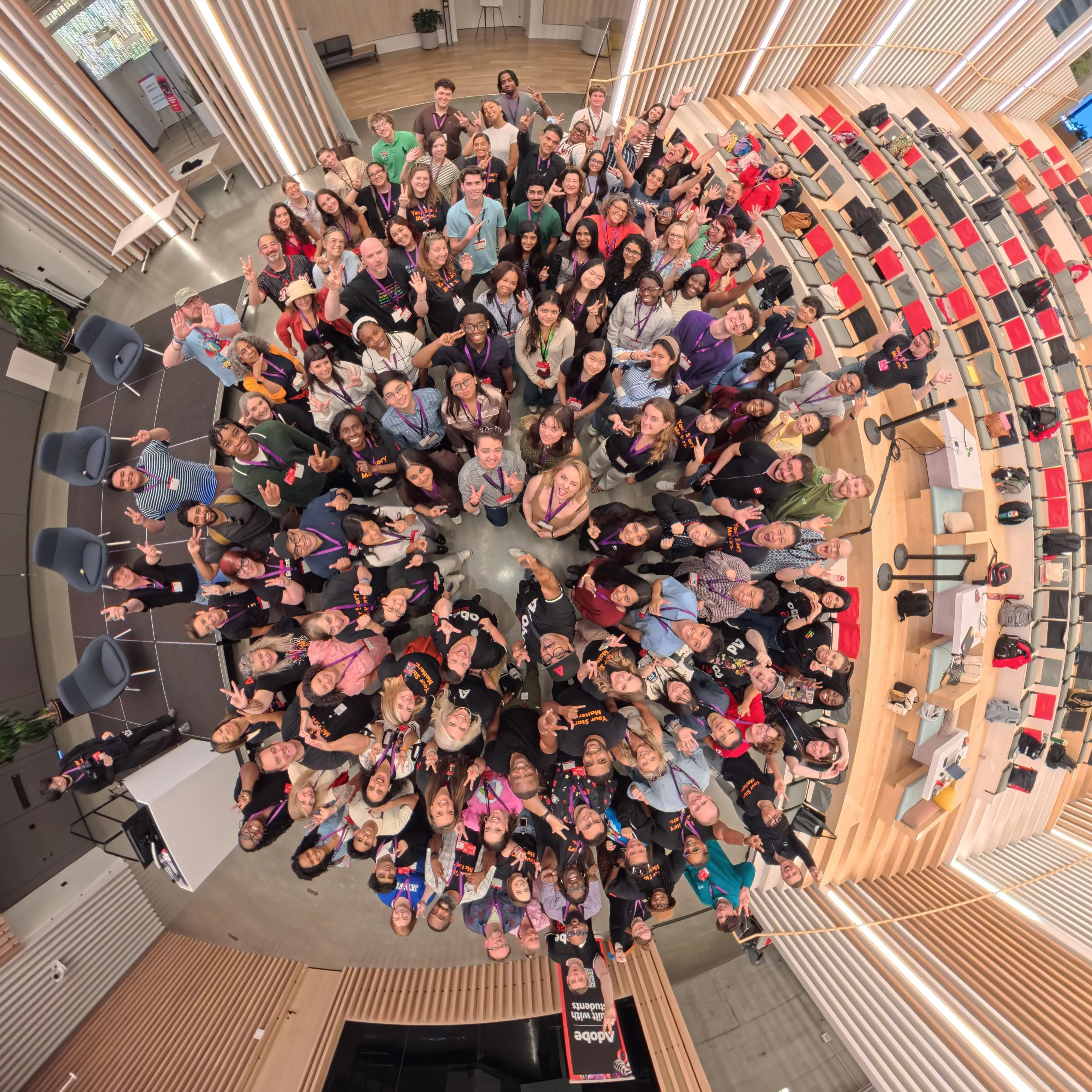
Your Story Matters: Reflections from the Adobe Education Summit
There are some professional opportunities that provide useful ideas, new contacts and a few notes to revisit when you return home. Others create the space to step back, look at your work from a different perspective and reconsider what might be possible. The Adobe Education Summit in San Jose was firmly in the second category.
Alongside Catherine Stewart, I was invited to San Jose to represent educators from Northern Ireland and to deliver an Ignite talk about our involvement in the Adobe Student Ambassador pilot.
Across three busy days, we worked with educators, students, content creators and product teams from different parts of the world. Although the programme covered a wide range of topics, several themes continued to surface: student agency, creative confidence, genuine co-creation and the importance of giving people space to tell their stories.
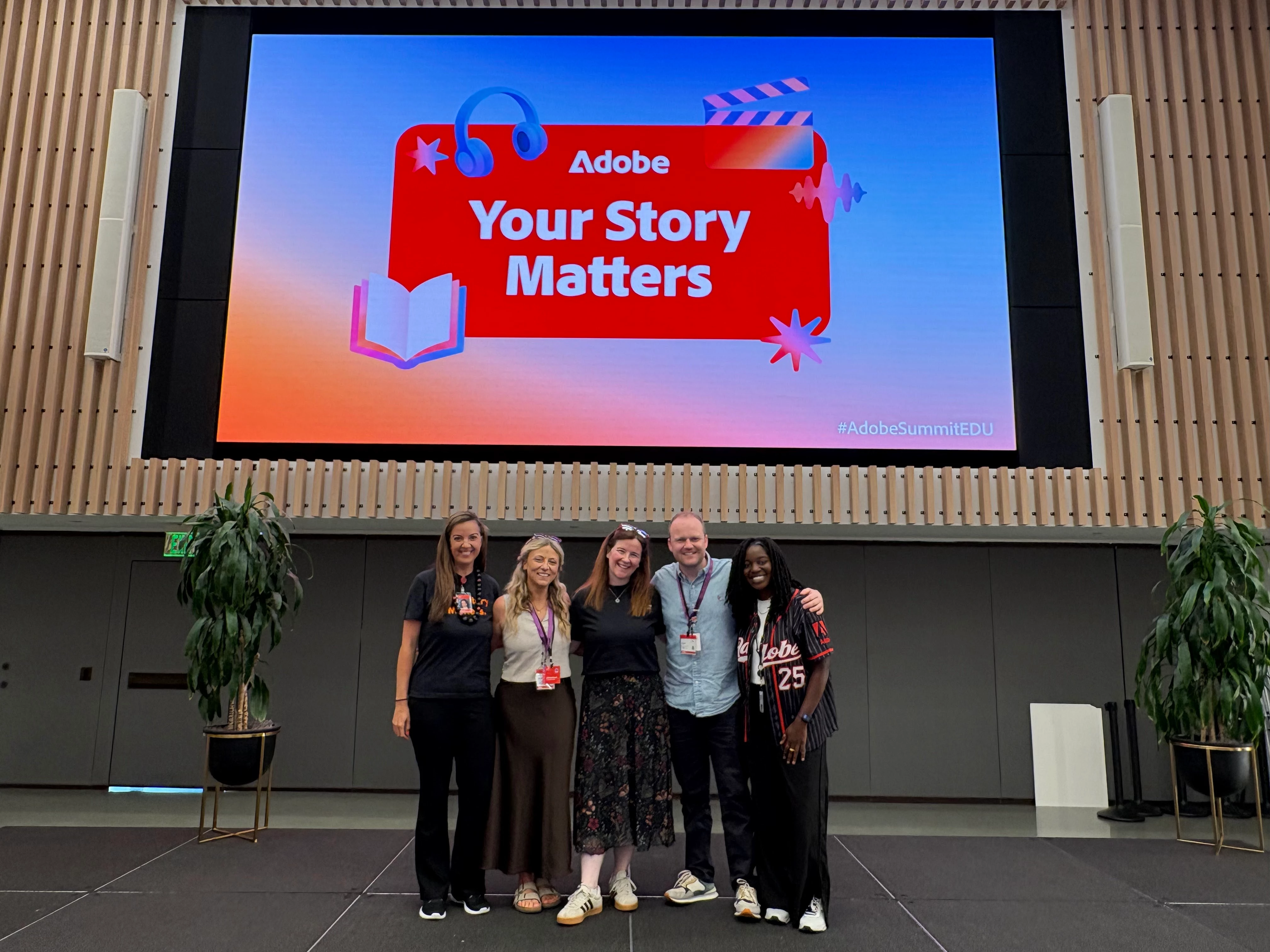
The theme of the Summit was Your Story Matters. That message was present throughout the event, but it also caused me to reflect more deeply on the story we have been building at St. Colman’s College, Newry.
Learning from how young people collaborate
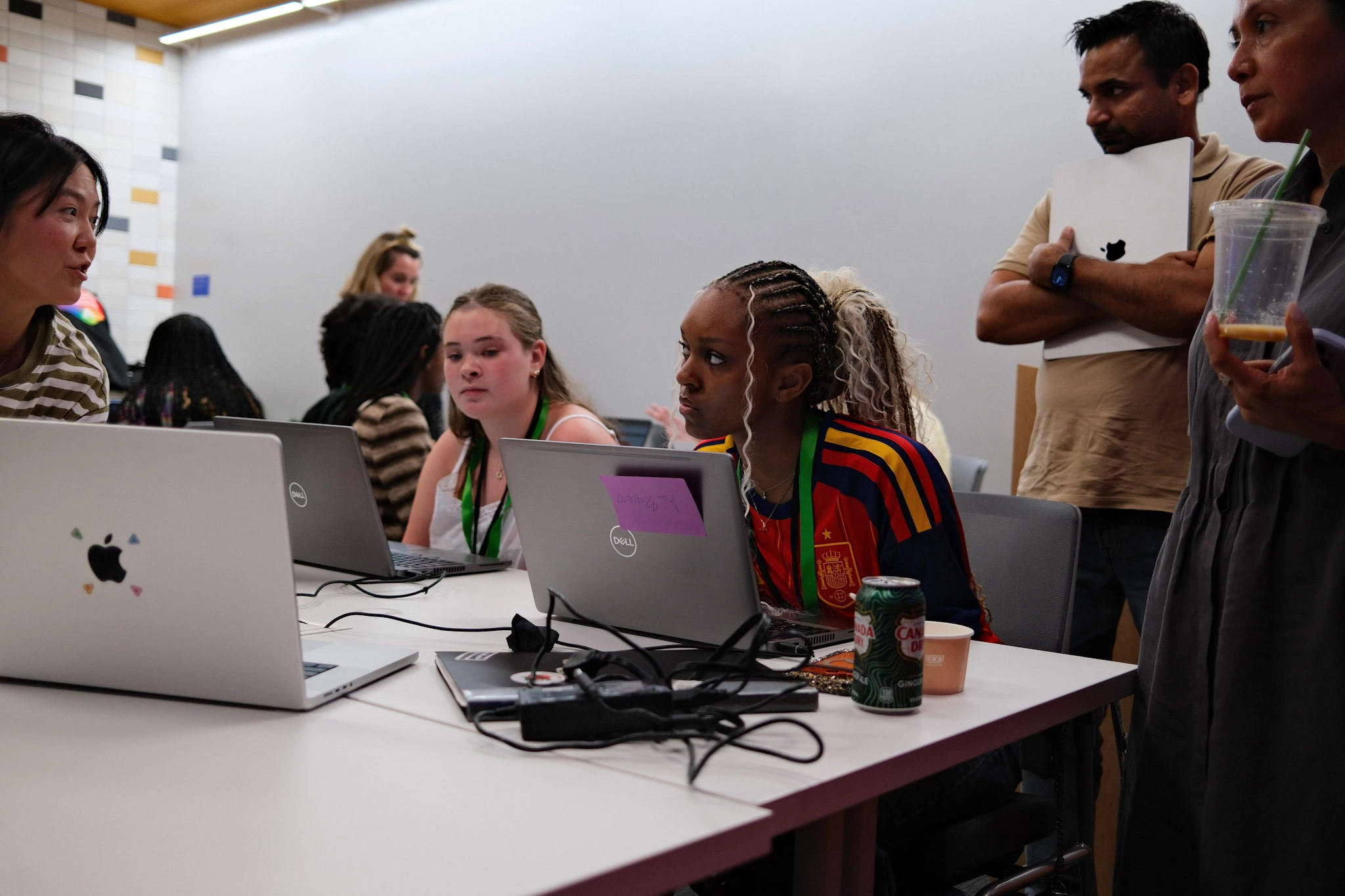
The opening day focused heavily on the student ambassadors from K–12 and higher education. Students were brought together to collaborate, create and participate in design sprints. Watching them work was one of the most interesting parts of the Summit.
Their approach to collaboration felt noticeably different from the way my own generation, the Millennials, might tackle the same task. Situations that adults could sometimes find awkward or difficult to navigate were handled with openness, humour and relatively little fuss.
That does not mean every younger person is automatically an effective collaborator, or that generational differences can be neatly defined. However, there was something worth noticing in the ease with which many of these students exchanged ideas, shifted roles and worked across unfamiliar groups.
It was a reminder that, when adults create the right conditions, young people do not always need us to over-engineer the process. Sometimes they need a worthwhile challenge, a little trust and the freedom to work things out together.
Student leadership with a real purpose
On day two, I had the opportunity to deliver one of the opening Ignite talks. My talk focused on the Adobe Student Ambassador pilot and the impact it has had on student leadership, creative agency and capacity-building.
The pilot arrived at an important time for us. We wanted to reinvigorate student leadership within digital learning, while also developing a more ambitious programme of creative outreach with local primary schools. The Student Ambassador programme created a bridge between those priorities.
Our students were not simply given a title or badge. They were trusted with meaningful responsibility. They developed their own creative skills, supported other pupils and helped us deliver workshops beyond our school gates. Through our primary outreach programme, they became part of something larger than their own individual learning.
Student voice can sometimes become tokenistic, particularly when young people are invited to contribute but have little real influence or responsibility. Agency requires more. It means trusting pupils to lead, create, make decisions and contribute to work that has a visible impact on others.
The experience has reinforced my belief that young people often rise to the level of responsibility we give them. When leadership is authentic and connected to a clear purpose, confidence and creativity can develop naturally.
Co-creation rather than consultation
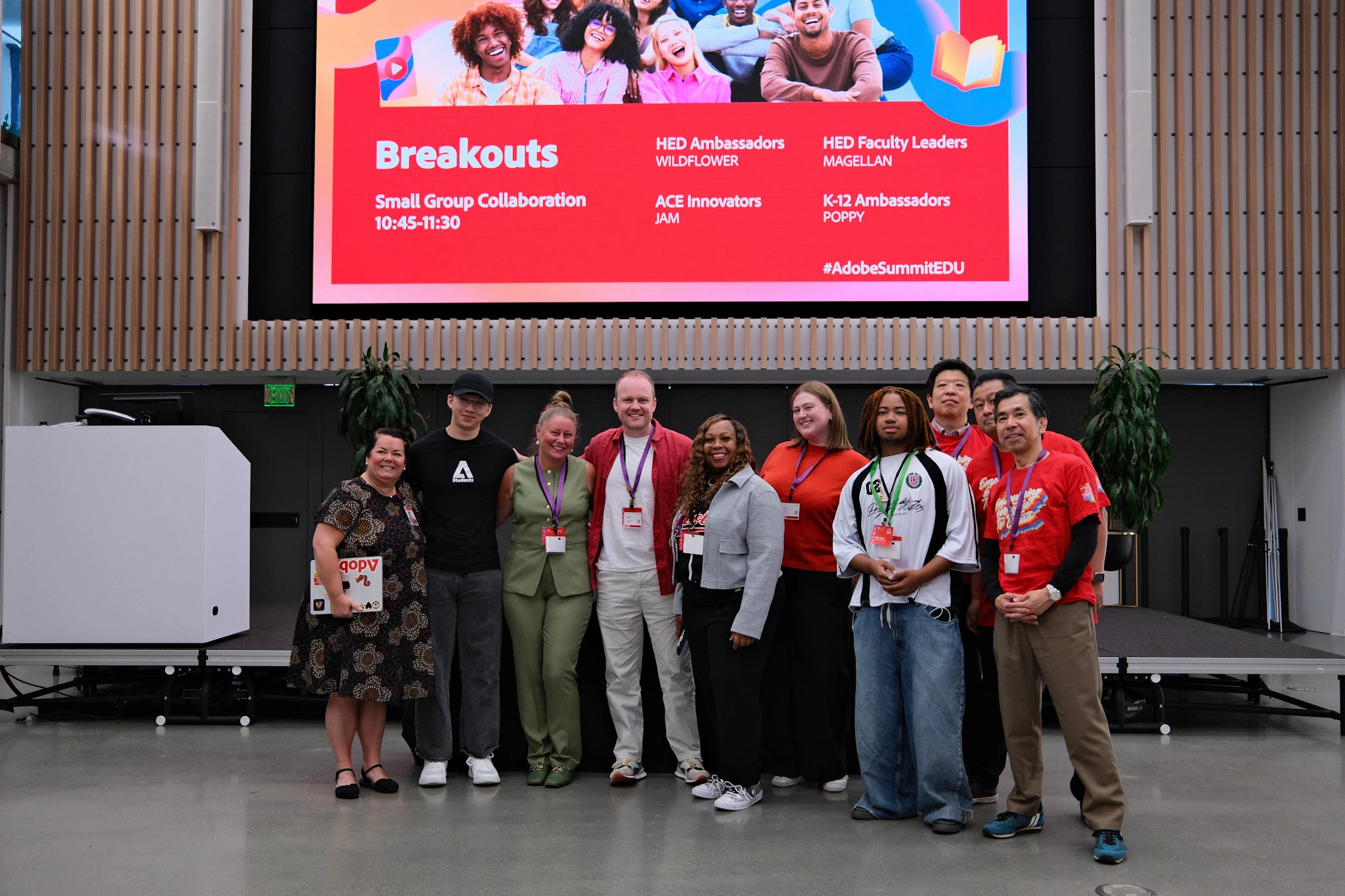
Another major highlight was the opportunity to meet directly with Adobe’s Content and Product teams. We were given an early look at some of the latest Adobe “Sneaks” and invited to share what teachers and schools need from the tools being developed. What stood out was that the process felt less like a conventional consultation and more like genuine co-creation.
Educators were able to speak directly with the people shaping the products, explain what would work within real classrooms and identify where an idea might have technical appeal but limited pedagogical value.
Comic Creator within Adobe Express provided a particularly clear example. When I first saw the tool in beta, I could not identify meaningful opportunities for students to demonstrate their learning through it. It was creative and visually appealing, but the pedagogical purpose was not yet clear. I shared that feedback directly. By the time of the Summit, Comic Creator had been significantly redeveloped. I could now see a clear pathway for students to use it to demonstrate learning, communicate understanding and create meaningful outcomes. The change was not simply cosmetic. The educational purpose of the tool had become much clearer.
One thing I have consistently noticed within the Adobe Education Community is a willingness to listen carefully to educators and act on that feedback. Credit where it is due!
Teachers are frequently asked for feedback, but it is not always clear where that feedback goes or whether it changes anything. In this case, the connection between listening and action was visible. For education technology to improve learning meaningfully, teachers cannot simply be brought in at the end of the process to validate something that has already been built. Educators and students need to be involved much earlier, while ideas are still being shaped and challenged. That is more important now than ever, particularly given the scrutiny surrounding EdTech. I remain convinced that digital tools can enhance learning, but only when pedagogy comes first.
Creativity, community and student voice
The closing Ignite session provided another point of reflection. Catherine delivered an excellent contribution on the theme You get out what you put in. Her talk explored how investing time in professional communities can create new opportunities for both teachers and students.
Through her involvement with the Adobe Community, Catherine has gained access to experiences including local Innovator meet-ups and the global Create-a-Thon. These opportunities have taken her beyond her comfort zone, encouraged her to be braver and helped her develop her own creativity.
More importantly, that investment has created opportunities for her students. Their work is no longer confined to the classroom or the school. They have been given real purpose and access to a global audience, allowing them to see that what they create can reach and influence people beyond their immediate community.
Catherine also reflected on the role of digital tools in giving students greater choice over how they communicate their learning. Rather than expecting every pupil to demonstrate understanding in the same way, technology can provide a range of creative routes through which students can express ideas, share knowledge and make their learning visible.
Her talk offered a clear example of how professional development can extend well beyond the individual teacher. When educators invest in communities, take creative risks and share what they learn, the benefits can reach directly into the classroom and create richer opportunities for students.
The closing Ignite session also brought an unexpected and particularly encouraging moment. Two of the presentations featured projects that had been directly influenced by work Catherine and I had previously shared.
Steve Jones had developed his own version of our primary outreach project, adapting the model to create opportunities for younger pupils within his own context. Anita Sahani meanwhile, explained how she had used the Plush Pal guided activity to support the development of emotional literacy – a direct use case from Catherines Create-a-Thon session.
Seeing those ideas reinterpreted and applied elsewhere was a genuine surprise. It was also a reminder that sharing practice can lead to outcomes we may never see coming. An idea developed in one classroom or community can be adapted, extended and given new purpose by someone working in a very different setting.
Public speaking as a valued student skill
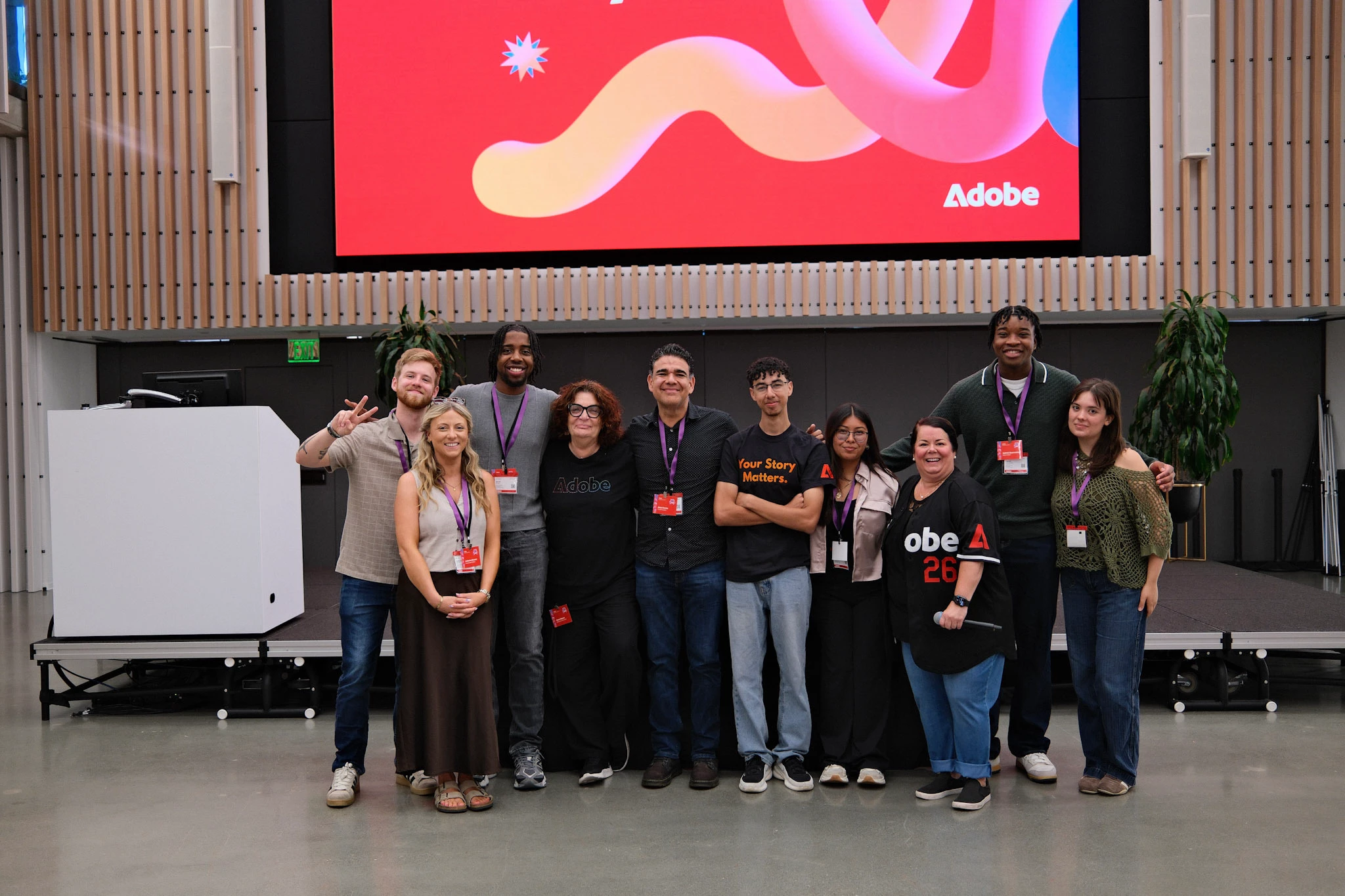
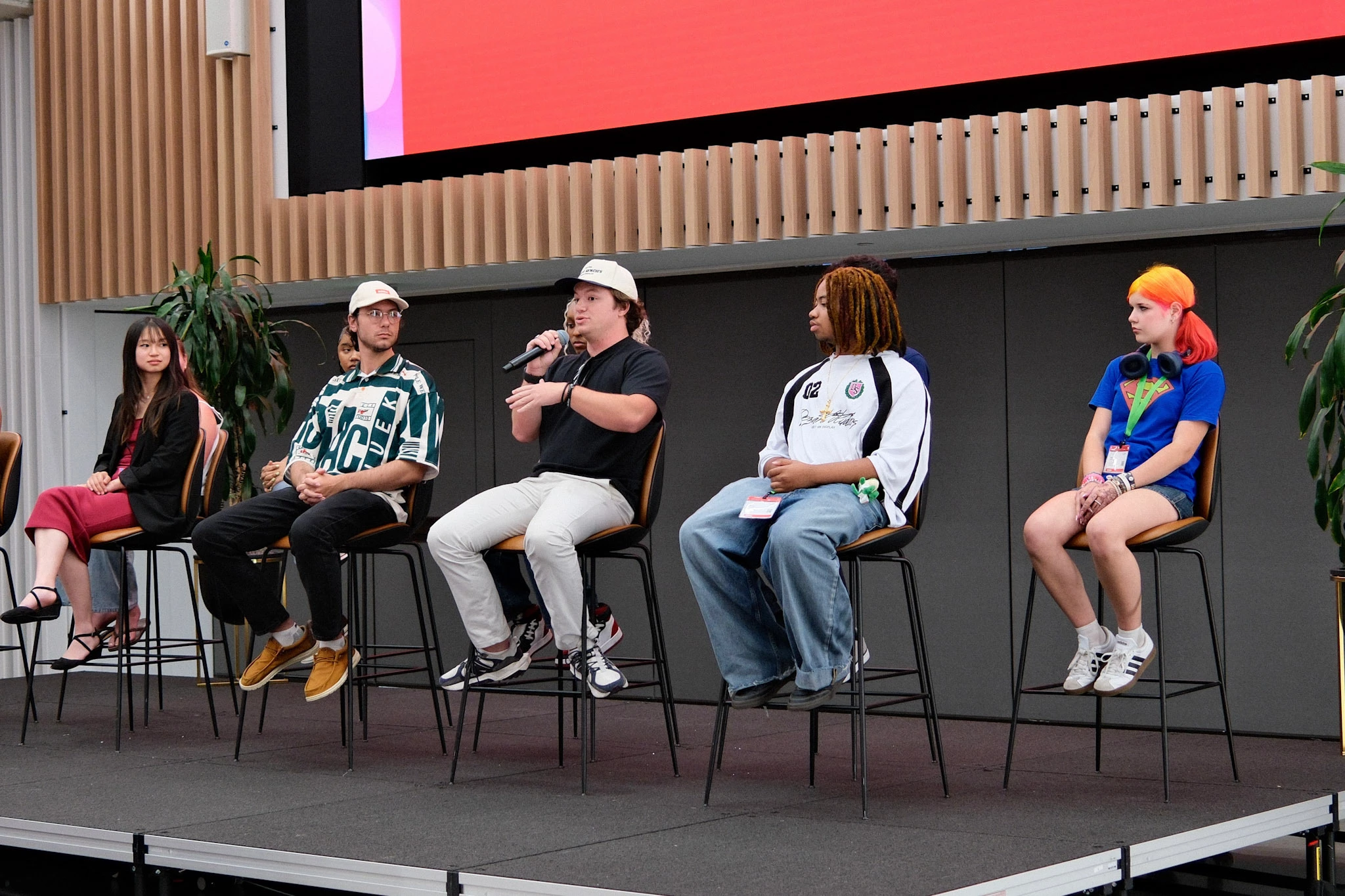
We also heard several student Ignite talks during the closing session, and the confidence with which they spoke was striking. My impression was that the American education system places considerable value on creating opportunities for young people to speak publicly. These students were not simply reading prepared information. They were telling stories, making arguments and holding the attention of an audience.
It made me question whether we provide enough opportunities for this within our own system. Of course, pupils in Northern Ireland present work, participate in drama, speak at assemblies and contribute to competitions. However, I am not convinced that public speaking is always treated as a core capability in the same deliberate way.
The ability to express an idea clearly, respond to an audience and speak with confidence has value in almost every pathway a young person might follow. It should not be reserved for a small number of naturally confident pupils or those involved in particular subjects and activities.
The value of being a generalist
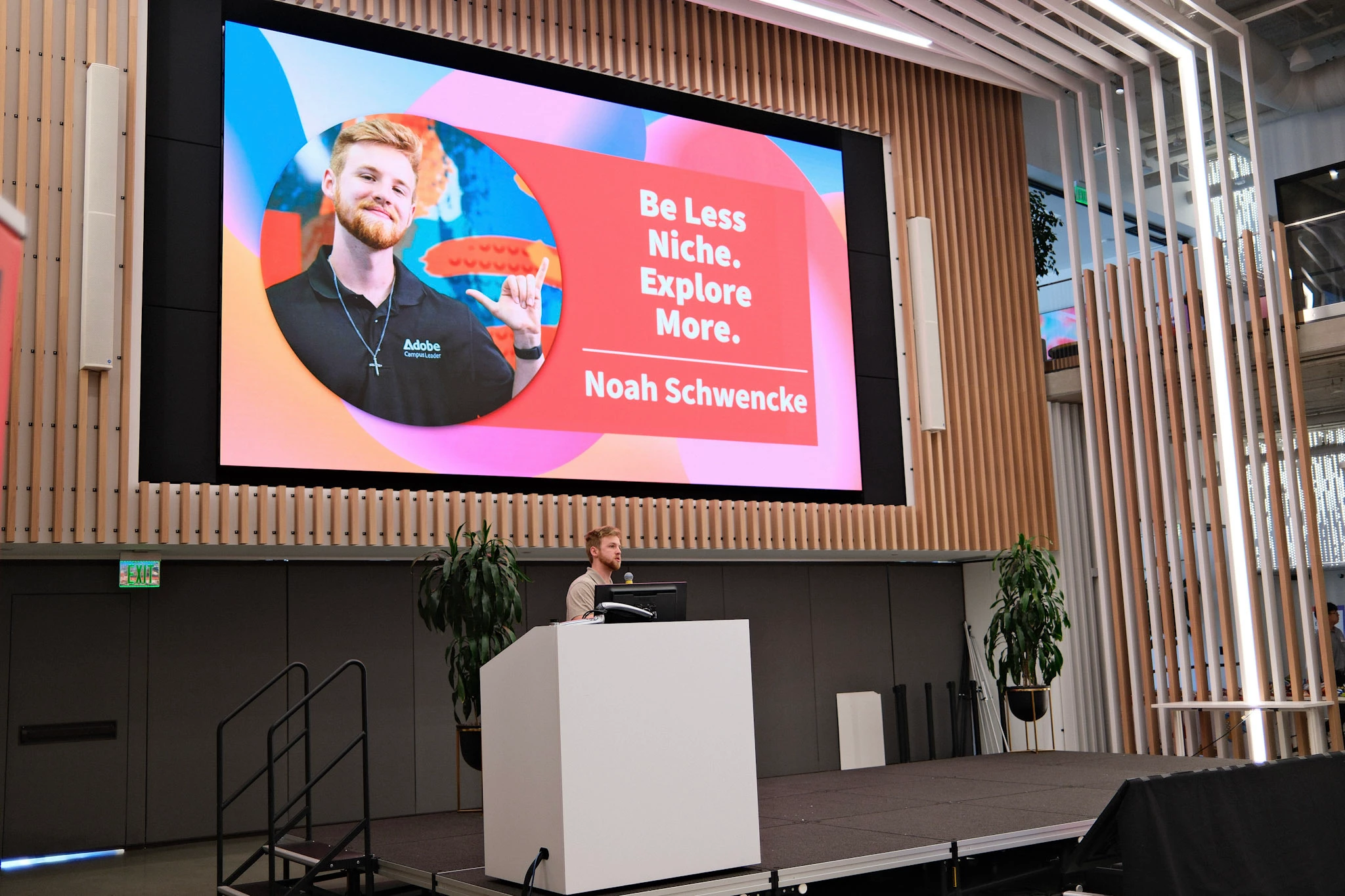
As day three drew to a close, there was one final opportunity for reflection. One of the student Ignite talks, delivered by Noah Schwencke explored the importance of being a generalist rather than a specialist.
Noah shared a quote attributed to Leonardo da Vinci:
“Study the science of art. Study the art of science. Develop your senses, especially learn how to see. Realise that everything connects to everything else.”
It captured the central idea of his talk particularly well. Much of the advice offered to young people focuses on finding a particular strength, building expertise and becoming highly specialised. There is obvious value in deep knowledge and technical skill. However, in a world shaped by rapid technological and social change, breadth also has value.
Generalists can make connections across subjects, adapt to unfamiliar contexts and draw on different experiences when solving problems. They may not always possess the deepest expertise in one narrow field, but they can often see relationships and possibilities that others miss.
This idea connected closely with the wider Summit experience. Creativity rarely sits neatly within a single subject or professional role. It develops when people bring different perspectives together, remain curious and are willing to move beyond familiar boundaries.
Perhaps the most useful advice for young people is not to choose between being a specialist and a generalist too early. They need opportunities to develop depth, while also retaining the curiosity and flexibility to connect ideas across different areas.
Leaving with better questions
The most valuable events do not necessarily provide a list of immediate answers. They leave us with better questions.
- How do we create leadership opportunities that give young people genuine responsibility?
- How do we ensure technology is shaped by educational purpose rather than novelty?
- How can teachers and students become active contributors to product development rather than passive end users?
- Are we giving pupils enough opportunities to speak, collaborate, create and lead?
- How do we help young people develop both specialist expertise and the broader capabilities needed to adapt?
These are not questions that can be resolved during a three-day Summit. However, they are questions worth carrying back into our schools and professional communities.
I am grateful to everyone at Adobe for the hospitality (shout out Ann Kozma, Martha Bongiorno and Andy Knueven), encouragement and welcome throughout the event. I would particularly like to thank Nicole O’Connor, Wezi Thindwa and Kristi Bringelson for the support they have provided throughout the Student Ambassador pilot. Their guidance, encouragement and willingness to help us shape the programme within our own context have been central to its development.
I am also grateful to the educators and students who shared their experiences so openly and challenged one another’s thinking with honesty and respect.
I ended my Ignite talk by sharing an Irish seanfhocal:
Mol an óige agus tiocfaidh sí - Praise the youth and they will flourish.
However, having reflected on Summit, perhaps this proverb needs updating to:
Cuir muinín san óige agus tiocfaidh sí - Trust the youth and they will flourish.
That idea ran through the entire Summit. Young people flourished when they were trusted to lead, speak, create, collaborate and shape what came next.
That is the work I will be returning home determined to continue.
 AdChoices