
Inspiring
May 26, 2019
Question

Library assets not working consistently

  • May 26, 2019
  • 1 reply
  • 422 views

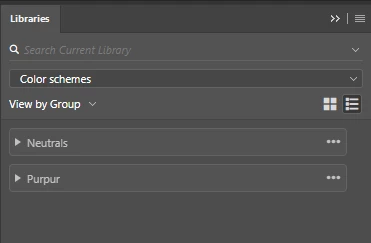
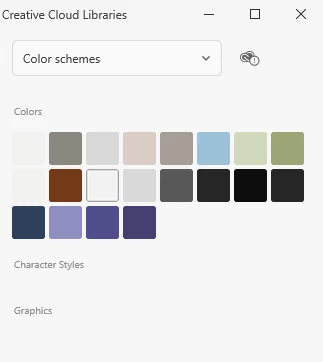
If the library function is supposed to be a global sharing system between the Adobe programs, then why isn't it acting identical cross programs? My colors are sectioned into groups in both PS, Ill and ID, but when opening the library in XD the groups are gone and the color swatches are scattered open. There's no way to view the colors are groups. There's no consistency to this at all. XD seems to be developed by someone not connected to the rest of the company. So many annoying examples of this.
This topic has been closed for replies.

1 reply

Peter Villevoye
Community Expert
Community Expert
May 27, 2019

I understand your grievance...

Adobe XD was indeed allowed to break the rules, with regards to old and new conventions in the Adobe realms. Tried and trusted things like the abundant windows and tools in many other Adobe applications, chiming in with Adobe CC services, and even novel XD features like Rulers, they are complete re-thought, and not as usual for a typical Adobe user.

And that's intentional, I'm afraid.

Adobe seriously needed to catch up with completely different UX tools, approaches, and workflows, and new generations of users who are not using many (or even any) Adobe applications at all.

In stead of having long internal debates and endless discussions with their current users, they simply took the deep dive and did things totally different in Adobe XD. So hooking up to Adobe CC was less of a priority, and is currently just a flawed one-way implementation.

perrybrusAuthor
Inspiring
May 27, 2019

Doing everything different isn't wise. Especially not when your a company that is selling consistency cross applications and the ability to utilize that in the CC ecosystem. As you probably know there's many things XD wasn't suppose to have but due to complaints from many users had to implement. Stuff like layers, guides, text underline and many things. Trying to build a car with no wheels just because people haven't opted for wheels is just annoying. Everyone knows what a tool such as XD needs in order to make sense. This lack of consistency between XD and the other CC apps is just hurting everyday workers like me and thousands of other designers. With one hand the XD team have worked to implement native file support from PS and ILL (great) but with the other hand they are leaving common sense with the other when developing the XD UI. I can't for the love of God understand why the library is displayed one way in ALL the Adobe programs but a different way in XD? It makes no sense from any perspective really. Would you make any application that inconsistent? A web page perhaps? Or a mobile app? Or would you make sure the users got what they expected in a transparent and simple manner?

The Adobe applications are supposed to be a family of products, XD is hardly a relative and every time users criticize XD for this they try to avoid implementing what we need in order to make stuff work - for XD to get features that are obvious for all of us we have to complain and write posts in forums for a very long time until someone in XD finally gives in. Do we really have to convince XD that the car needs a set of wheels? This slow and tedious iteration makes something banal such as text underline take forever to get, something that should have been there from the very beginnig. Wish the engineers at Adobe could have a sit-down and collaborate. The design industry is all about collaboration these day, sharing is caring and all that. Wish XD could utilize the vast knowledge base that is there within their own company walls and start implementing stuff in an transparent and expected manner, instead of doing everything the opposite way. The users don't benefit from that at all. It's zero gain.

Could I have a Deluxe version where all the nice features you already have developed in the other apps are included in XD ? I'm serious. I'm ready to pay for that. I'm cheering for you Adobe. You CAN do it if you want to.

Peter Villevoye
Community Expert
Community Expert
May 28, 2019

I'm glad you're bringing up these questions, because the answers to them need some explanation.

Disclaimer: what I describe below is my personal observation and opinion – not Adobe's.

Let's turn back the clock a decade.

2008 – Adobe has a strong set of applications for print media, video and animation, all aimed at creating end-products. Many designers are using them, and they all dominate in their respective industries, because they offer good productivity and have a good reputation. But Adobe is very weak in general web design. They pulled off some strange and failed attempts, and at a last resort they even tried to let various incarnations of Flash-based technologies compete with HTML, as the new world standard for rich media.

A couple of years later (hello iPhone and iPad) they realised that Flash is a bad roadmap, that their existing popular tools need to embrace HTML5, and that the world is definitely turning away from print media. And apps were becoming the new gold rush ! So Adobe started piggy-backing their tools with features to vaguely perform some web and app design. But as we know by now: it worked like lipstick on a pig...

The absence of a simple and clean drawing/design tool for digital projects, inspired a small Dutch company in 2010 to become the David against Goliath: Sketch ! Taking on the heavy-weight Illustrator, it was built onto the then trending and very typical Apple UI: a clean slate with just a few tools, one main dynamic and context-sensitive Property window, and just a limited number of extra panels or tabs. No 20+ tools and 40+ windows, no over-the-top routine tricks and workflows, no mercy for legacy features – back to basics, with a new paradigm !

In the meantime everyone also started hunting for cloud-based services and open source was soaring. So all kinds of online repositories were appearing, and development became a globally spread crowd effort. Thanks to that shift, Sketch quickly gained popularity and attracted a new generation of users and developers in the expanding industry of web and app design.

Adobe didn't see that one coming.

Together with their new subscription model and several cloud-based services, Adobe understood they needed to bring a new player to the table, otherwise they'd be missing out on all the new stuff. So they embarked on a great and totally new idea: let's imitate Sketch. Their rationale must have been: "If users clearly don't give a damn about turning away from the mainstream and turning down all Adobe goodness, then why not give them what they want, and dare to break with our own past !"

From the menubar to the toolbar (interface), from the drawing pen to the zoom keys (workflow), from the Uservoice feature requests to the API support for plugin developers (crowd sourcing), from the unlimited trial version to a vast collection of templates on i.e. Behance (everything free) – it's a completely different game they're playing. And granted: not everything works out fine. Adobe sets their priorities with XD in ways I don't always understand, but those are their decisions.

On the other hand, some aspects are even bypassing Sketch, e.g. built-in navigation and animation for prototyping, a Windows version, and much better help for installing and maintaining plugins (because designers always cringe when they see a GitHub link with 6 versions of a download...)

Consistency might support a policy, but it shouldn't be a goal in itself.

So the policy for Adobe in developing XD has been different from other applications. As a matter of fact, it started with a carte blanche, and now serves as a new blueprint for other new applications and apps (like Dimension). I also have my worries when I see that CC Libraries are up for elimination (oh well, why not, the majority of users unfortunately still don't get it). But I'm definitely celebrating the change from those horrible Symbols to the more flexible Components !

I hope this sheds some light on the mixed feelings we might have.

Adobe is on a roll, although they roll differently then we're used to.