


lukac15699767
Inspiring
February 8, 2019
Answered

Bought a wide gamut monitor and colors are all over the place. Help?

  • February 8, 2019
  • 7 replies
  • 41352 views

I am a photographer, but honestly - color management isn't my strong suit. I don't print my stuff (yet) and I create mainly for the web, and therefore export everything in sRGB.

Tech info: Win7 (64-bit), GeForce 760 GTX, EIZO CS 2730 monitor.

I calibrated the monitor with the software that came with it (Color Navigator 6), and the hardware calibrator was i1 Display Pro. I tried calibrating and profiling with X-Rite's i1 Profiler and DisplayCal, but both gave inferior results (to my eye), and the EIZO support guys also said to ditch those and use CN6 instead. So that's what I did.

My current workflow:

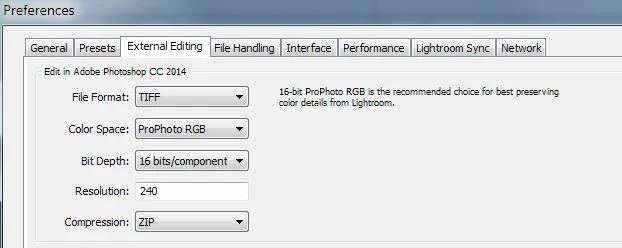
I usually edit raw files and open them as ProPhoto RGB 16bits TIFF files, either via Lightroom
or Camera Raw in Photoshop.
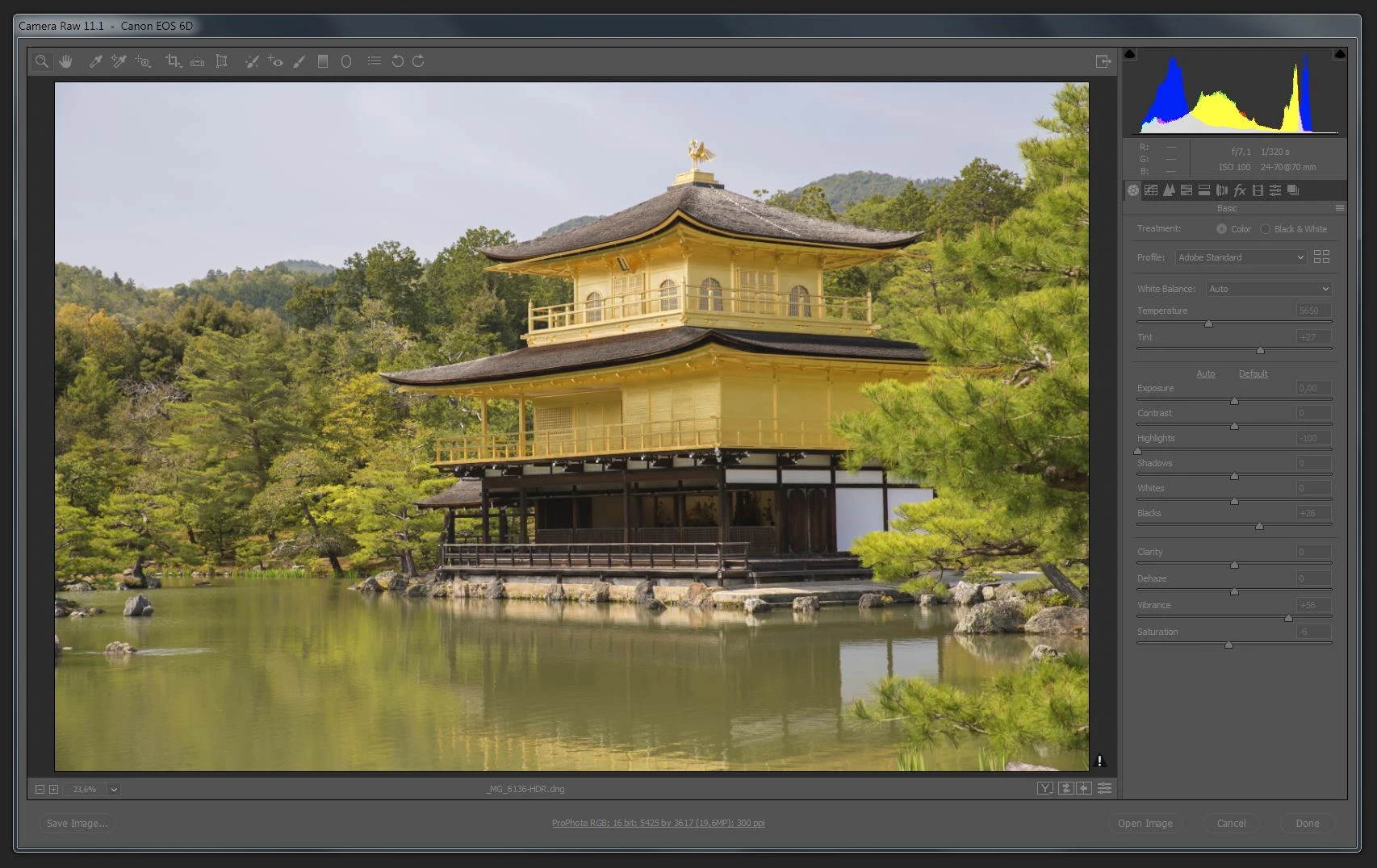
I do this because I've learned that it's best to start with the widest possible color space before applying any edits, and then when you're done with your edits in that wide color space, compress everything to the output color space, which in my case is sRGB.

Just to check, here's the dialog from Edit > Assign Profile:
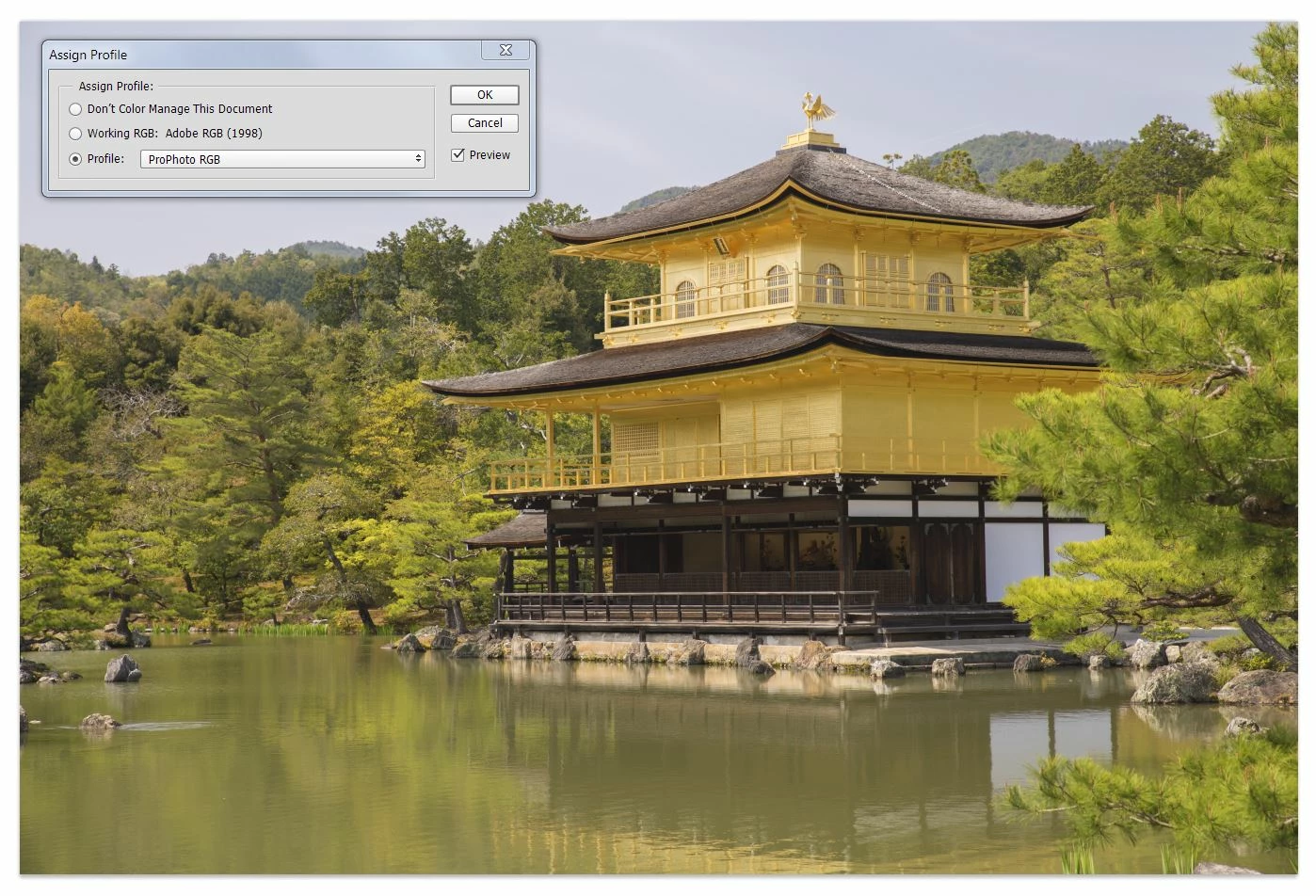
Btw images like this (above) are screenshots with the Windows Snipping tool, and the image is open in Photoshop on a white background.

I save it for web, convert it to sRGB and embed the profile:
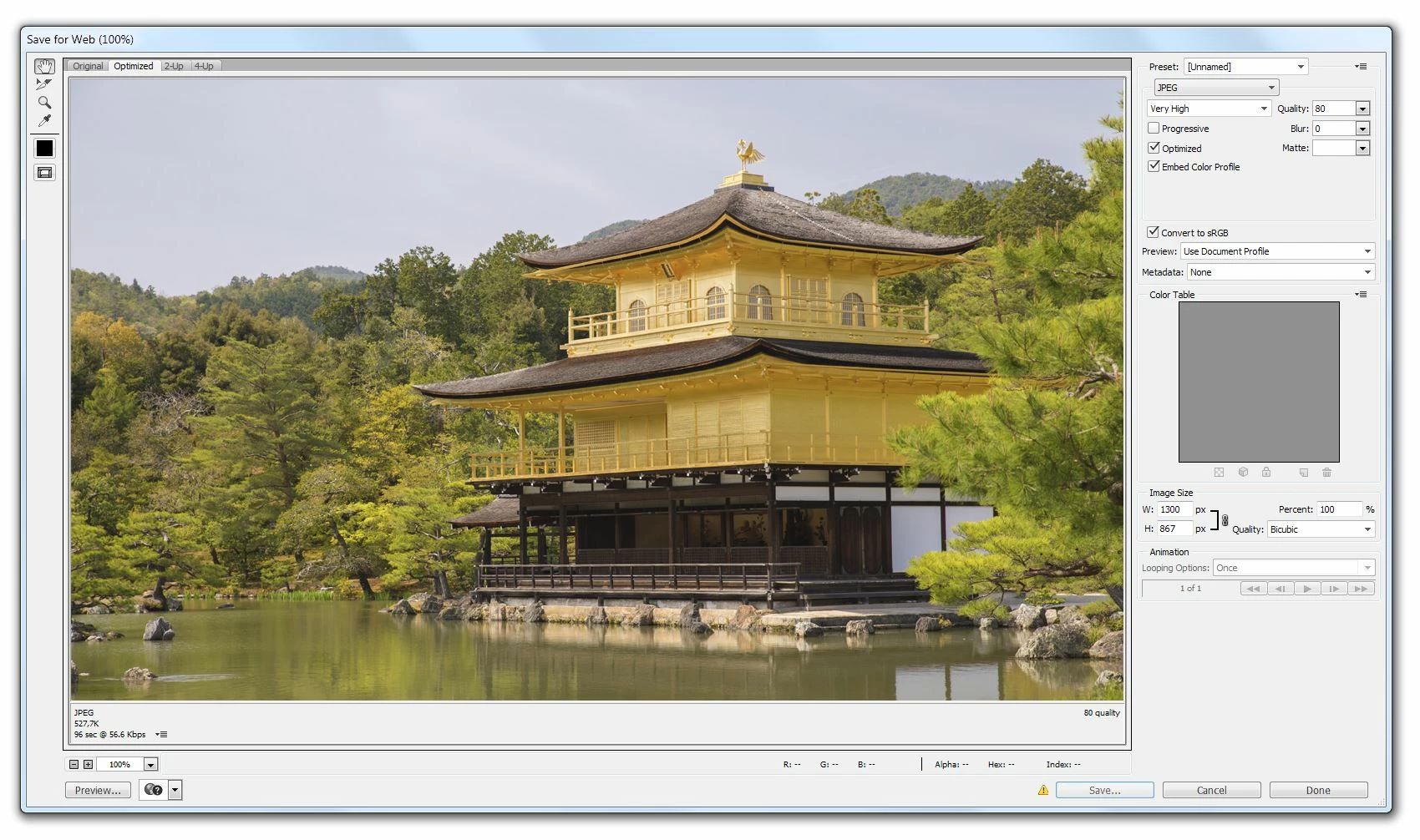
So far, so good. All colors seem to stay the same.

That is, until you check the saved image, which gets oversaturated and color shifted:

Now, since the rendering of the image colors is dependent on your browser and browser settings (more on that later), if you don't see a shift in colors, download the image from here (https://i.imgur.com/lpZU2oP.jpg) and open it in MS Paint for example. It should look oversaturated as compared to the file open in Photoshop. What's going on?

If I open the image in IrfanView (left) and overlay it on top of the image open in Photoshop (right), the same thing happens.
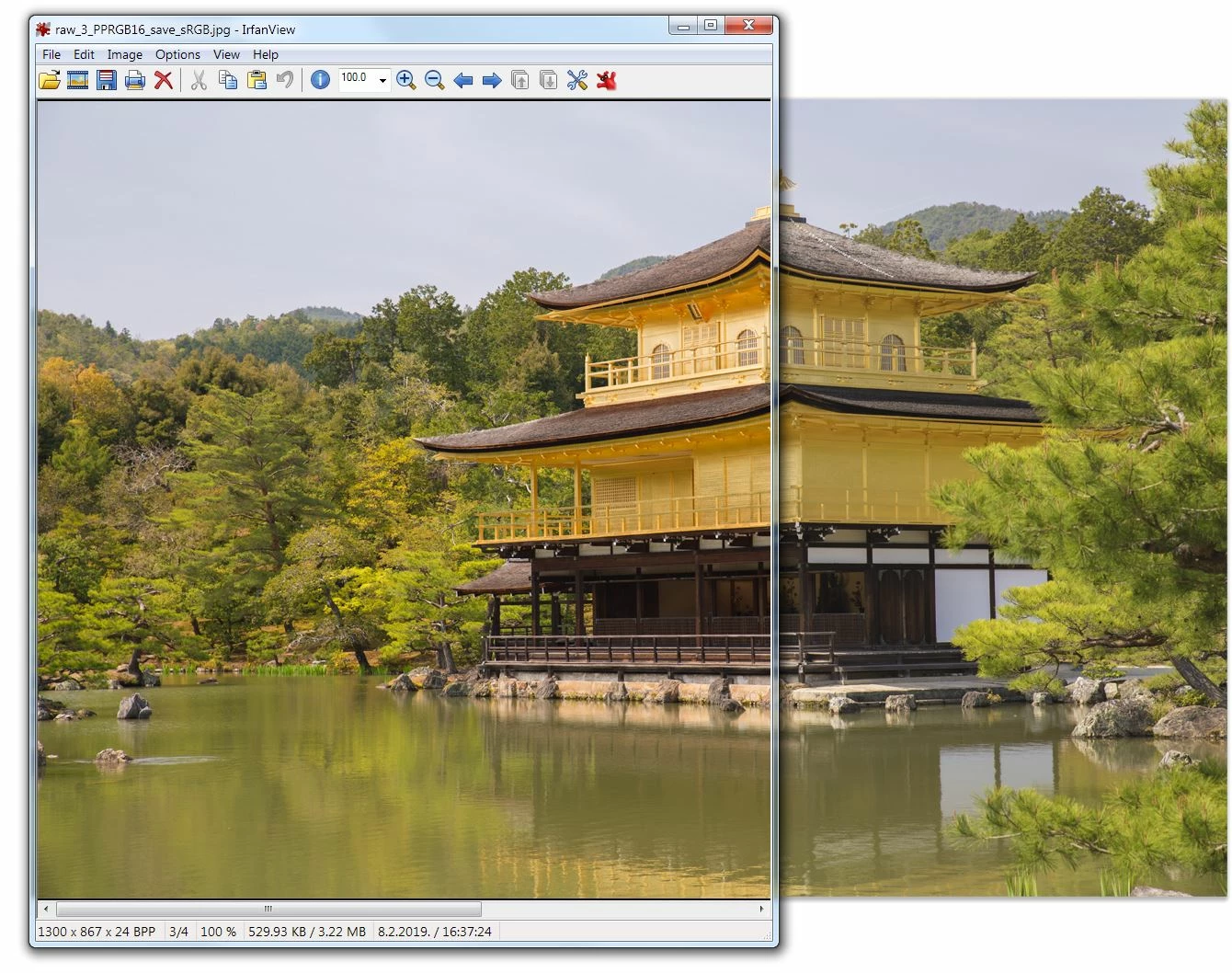
Let's try with MS Paint (left side):
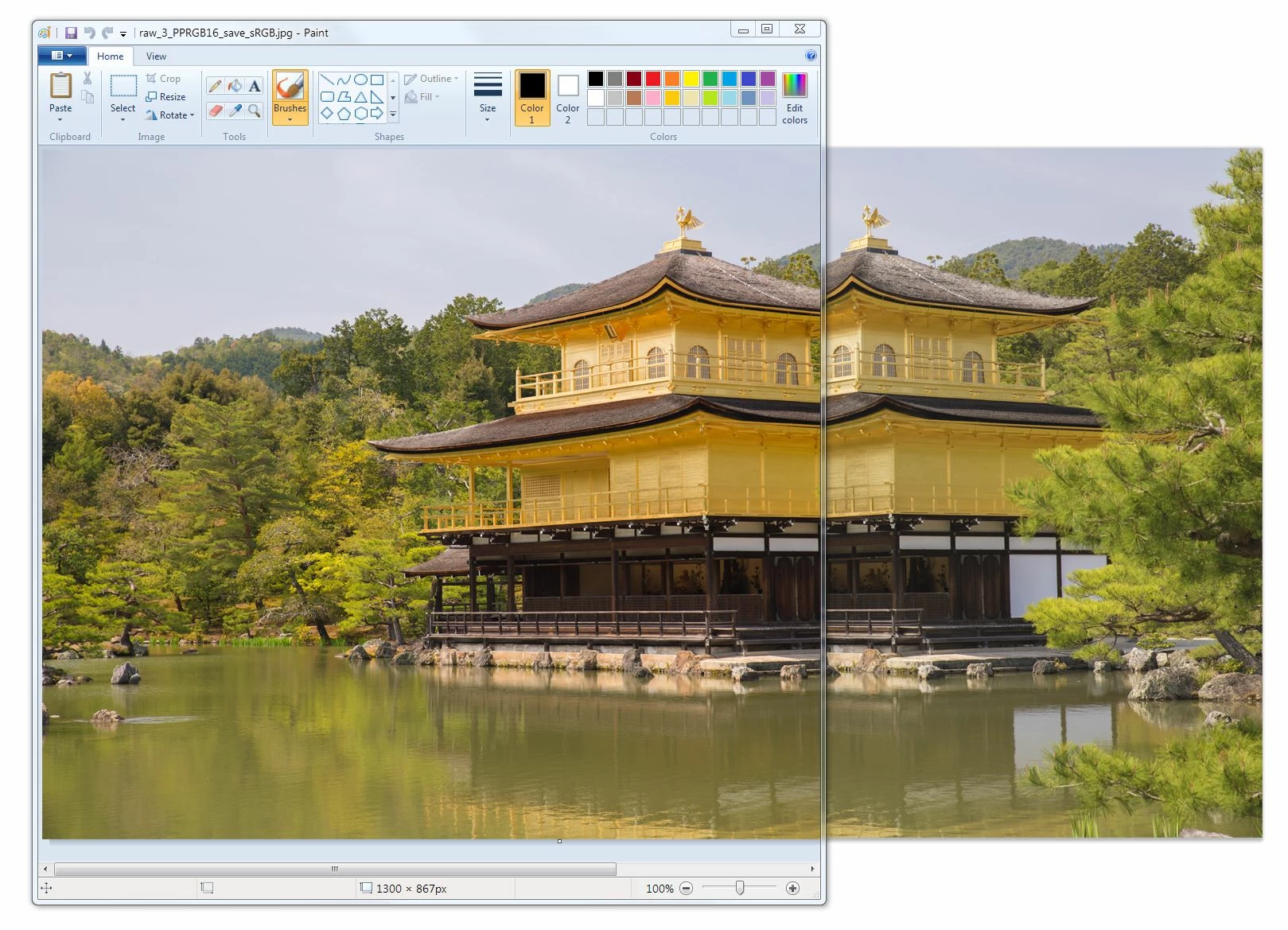
Same thing.

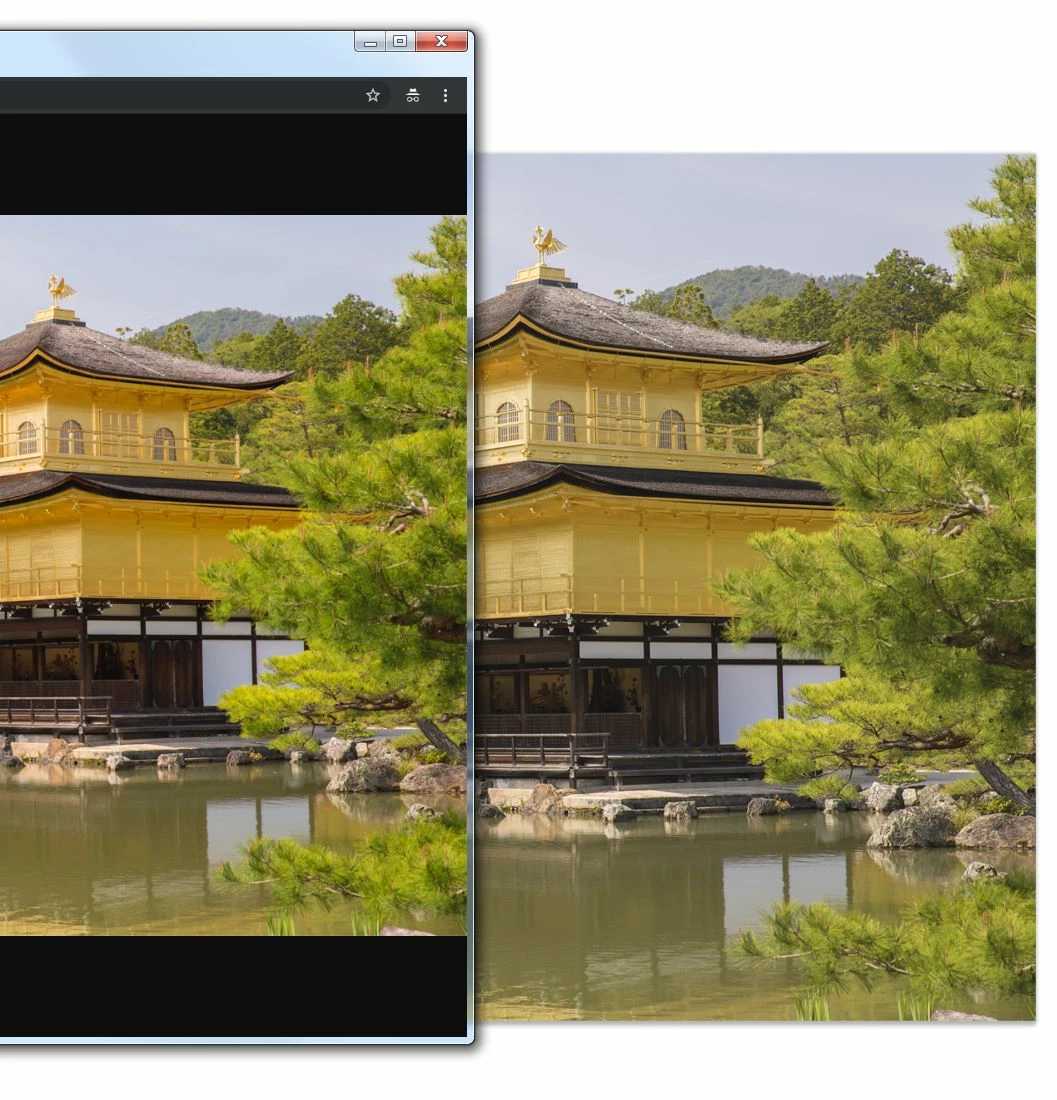
In Chrome? Well, it depends. If I go to chrome://flags and force the sRGB color profile (which I did because if I don't everything looks super washed out and unsaturated)

Then I get this (chrome on left, photoshop on right):
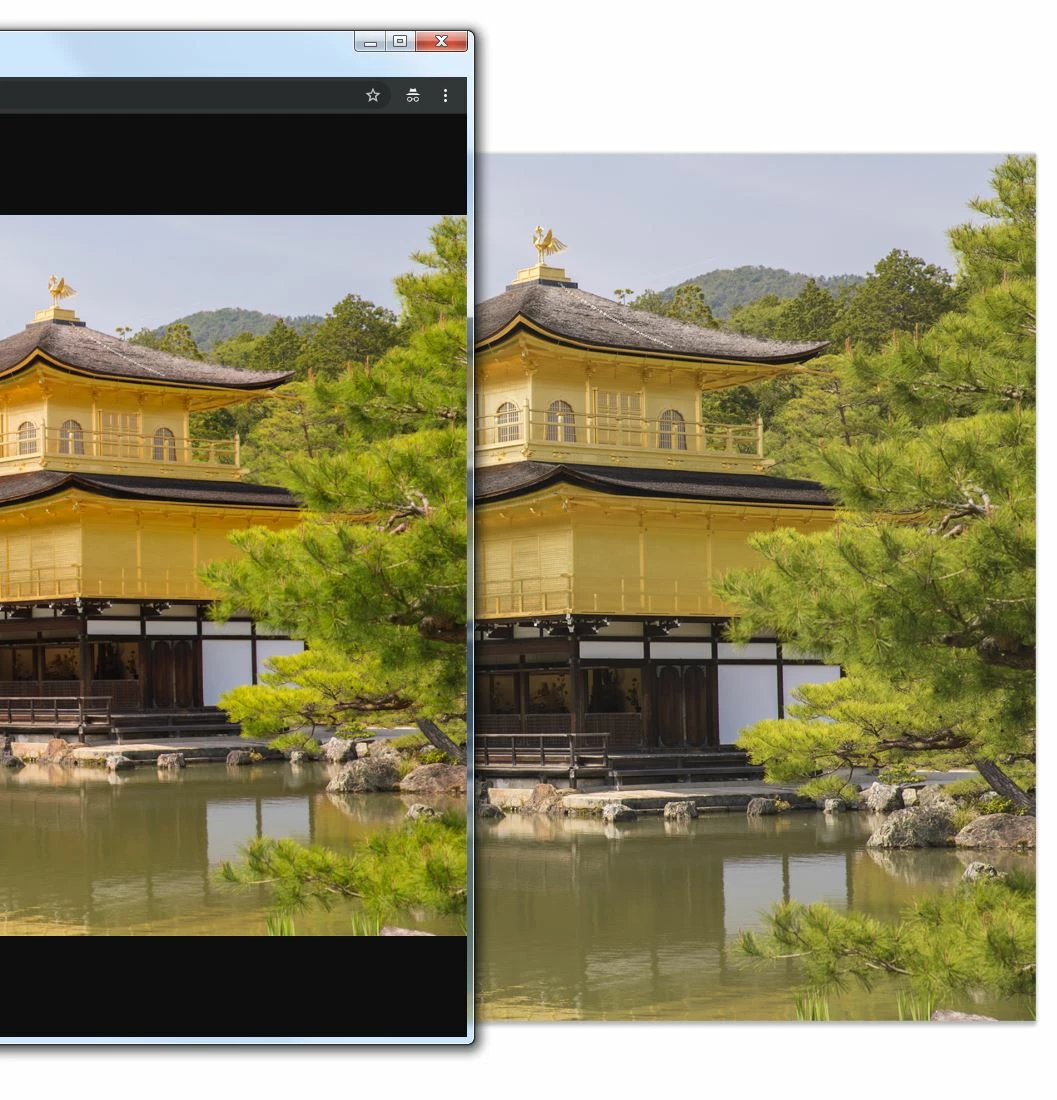
Again, oversaturated. But if I change the settings of the #force-color-profile to "Unmanaged" instead of sRGB, then I get this (chrome left, photoshop right):
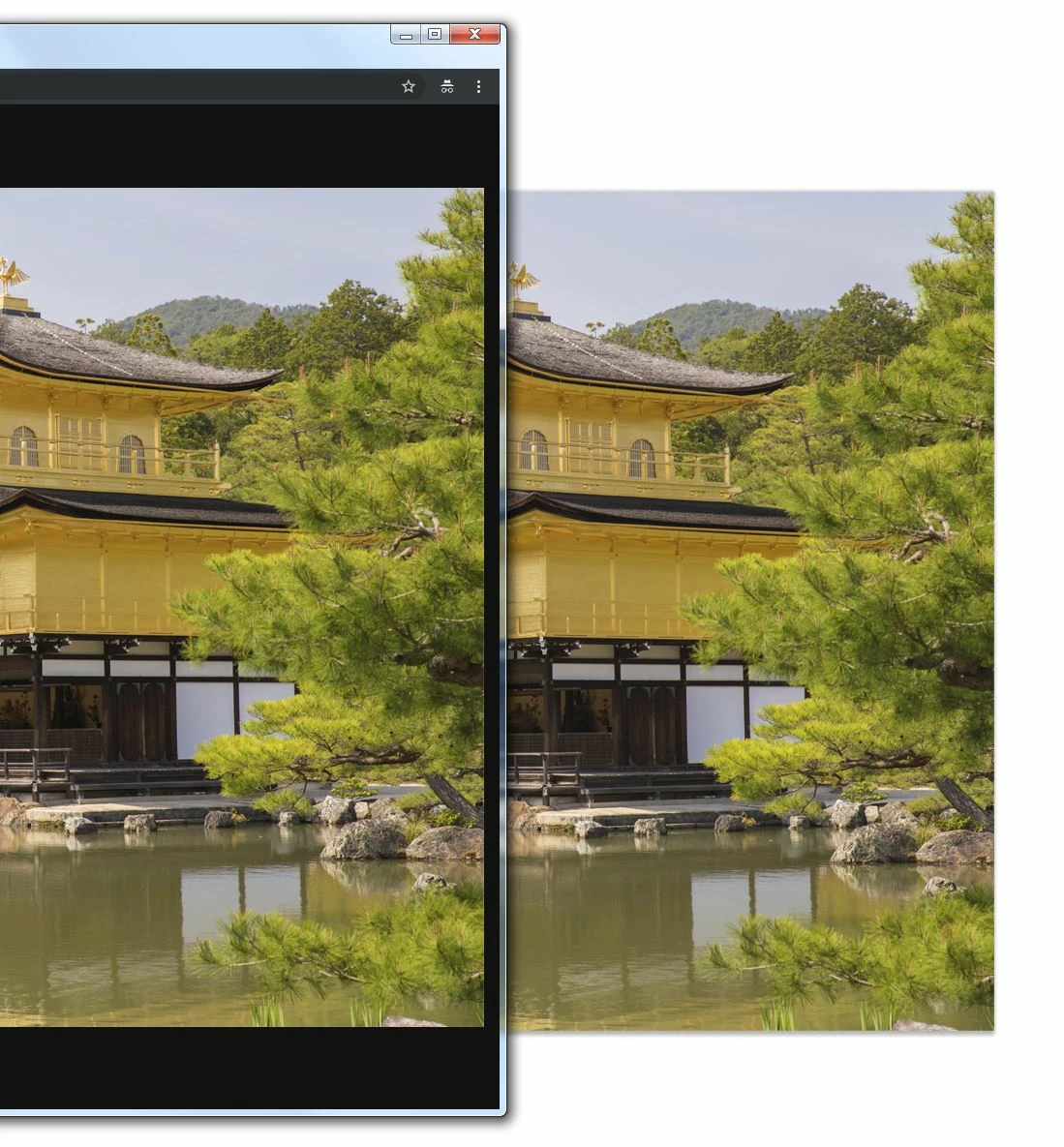
Ok, now it looks like it did in Photoshop, but all the other colors in Chrome are muted as well.

So, my issue is with color managed vs unmanaged applications. I have no idea which output will be seen, because it depends on the application and application settings. I just want the colors to be consistent, at least for me, so I'm wondering how should I set up my workflow given that I mostly edit raw files which will be exported to sRGB and displayed on the web?

Mind you, I had a color-managed sRGB monitor before this one (Dell U2311H) and the unsaturated colors in chrome to me seem even less saturated as compared to that monitor. When I check how the images look on my smartphone (which isn't a great test, I know, as most of them don't show sRGB, are more saturated by default and use OLED instead of LCD), they look much closer to what I see when I set the chrome://flags to force the sRGB color profile (reminder below, right side)
Question:
So, for someone who edits raw files and his primary target is the web (sRGB), what should be my workflow to keep color consistent, and that the people with "normal" monitors see the same thing I see? Because, if I understood correctly, even though my monitor is a wide gamut monitor (99% AdobeRGB), when I compress everything to sRGB, I should see the same image as someone with a normal-gamut monitor. Right? But I feel like I don't. And I have no idea which colors are the "correct" ones, the ones from Photoshop, or the ones in any other viewers I used to open the .jpg (IrfanView, MS Paint, Chrome)? Since all the other viewing applications (listed) and devices (smartphones) show the image as "more saturated" in comparison to Photoshop, I feel like Photoshop isn't giving me the right colors?

Album with all the pictures from this post (so you can download the .jpgs without the browser potentially distorting colors): https://imgur.com/a/ogKhCVZ

Any help is more than welcome.

This topic has been closed for replies.
Correct answer lukac15699767

All right. Our problem here is that none of what you describe should happen - there's no reasonable explanation for it.

Color management should work right out of the box, as long as you have:

  • an embedded document profile
  • a valid monitor profile at system level
  • a color managed application that converts from the first into the second

That's the definition of a color managed process. If you have those three, it has to work.There's nothing the user needs to do, no special settings. Photoshop is designed from the ground up to work this way, the whole application revolves around it.

So which one of those three is failing here? Your monitor profile should be fine after all we've went through. The document profile is embedded. That leaves the application's color management (Irfanview).

Again - use proof to Monitor RGB as a reference for no color management. An sRGB file will be oversaturated here. Anything that looks like that is wrong.


https://forums.adobe.com/people/D+Fosse  wrote

All right. Our problem here is that none of what you describe should happen - there's no reasonable explanation for it.

Color management should work right out of the box, as long as you have:

  • an embedded document profile
  • a valid monitor profile at system level
  • a color managed application that converts from the first into the second

That's the definition of a color managed process. If you have those three, it has to work.There's nothing the user needs to do, no special settings. Photoshop is designed from the ground up to work this way, the whole application revolves around it.

So which one of those three is failing here? Your monitor profile should be fine after all we've went through. The document profile is embedded. That leaves the application's color management (Irfanview).

Again - use proof to Monitor RGB as a reference for no color management. An sRGB file will be oversaturated here. Anything that looks like that is wrong.

Gotcha. Any recommendations for a image viewer that's color managed, and isn't Windows Photo Viewer?

I tried both IrfanView and Faststone image viewer (both with enabled CMS) and I get oversaturation regardeless of the setting (on/off).

EDIT: I managed to make XnView display colors like Photoshop and Chrome. So if anyone else is looking for an image viewer, you can try with that one.

7 replies

Participant
May 23, 2019

I have been combing through the internet to find something like this. I also have a wide gamut monitor and am absolutely flipping out about the fact that in photoshop my images look green-ish and unsaturated and anywhere outside of PS it over saturated and dark. I have I vested in a calibration kit in hopes to help my output for print mainly but also so that my images look as I intend them to everywhere else. Now my concern is that I calibrate and my images still end up looking green and unsaturated in PS and I still am in the dark as to how they appear outside of PS. Currently I am on hold from editing anything until I calibrate. I don’t want to send u satisfactory images to my clients.  I don’t really have anything to offer in way of a solution I just needed to share that the original poster is not alone.

TheDigitalDog
Inspiring
May 23, 2019

Theresadub4d  wrote

I have been combing through the internet to find something like this. I also have a wide gamut monitor and am absolutely flipping out about the fact that in photoshop my images look green-ish and unsaturated and anywhere outside of PS it over saturated and dark.

No. They are previewing incorrectly because you're viewing them without color management! If you did, they would exactly match Photoshop and all other color managed applications. And the same is true for an sRGB display.

IF you care about image appearance, you must use color managed applications; with any display of any gamut.

View my video. Try using Adobe RGB (1998) images without color management on the wide gamut display and you mimic what other's 'see' without color management with sRGB and sRGB gamut displays. It looks 'OK' but no, zero guarantee that the previews are correct. Because there's no color management going on for the previews.

IOW, if every image on the planet was Adobe RGB (1998) rather than most being sRGB, and everyone had a wide gamut display, we'd be in the same shape as we are today with sRGB displays and all those awful non color managed applications. But the fix is simple; use color managed applications then ANY tagged color space WILL preview correctly as they do in Photoshop (caveat, correct when ideally calibrated and profiled).

Author “Color Management for Photographers" & "Photoshop CC Color Management/pluralsight"
D Fosse
Community Expert
Community Expert
April 1, 2019

Yes. It's important to understand that any monitor displays incorrectly without full color management. A wide gamut one just displays more incorrectly, to the point where you can no longer ignore it.

Participant
April 1, 2019

I have been frustrated with very similar problems as described in this thread by lukac15699767, titled “Bought a wide gamut monitor and colors are all over the place. Help?” Today I found what appears to be a solution in my case, and wanted to share it here.

Since getting a new wide gamut monitor about a year ago with my new full-featured Windows 10 Dell Desktop computer (monitor is “Dell Ultra Sharp 25 Monitor with PremierColor UP2516D”) the colors of photos I’ve edited with Photoshop CS6 with what appeared to be proper saturation  as viewed on this desktop computer, have been wildly oversaturated using the following programs on the same computer.

- Windows 10 Photo viewer

- The Microsoft Edge browser viewing with Flickr (however they appeared properly saturated with the Firefox and Chrome browsers)

- IrfanView (desktop photo viewer)

-ViewPrint (desktop photo viewer)

- and at times even Photoshop Bridge (CS6), sometimes yes, sometimes no.

These edited photos however had proper saturation when viewed with the same programs listed above on a fairly new Dell laptop (non wide gamut display).  They appeared properly saturated in Photoshop CS6 and Adobe Camera RAW on the Dell laptop. Saturation was consistently proper on the laptop, regardless of program. The color profile on the laptop is (and remains) “sRGB IECC6 1966-2.1”. These same photos also all appeared properly saturated when viewed on my ipad and iphone, and viewed on a Mac in Safari.

The photos I work with are all RAW photos, shot with my Canon DSLR. The color profile I’ve been using on the desktop (with wide gamut monitor) had also been (until today)  “sRGB IECC6 1966-2.1”, selected in the Adobe Camera RAW program, in Photoshop CS6, and in my Windows 10 Color Management control panel. My final photo files are saved as a JPG file.

Today, just for the heck of it, I changed the color profile on my Desktop computer (with wide gamut monitor) to “Adobe RGB 1998” - in the Adobe Camera RAW program, in Photoshop CS6, and in my Windows 10 Color Management control panel. Voila! The inconsistency in saturation between different programs, and between my two computers has virtually disappeared. There is just some negligible inconsistency, dramatically less than before, and perfectly understandable to me given different hardware and different types of programs.

In order to see the improved results on my desktop in the listed programs I had to start the editing from scratch – from the original RAW photos, and again saved as a JPG once my editing was complete. The photos I had previously edited with the sRGB profile continue to appear dramatically oversaturated in the listed programs on the desktop computer (with wide gamut monitor).

All the photos, the ones previously edited under the sRGB profile, and the newly edited ones under the Adobe RGB profile, continue to display with proper color on the laptop computer (non wide gamut display) and on my ipad and iphone.

Summary: My problem with wildly inconsistent saturation on my desktop computer with wide gamut monitor appears to have been solved by changing all color management profile controls on that computer from sRGB to Adobe RGB. There continues to be no problem with viewing any of my photos, the ones edited on the desktop previously with sRGB and later with Adobe RGB, on my other devices – Windows 10 laptop computer, ipad and iPhone.

Pete

D Fosse
Community Expert
Community Expert
April 1, 2019

I'll give you a very short and fully complete answer that explains everything you describe:

You are using applications without color management. You cannot do that with a wide gamut monitor! It's been emphasized over and over in this thread (and others).

You need to stop what you're doing and read this thread again, from the beginning. You are about to ruin all your files.

A wide gamut monitor absolutely requires that you use color managed software only. No exceptions. That's the deal you accepted when you bought that unit. You also need to buy a calibrator, to make a monitor profile that your color managed applications can use. That's also a requirement that goes with the monitor, and no wide gamut models should ever be sold without one.

Participant
April 1, 2019

Thanks D Fosse. If my source files are RAW, and I am editing with Photoshop CS6 (which I understand is color managed) with Adobe RGB as the color profile, and I am making my color editing decisions based on how my photos appear in Adobe Camera RAW and in Photoshop, and I save the resulting file as a JPG  - how am I "about to ruin" all my files? What about this process is ruining them? How would I see damage that is being caused? What should I be doing differently?

Thanks for any response
Pete

NB, colourmanagement
Community Expert
Community Expert
February 9, 2019

Hi,

wide gamut screens cannot be used with non colour managed applications. period.

however -

if, during calibration in CN, you set the screen gamut sRGB you'll see on your screen pretty much what others (with normal screens) see.

You've already discovered that non colormanaged applications cannot show images accurately, and this is exaggerated big time if the screen is wide-gamut (and its been calibrated full gamut).

Photoshop is the arbiter of truth here, its most likely to be showing you the actual true colour.

If its not something's broken, like the display profile.

Want to see what a wide gamut screen does to an sRGB image but to see that in Photoshop?

Open it, go to assign profile and temporarily assign Adobe RGB, you'll see the saturation jump.

What you are seeing is an example of what happens if an application misinterprets the colour numbers. And that’s what non colour managed applications do, they just send raw image data to the screen - if the screen's wide gamut (close to Adobe RGB) then it "sees" the colour numbers as (NEAR TO) Adobe RGB - same as you achieved in the test in Photoshop I described above.

DFosse's "proof to monitor profile" is good test too.

I hope this helps

if so, please do mark my reply as "helpful" and if you're OK now, please mark it as "correct" below, so others who have similar issues can see the solution

thanks

neil barstow, colourmanagement

D Fosse
Community Expert
Community Expert
February 9, 2019

This thread is far too long to have time to read it all now.

But I did see proof mentioned. There is a very simple test. In Photoshop, turn on Proof to Monitor RGB. This disables all color management completely. Open an sRGB file and it will be oversaturated on that monitor.

So that's how it's not supposed to look, with absolute certainty. Anything that looks like that is wrong, either the application isn't color managed, or it's broken, or it's not configured correctly.

I'll read the rest of the thread tomorrow.

lukac15699767
Inspiring
February 9, 2019

https://forums.adobe.com/people/D+Fosse  wrote

This thread is far too long to have time to read it all now.

But I did see proof mentioned. There is a very simple test. In Photoshop, turn on Proof to Monitor RGB. This disables all color management completely. Open an sRGB file and it will be oversaturated on that monitor.

So that's how it's not supposed to look, with absolute certainty. Anything that looks like that is wrong, either the application isn't color managed, or it's broken, or it's not configured correctly.

I'll read the rest of the thread tomorrow.

Thanks for your reply, D Fosse.

I did what you said (Proof to Monitor RGB), and then it looks like it does in Chrome and IrfanView. So, Chrome and IrfanView show the image wrong, whereas Photoshop and WPV displayed it correctly?

If so, why does then Per Berntsen say that  he "downloaded the Maria Svarbova image and it looks under saturated in Photoshop in your screenshot"?

Thanks for taking the time to participate in this thread btw, it's driving me nuts and I just want to figure this stuff out. It's really unintuitive and I have no idea which colors are "right". The Photoshop ones seem too muted, you say the ones with Monitor RGB are oversaturated... so I'm lost

D Fosse
Community Expert
Community Expert
February 9, 2019

I don't use Irfanview - but everything I see and read here points to broken color management in Irfanview. I think the "undersaturated" version is in fact the correct one.

In addition to proof to monitor RGB, I see you also tried to assign the monitor profile to the image (which as Per says you should never ever do). The thing is, it does the same thing: it disables color management altogether. So again you get the oversaturated version.

But proof to Monitor RGB is a bulletproof test. That makes Photoshop behave like any other non-color managed application. Open an sRGB file, proof to Monitor RGB - it gets oversaturated because color management is off.

One variable not covered, is whether you have more than one display on this system. Some applications that are nominally color managed, will use the profile for the main display regardless of what display it's actually on.

TheDigitalDog
Inspiring
February 8, 2019

It's really simple. Wide gamut display or not. You need color management to properly view images.

On an sRGB like gamut display, sRGB is an unknown concept outside color management but because that data is similar in gamut, it looks OK. Ditto on a wide gamut display but with Adobe RGB (1998) rather than sRGB.

WITH color management, on either gamut display, both color spaces and all color spaces (tagged) preview properly.

DON'T use non color managed applications.

This may help too:

sRGB urban legend & myths Part 2

In this 17 minute video, I'll discuss some more sRGB misinformation and cover:

When to use sRGB and what to expect on the web and mobile devices

How sRGB doesn't insure a visual match without color management, how to check

The downsides of an all sRGB workflow

sRGB's color gamut vs. "professional" output devices

The future of sRGB and wide gamut display technology

Photo print labs that demand sRGB for output

High resolution: http://digitaldog.net/files/sRGBMythsPart2.mp4

Low resolution on YouTube: https://www.youtube.com/watch?v=WyvVUL1gWVs

Author “Color Management for Photographers" & "Photoshop CC Color Management/pluralsight"
lukac15699767
Inspiring
February 8, 2019

thedigitaldog  wrote

It's really simple. Wide gamut display or not. You need color management to properly view images.

On an sRGB like gamut display, sRGB is an unknown concept outside color management but because that data is similar in gamut, it looks OK. Ditto on a wide gamut display but with Adobe RGB (1998) rather than sRGB.

WITH color management, on either gamut display, both color spaces and all color spaces (tagged) preview properly.

DON'T use non color managed applications.

This may help too:

sRGB urban legend & myths Part 2

In this 17 minute video, I'll discuss some more sRGB misinformation and cover:

When to use sRGB and what to expect on the web and mobile devices

How sRGB doesn't insure a visual match without color management, how to check

The downsides of an all sRGB workflow

sRGB's color gamut vs. "professional" output devices

The future of sRGB and wide gamut display technology

Photo print labs that demand sRGB for output

High resolution: http://digitaldog.net/files/sRGBMythsPart2.mp4

Low resolution on YouTube: https://www.youtube.com/watch?v=WyvVUL1gWVs

I've checked out your video and you sound very knowledgeable, but as printing currently isn't my concern, I've just focused on sRGB and export for web/mobile devices.

1. As stated before, I open the raw files in the widest possible color space (ProPhoto RGB, 16bits)

2. I edit in that color space to avoid clipping

3. I convert to sRGB as the last step, after resizing and sharpening

When I open that sRGB image on the web, locally in Irfanview or on a mobile device, they all look more saturated than in Photoshop.

Check the example in the post above, where I save the image from Chrome, open it in Photoshop and it looks muted. I save it like that from Photoshop and it looks like the original in Chrome/Irfanview/Mobile device. I just want these to be as close as possible, as otherwise I'm running a real risk of my images looking oversaturated to 99% of people who don't have a wide gamut monitor or a color managed workflow.

Per Berntsen
Community Expert
Community Expert
February 8, 2019

The over saturation you're seeing is inevitable when viewing images in applications without color management on a wide gamut monitor. So with this kind of monitor, you have to use color managed applications only.

Paint is not color managed, so forget about it.

Irfanview needs to have color management turned on under Options > Properties/Settings > Zoom/Color management.

Chrome is color managed out of the box, and should display the same as Photoshop, without the need to change any settings.

The Windows Photo Viewer is the only native color managed application on Windows 7.

Smartphones are not color managed, and can not be expected to display correct colors.

And I have no idea which colors are the "correct" ones, the ones from Photoshop, or the ones in any other viewers I used to open the .jpg

If you have not been playing around with Photoshop's color settings, and have a sound monitor profile, Photoshop will be correct.

Can you post a screenshot of the PS Color settings? (Edit > Color settings)

lukac15699767
Inspiring
February 8, 2019

Thanks for your reply, Per Berntsen.

In fact, I turned on color management in IrfanView, and still get different color (oversaturated) as compared to Photoshop. Settings here:

Also here are my PS Color settings:

Let me give a more clear example. I'll use another photographer's (Maria Svarbova) image which is very colorful: https://www.behance.net/gallery/68166169/HORIZON

I save it from Chrome on my disk as a jpg.

I open that jpg in photoshop (right) and IrfanView (left). Result:

The colors in photoshop look way desaturated as compare to what I see on the web (because of the flags I turned on in Chrome) and what I see locally in IrfanView. The saturated image as from IrfanView is what most people see (regardless of calibration, it will be closer to that, than Photoshop's desaturated image on the right). And the funniest part? When I save that undersaturated image in Photoshop:

I get this in Irfanview:

It's saturated, like on her behance page, like locally when viewed in Irfanview, even though the preview in Photoshop's save for web shows an undersaturated image.

W to the T to he F

Essentially, only Photoshop shows an unsaturated image, and when I output it from PS, all other applications and devices show a more saturated image. I'm not so concerned about others' viewing devices, I'd like some consistency on my own computer for a start

I can't understand this, and I swear my IQ is at least 95.

Per Berntsen
Community Expert
Community Expert
February 8, 2019

I forgot to mention that you have to restart Irfanview after enabling color management, did you do that?

All color managed applications register the monitor profile on launch.