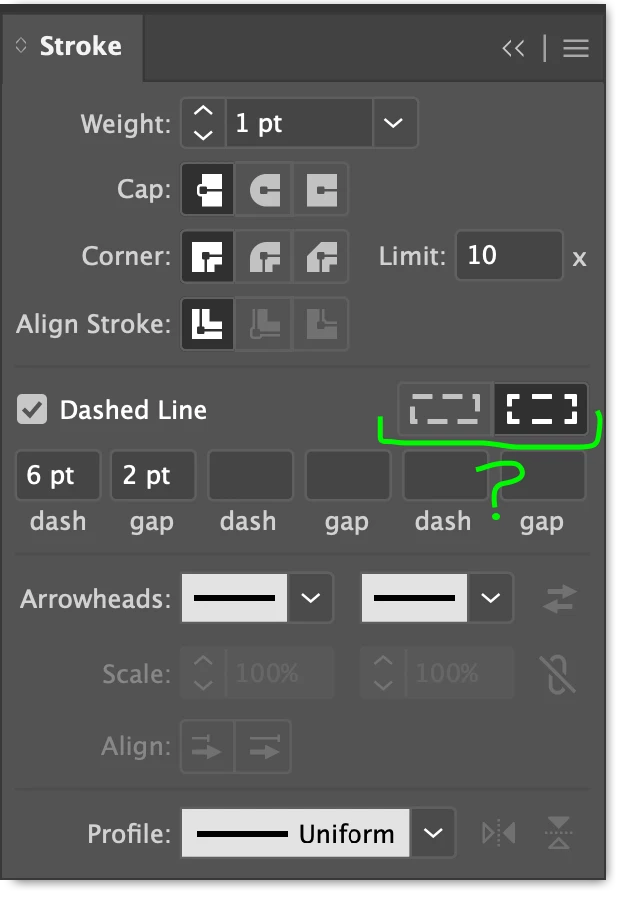
I've written a function that returns true when the item has dashes aligned. Figured I should post it here for anyone who happens along later.
- Mark
Edit: now works with compoundPaths.
/*

    Get Stroke Dashes Alignment Style
    For Adobe Illustrator 2022

    by m1b,
    here: https://community.adobe.com/t5/illustrator-discussions/script-api-for-stroke-align-dashes-to-path-corners/td-p/12689425

    This function returns true if the item's stroke
    dash alignment is set to 'aligning to corners
    and path ends, adjusting lengths to fit'.

    At this time there is no API access to this setting
    so this method is quite hacky: it converts a model
    duplicate of the item into outline stroke
    and counts the number of dashes.

    `item` must be a pathItem or compoundPathItem
    and must have a dashed stroke.

*/


alert(strokeDashesAreAligned(app.activeDocument.selection[0]));


function strokeDashesAreAligned(item, keepSelection) {
    if (
        item == undefined || !(item.hasOwnProperty('pathPoints') || item.hasOwnProperty('pathItems'))
    ) return;

    var dashesAreAligned;

    // we only worry about storing the
    // selection because the outline
    // stroke test later destroys it
    keepSelection = keepSelection || true;
    var doc = getParentDocument(item),
        selectedItems = [];
    if (keepSelection) {
        for (var i = 0; i < doc.selection.length; i++) {
            selectedItems.push(doc.selection[i]);
        }
    }

    if (item.typename == 'CompoundPathItem') {

        // COMPOUND PATH ITEM

        if (
            item.pathItems[0].stroked == false
            || item.pathItems[0].strokeDashes.length == 0
        ) return;

        // duplicate
        var dup = item.duplicate();
        doc.selection = null;
        dup.selected = true;
        // uncompound
        app.executeMenuCommand('noCompoundPath');
        // collect the resulting path items
        var pathItemsToDelete = [];
        for (var i = 0; i < doc.selection.length; i++)
            pathItemsToDelete.push(doc.selection[i]);

        // get result on just the first path
        dashesAreAligned = strokeDashesAreAligned(pathItemsToDelete[0], keepSelection);

        // remove uncompounded duplicates
        for (var i = pathItemsToDelete.length - 1; i >= 0; i--)
            pathItemsToDelete[i].remove();

    } else {

        // PATH ITEM

        if (
            item.stroked == false
            || item.strokeDashes.length == 0
        ) return;

        // duplicate item
        var modelPathItem = item.duplicate();

        // standardise model
        var standardPoints = [[0, 0], [3, 0]];
        modelPathItem.filled = false;
        modelPathItem.stroked = true;
        modelPathItem.strokeWidth = 0.1;
        modelPathItem.strokeDashes = [1];
        modelPathItem.closed = false;
        for (var i = modelPathItem.pathPoints.length - 1; i >= 0; i--) {
            if (i >= standardPoints.length) {
                modelPathItem.pathPoints[i].remove();
            } else {
                modelPathItem.pathPoints[i].anchor = standardPoints[i];
                modelPathItem.pathPoints[i].leftDirection = standardPoints[i];
                modelPathItem.pathPoints[i].rightDirection = standardPoints[i];
            }
        }

        // convert to outlined stroke
        // must clear selection to do this
        doc.selection = null;
        modelPathItem.selected = true;
        app.executeMenuCommand('OffsetPath v22');
        modelPathItem = doc.selection[0];

        // the model, once converted to compoundPathItem,
        // will have 2 pathItems if dashes are not aligned,
        // or 3 if dashes are aligned
        var dashesAreAligned = modelPathItem.pathItems.length == 3;

        // remove the model and reselect the original
        modelPathItem.remove();

        // re-instate inital selection
        for (var i = 0; i < selectedItems.length; i++) {
            selectedItems[i].selected = true;
        }
    }

    return dashesAreAligned;
}

function getParentDocument(obj) {
    while (obj.hasOwnProperty('parent') && obj.constructor.name != 'Document')
        obj = obj.parent;
    return obj;
}






 AdChoices