Participant
September 20, 2021
Answered

Tile Random Squashing Tiles

  • September 20, 2021
  • 1 reply
  • 494 views

Hey,

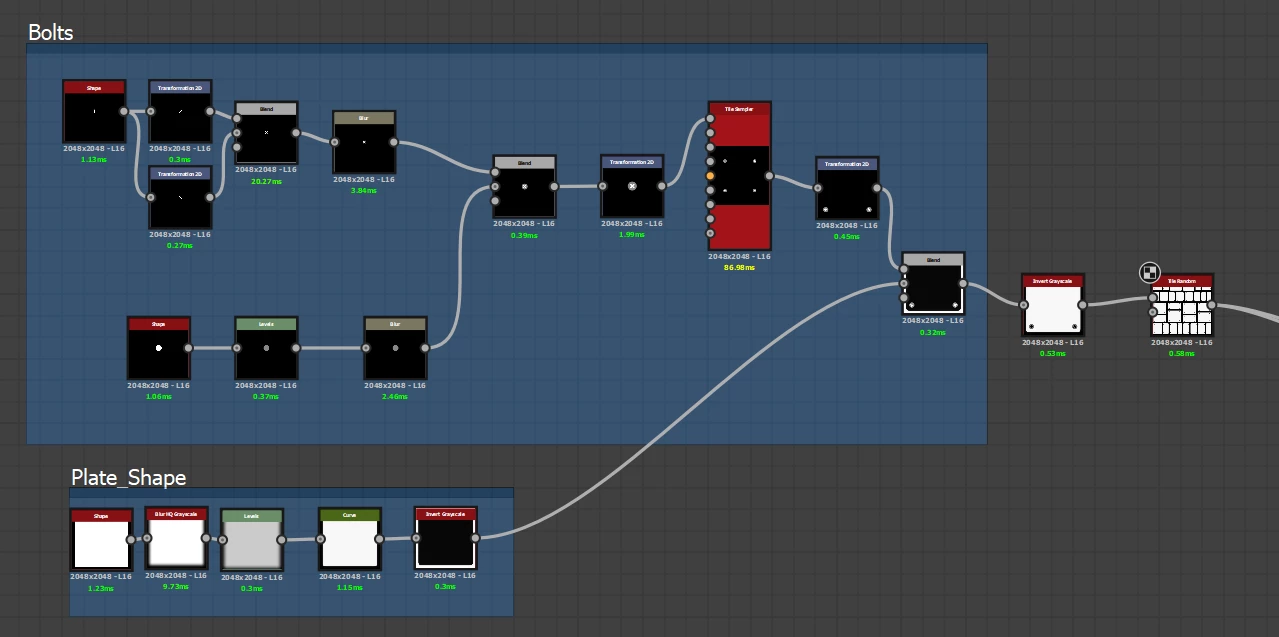
I know that this is what the Tile Random node does, however I am looking for a workflow that means that I can have the random tile generation, but with the bolts in the corners not looking squashed. Please find attached an image of the result and the workflow. Please share if there are better ways to create this shape!


Thanks,

Michael


This topic has been closed for replies.
Correct answer davescm

Hi

Try the, very clever, method outlined by Nicolas Wirrmann in the link below:

https://forum.substance3d.com/index.php?topic=29858.0


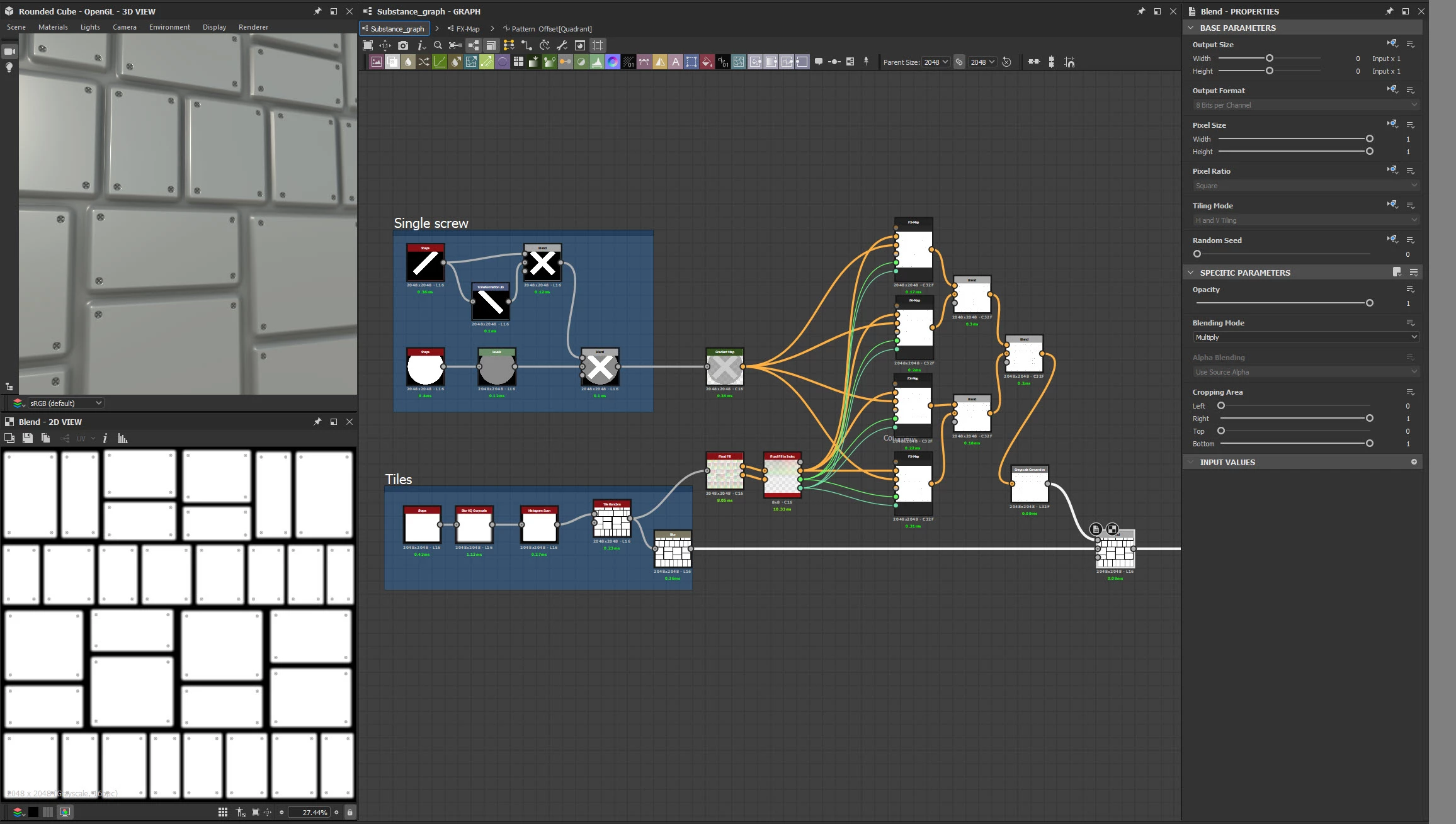
He shows a method using Flood Fill Index and an FX Map to put a single square in the corner of a random tile.He has attached a link to the SBS file so you can download it and look at the function graph in the Color/Luminosity (ie first) input of the Quadrant node in the FX map.


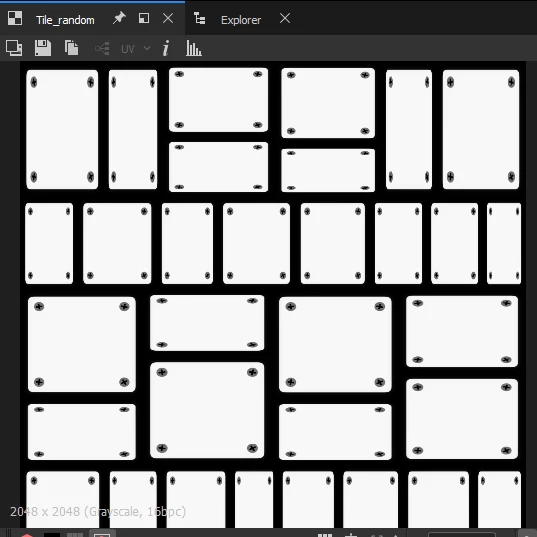
It is easy to substitute an image input for the square, to get the screwhead, and to duplicate the FX Map node and change the offsets so that you get a screw in each corner, which is what I've done below.


Dave

1 reply

davescm
Community Expert
davescmCommunity ExpertCorrect answer
Community Expert
September 20, 2021

Hi

Try the, very clever, method outlined by Nicolas Wirrmann in the link below:

https://forum.substance3d.com/index.php?topic=29858.0


He shows a method using Flood Fill Index and an FX Map to put a single square in the corner of a random tile.He has attached a link to the SBS file so you can download it and look at the function graph in the Color/Luminosity (ie first) input of the Quadrant node in the FX map.


It is easy to substitute an image input for the square, to get the screwhead, and to duplicate the FX Map node and change the offsets so that you get a screw in each corner, which is what I've done below.


Dave

Participant
October 4, 2021

Hey Dave,


Thank you so much for the quick response. This gave me the means to the end. However I would like to know more about FX maps and their uses (they seem super powerful). Do you know of any good material to read or a good exercise in order to learn this tool better?


Thanks,

Michael