Quntin,
Thanks for the clarification and the example. You describe a typical structure for technical material in which a chapter is divided into sections, sections into subsections, subsections into sub-subsections, and so forth. What I suggest, consistently with Matt's remarks, is:
1. Instead of using a Headings element for subsections and their further divisions, reuse Section.
2. Your initial general rule for the Headings (now Section) element was <TEXT>, Content*, Headings*. You expect the text entered at the beginning to be one of the Level n Headings. Try using an element named Heading instead.
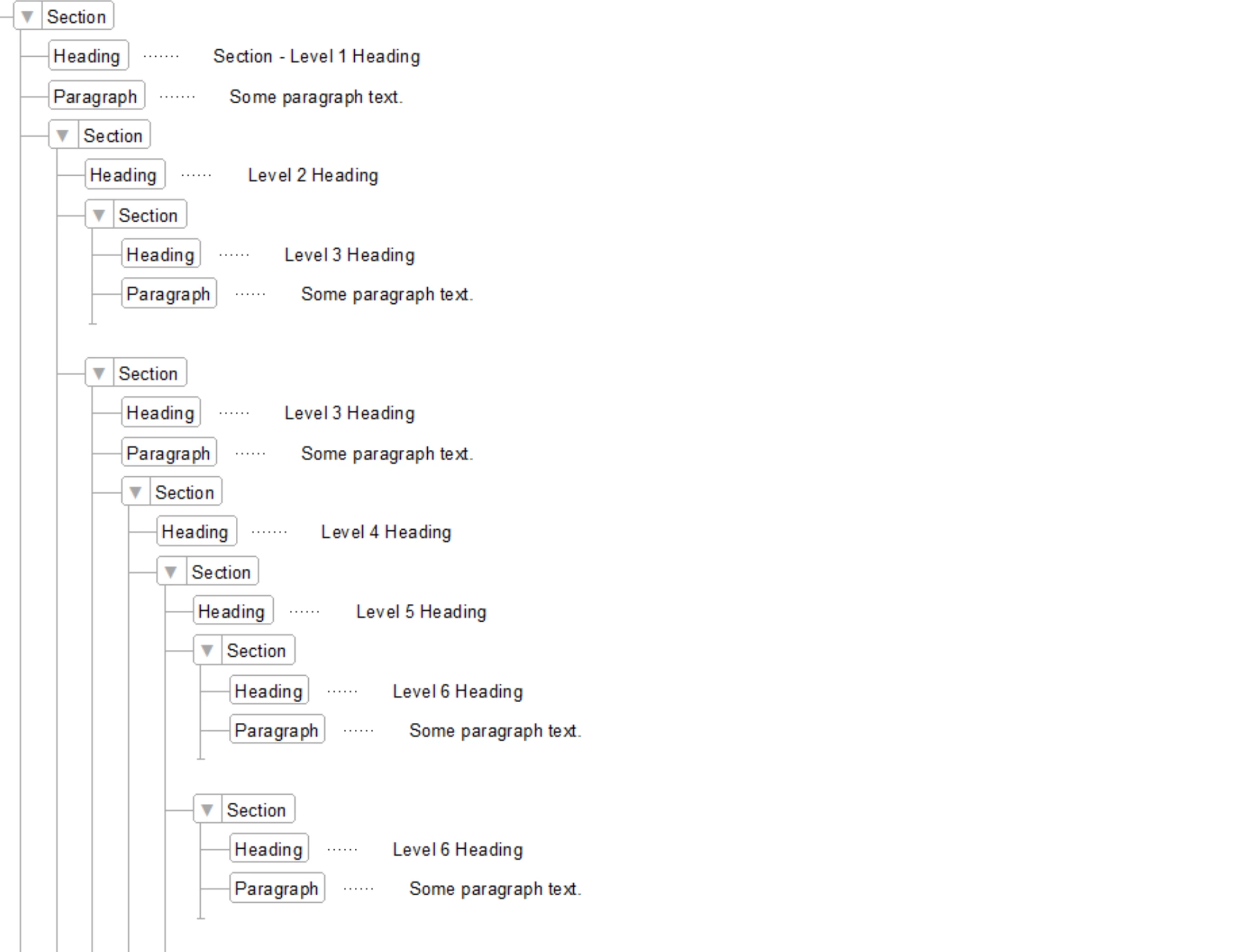
3. Finally, instead of an element named Content, you can put the types of content directly into the definition of Section. So that the Section general rule would now be something like Title, (Paragraph | List | Table | Figure)*, Section*, which means that Section has three parts: a title, optionally some Paragraph, List, Table, and Figure elements, and possible subsections. Notice that this three-part approach is the same breakdown as defined in your old Headings general rule.
The format rules for Title would make the appearance of the Title for different levels of sections and subsections vary appropriately.
Would this use of the words Section and Heading work in your organization? Would it be natural for you and your colleagues to discuss something like a third-level section, say?
If you follow my suggestion, your example Section would have the following structure:




 AdChoices