
Known Participant
September 10, 2024
Question

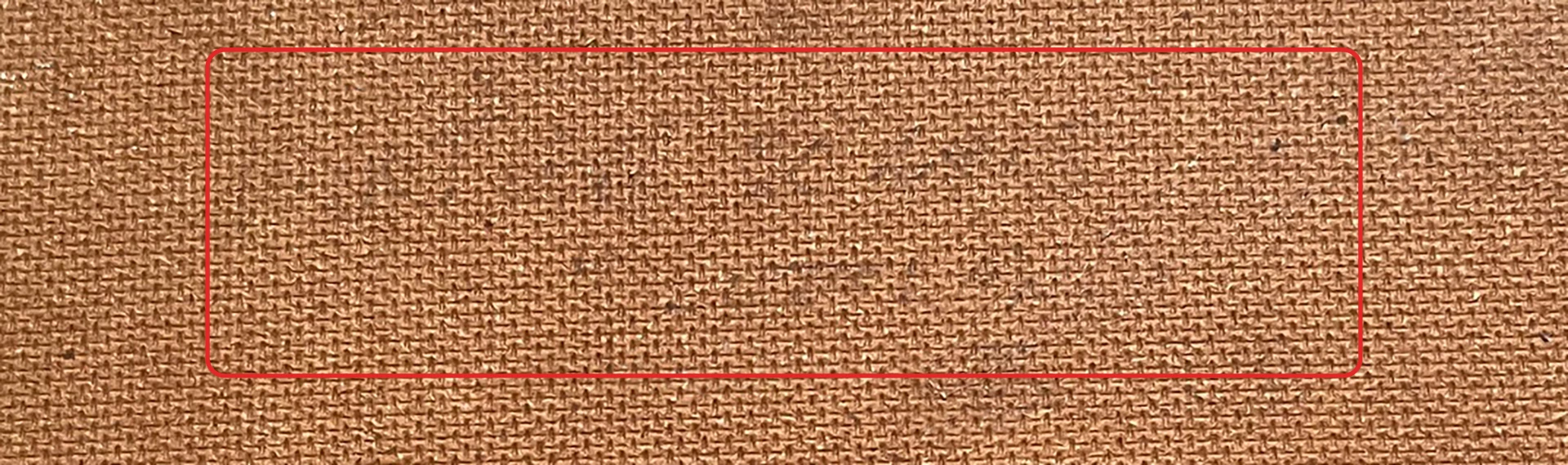
Old writing on back of painting - Does anyone have the skills to show the text?

  • September 10, 2024
  • 2 replies
  • 578 views

I have tried every technique I can think of to 'pull out' the text written on the back of an old painting.
For me?  Impossible.
If anyone can get me anywhere closer to the 'text inside the red rectangle' - I would really appreciate it.
All of my standard techniques have got me <10% closer to an answer.
This topic has been closed for replies.

2 replies

davescm
Community Expert
Community Expert
September 10, 2024

I'd love to see the outputt using the techniques that D Fosse describes for filtering at the image capture stage, which are far more likely to yeild a usable result.


I had a quick look to see if there was anything in your attached screenshot  at all, and there is but not enough to read if the text is not already known.

I used an FFT filter on the red channel, then the camera raw filters texture (negative) and dehaze (positive) filters, before blending them with the original colour.


Dave

przoneAuthor
Known Participant
September 11, 2024

Really appreciate the effort !

D Fosse
Community Expert
Community Expert
September 10, 2024

In your case I feel the most important thing is to kill the texture first of all. I'd try lighting it from all four sides, and experiment to find the best angles to the surface. Perhaps even try direct frontal light close to the lens. That's not something you would normally do, but might work here if it's not too reflective.


Anyway, I've done a bit of this (I work at an art museum). That's when I pull out my IR/UV-modified camera and bandpass filters. Sometimes you get closer, but it never just pops out. That's just on TV. UV is usually most effective.


Here's an example. Visible light, infrared and ultraviolet (reflected):


przoneAuthor
Known Participant
September 11, 2024

Great feedback... I have told my friend to try UV, IR and 'lighting from multiple angles' - with the best camera they can find - ideally 'mounted' to remove any wobble and allow 'accurate overlays' later 

D Fosse
Community Expert
Community Expert
September 11, 2024

You need a specially modified camera, where the IR and UV blocking filters have been "peeled off" the sensor.  I got mine (a Sony a7r IV) from LifePixel. We got it delivered to our offices in a month or so.

https://www.lifepixel.com/shop/converted-cameras/sony-converted-cameras/sony-a7r-iv-camera-conversion 


With a separate visual bandpass filter it can be used as an ordinary camera, so it doubles as my backup second body.


Kolari Vision has an excellent UV bandpass filter:

https://kolarivision.com/product/uv-bandpass-lens-filter/ 


You can use ordinary lenses, but it actually pays to use a cheap standard 50 mm kit lens, nothing fancy. Yes, that sounds odd, but the reason is that you want as few lens elements as possible. More complex lenses can cause problems with hot-spot ghosting in IR.


EDIT as for direct frontal lighting (not sure if it will work but worth a try), you can try a ring light if you have access to one. It's also possible to place a semi-reflective glass plate at exactly 45° angle between the lens and subject, and point a light directly to it from the side. This is true axial lighting, but you'll need a dark room for this to work