Nancy OShea
Community Expert
Community Expert
June 14, 2024
Question

Controversy over Embossed Embroidery Patent

  • June 14, 2024
  • 3 replies
  • 1495 views

DELULU warning


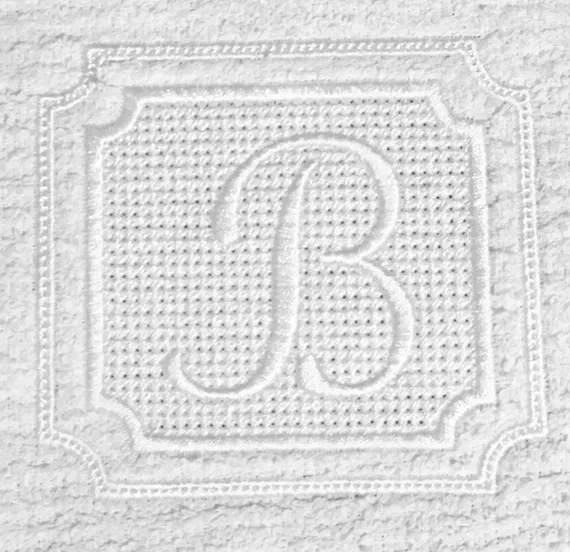
Some woman with a U.S. Utility Patent claims she owns 'embossed embroidery' and no one can use it on TikTok, Etsy, eBay, Instagram, Pinterest, YouTube, etc... without paying her a licensing fee.


I don't think this will hold up as embroidery & embossing techniques date back thousands of years. But we'll have to wait and see if anyone actually challenges this in court. 


In the meantime, don't create any embossed embroidery designs for commercial items.  And don't do any tutorials on the subject unless you want to risk being banned by your respective platform.  Tell your friends, family & clients.


    This topic has been closed for replies.

    3 replies

    Abambo
    Community Expert
    Community Expert
    June 15, 2024

    Patent troll.

    ABAMBO | Hard- and Software Engineer | Photographer
    Nancy OShea
    Community Expert
    Community Expert
    June 15, 2024

    Here's another embroidery controversy that dates back to the early 1880s.  It really boggles my mind that stitches can be patented.

    https://pieceworkmagazine.com/embroidery-patents/


    Nancy O'Shea— Product User & Community Expert
    Abambo
    Community Expert
    Community Expert
    June 17, 2024
    quote

    Here's another embroidery controversy that dates back to the early 1880s.  It really boggles my mind that stitches can be patented.

    https://pieceworkmagazine.com/embroidery-patents/


    By @Nancy OShea

    The good thing here is that the patents are good for 20 years. 


    To understand patents, here are some basics: 

    1. patents are different from copyright.
    2. patents describe inventions so that experienced people in that domain can recreate the invention.
    3. patents get published and in exchange the patent holder gets the exclusive on the patent for 20 years max. (The patent holder pays an increasing annual fee. Failing to pay that fee puts the invention into the public domain)
    4. patents are granted on a per country basis. As this is a US patent, the patent owner needs to apply also for protection in other countries, if they want protection in those countries. Each country collects an annual fee.
    5. patents are written in a specific technical language to make it difficult to understand. So this is to make it not that easy for 2)
    6. inventions, for getting awarded a patent, need to be novel and inventive. Any prior art to the invention that has been published is invalidating the patent.
    7. if a patent has been granted and the opposition phase is over, you need to go to court to get a patent invalidated. That happens quite often, when patent trolls claim to have a patent on something very obvious and well documented. Very often, however, companies just pay the troll, as it is cheaper to give some money instead to go to court and sue.


    As a fact, patents are neither good nor bad. It depends on the use you do. I strongly suspect this embossed broidery case to be a patent troll, going after unsuspecting small business owners not having the knowledge and bfinancal power to hit back. I also strongly suspect that because of the language used in the patent, the examiner did not detect that the invention is hot air. The patent troll just sends out a lot of e-mails and hopes that some of the recipients will pay.


    If you have found a novel manner to do embossed broidery, you can patent that novel procedure. Formerly you could only patent "machines" doing something, but I think this has been extended also to methods. Algorithms for example are patentable, mathematical formulas are not. Physical effects are not patentable (the water flows downhill), but you could patent an apparatus to achieve that more effectively for example to drive a turbine. So, in this case, any method to do broidery that was state of the art and described somewhere (ie in a teaching book about broidery) cannot be protected by this patent. That would count as prior art. 


    I suppose that anyone creating broidery is doing that in a manner that has been known for decades, if not centuries. So without diving into the patent, I do not think that the patent application, if valid, can be very broad.

    ABAMBO | Hard- and Software Engineer | Photographer
    PaintedKitty
    Community Expert
    Community Expert
    June 15, 2024

    I would understand if this was a specific font but technique? But for this I can't imagine. That's like saying that some person owns copyright of glass windows. Maybe a patent for a type of glass window or design but not the glass window its self. 

    Leslie Moak Murray
    Community Expert
    Community Expert
    June 15, 2024

    I agree, it seems very odd. It doesn't sound like she has a leg to stand on, but even the threat of legal action can put a damper on things.

    Leslie Moak Murray
    Community Expert
    Community Expert
    June 14, 2024

    Wow that will not be good news in the Print On Demand world.