


Known Participant
October 20, 2025
質問

📕 ACE Global Book Club – Chapter 5-7– STEAM Power

  • October 20, 2025
  • 返信数 12.
  • 708 ビュー

Hi ACE people!! 👋

This week we’re exploring animation, photography, social media, and podcasting (A personal favorite of mine😉)!


Big idea: Embed projects/assessments into the actual world our students live in. When I read these 3 chapters, what really jumped out at me was the idea that all these projects were based out of the world around us and not just confined to the 4 walls of our students. Oftentimes, we as educators think just within the boundaries of our classroom; the big test, the school year, and oftentimes miss the opportunity to help our students reach out to their own world. I loved the explicit example lessons given for students so they could connect with the world around them and amplify their student voice! 🎙️️

Question for you: When is a time that you've worked with students in amplifying their voice into their world? Did you have any constraints? Is school built for this type of work? 


OPTIONAL: Include an image that embodies the 3 chapters. I'll got first:
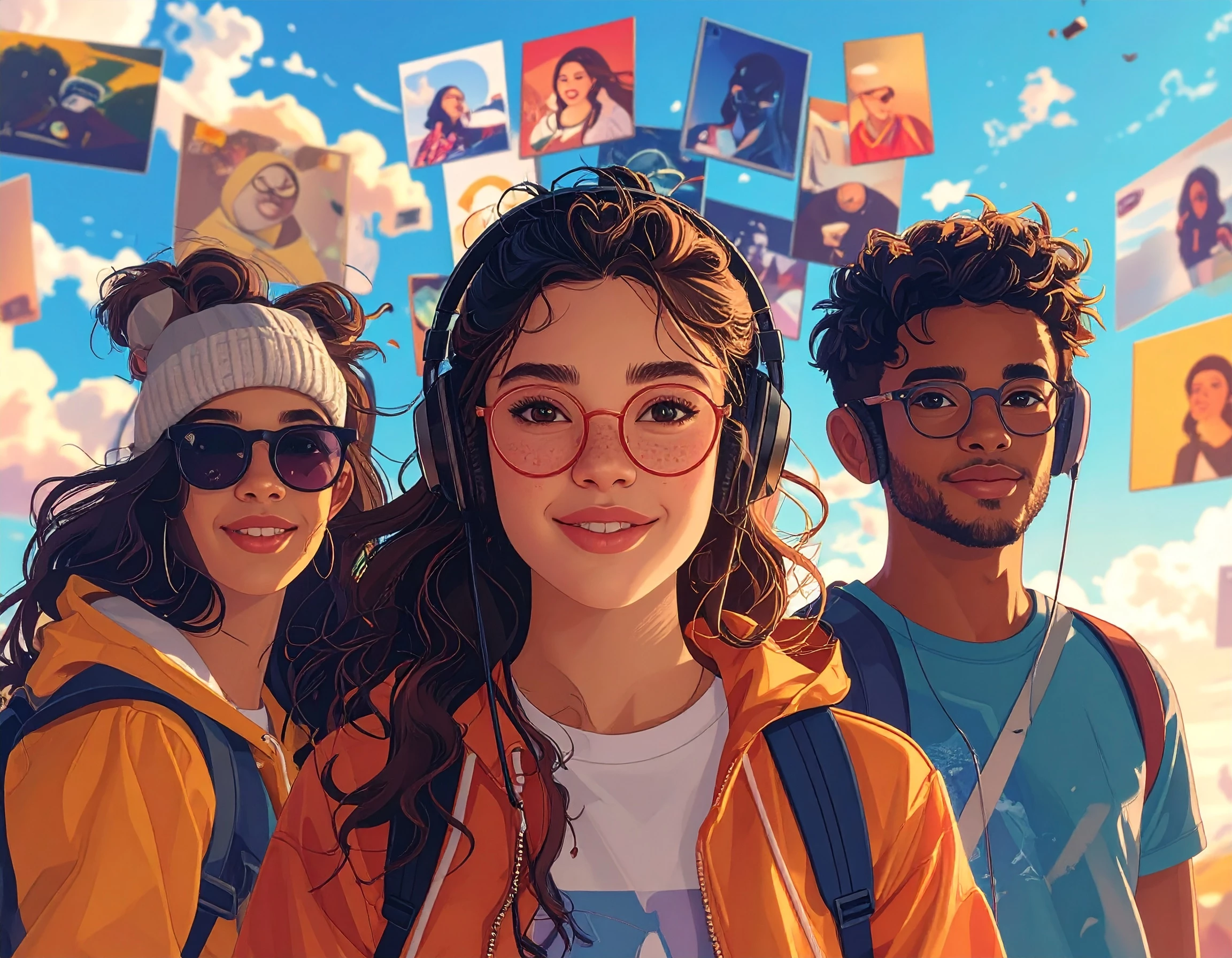
 

Image generated by Firefly. Prompt: Create an image of students that embodies student voice with podcasting, social media, photography, in the world around them. In the background include technology, photography, and other images. 

返信数 12

Participating Frequently
November 4, 2025

The chapters that excited me the most were 5 and 7. That is mainly because I was able to visualize how I could use them with students. I love the idea of the video poem and educational PSA. These chapters gave me so many different ideas on how to give students chances to share their voice. After reading through the chapters, I thought about the questions you posed in your post. I think that in the elementary setting it could be challenging to share their voices with the world not unless you would consider the school as the world. Not too long ago I acquired new podcasting equipment for the school in hopes of making a student podcast show where students discussed matters that concerned them. This could include things around the school and in their neighborhood. I believe that posting the podcast in our community newsletter or school website may be the best way to reach their world.


Here is my image using ChatGPT. This is my prompt: I want to create a realistc image that reflects students sharing their ideas with the world through any of the following mediums: animation, digital photography, social media, web design and podcasts in a classroom setting.


StevieFrank23作成者
Known Participant
November 4, 2025

You pose some very responsible questions around technology that I don't always hear so THANK YOU! I think that when it comes to sharing young student voices out in the real world I'm personally not comfortable if there are names associated with it. Where I start getting comfortable is around 5th grade and that's with parent and student consent.


When I was in the classroom, I had students create podcasts. Due to certain political climates, I decided against some public publishing even though the students really wanted to publish and parents gave me consent. I felt like I didn't want to put a target on the back of a family at such a young age over a podcast that ultimately was teaching kindness. That's a difficult decision for sure!


I love that you're thinking abouot getting it published in the school! Way to create that authentic experience!  How has the new equipment  been going?! Have you tried Adobe Podcasts????

Participating Frequently
October 31, 2025

Sorry I so late to the conversation. It has been a very busy week! As an art teacher I have done soem of the projects Tim outlined, in some form or another. I have taught analog and digital animation- flipbooks and stop motion animation. I have also taught kids to use iMovie. My 3rd graders use greenscreens to record video clips with puppets they hand sew and then edit them in iMovie. I  haven't done cyanotypes in ages- not really sure why?! I use my class set of ipads to teach photography to 4th grade. They are not ideal, though. I would love to try the light painting with students! I recently attended a session about it at my state Art Education Association convention and it was so much fun! But I need to invest in some actual cameras. 


I am at a private school, and the social media accounst are controlled by the marketing and communications team, so I whatever we would create for social media has to run through and be posted directly by them. This has actually been a point of frustration for me this year. I started a weekly drawing challenge this year with the entire school. I was hoping that all of the submissions could be posted weekly to social media, which the marketing and comms team agreed to, but they have not been consistently following through. We just finished week 8, and the kids' drawings were posted only 3 of the 8 weeks. I liked the ideas that Tim presented, but the reach of social media-based projects would be very small, mostly just in-house, for me. 

Shana Ryback @shanart31
Participant
October 30, 2025

Is school built for this type of work?


That’s unfortunately a loaded question. Can it be? Yes, absolutely. Is it usually? That depends.


When it comes to trying something new, many of the teachers I work with can be hesitant if it’s not already embedded into the curriculum. The core contents are often expected to follow a strict pacing guide that includes what to teach, when to teach, and how to teach it. This leaves little time for “out of the box” thinking.


However, when we get buy-in from teachers (or even better the curriculum writers) those little infusions can challenge students to truly apply what they have learned in meaningful and authentic ways.


I mentioned in the discussion for Chapters 1-4 how I worked with a Spanish teacher to help students record speaking videos using Animate with Audio. Those recordings are now part of their digital portfolios, showcasing how much the students have grown throughout the year not just for themselves, but their families as well.


More recently, we celebrated National Bullying Prevention Month. As part of the festivities, we challenged students to create a PSA on bullying prevention in Adobe Express to potentially be shared on social media. These videos were done voluntarily on their own time and were not part of any curriculum. We had 52 students participate with 14 finishing their video by the deadline. Their experience with Adobe Express varied, but every single one took a risk and tried something new.


When we give students authentic opportunities to connect with their world and interests, they will rise to the occasion to ensure their voice is heard.


Image generated by Firefly. Prompt: students, podcasting, social media, animating

Participating Frequently
October 30, 2025

I loved reading about social media with kids because they're so engrossed with it that bringing in any academic skills feels like instant buy in. The only problem is that without digital citizenship (which comes later in the book, I know) it's so hard to talk about designing or creating for social media. Even though I already did a digital citizenship unit with all of my students, I still need to do more when it comes to any topic tangential to creating for that space. But at the same time I love having students create PSAs that would (but don't actually!) go on TikTok. Incorporate that fun dance and teach kids something new/important. I even have industrial green screens for the kids to see what it feels like in studio!

Participant
October 30, 2025

If you haven't read it, yet, I highly recommend Developing Digital Detectives: Essential Lessons for Discerning Fact from Fiction in the "Fake News" Era (Jennifer LaGarde, Darren Hudgins). It does a great job of breaking down how we interact with social media into "lenses" and has had ready-to-use lessons for all grade levels.

Participant
October 28, 2025

I thoroughly enjoyed these chapters because I'm passionate about enabling students to explore their creativity beyond the typical class work. Digital media is crucial here—it provides an accessible creative outlet for all students, leveling the playing field beyond traditional art.

As a trainer and facilitator, I've noticed a primary constraint among classroom teachers: they're uncomfortable with the technology because they haven't had the time to master it. I stress that they don't need to know everything. Their value is in being the guide and providing a clear purpose for the project. Learning with the students is not a flaw, but an asset.

StevieFrank23作成者
Known Participant
October 29, 2025

Love that call out to being ok with not knowing everything before you dive into a tech tool with students. I think that gray area, especially for educators, is difficult to live in because we want to be able to answer all the questions that students have AND be able to plan for those questions ahead of time. How do you help support staff that's grappling with this?

Participating Frequently
October 27, 2025


I had actually jumped ahead to the digital photography chapter when I first got the book.  I was asked to teach digital photography this year.  It was known that I was a photographer since I provide free photography services for the play and dance program.  I knew that we were going to do slow shutter speed and so light painting would be fun.  We did two different days, one day in the classroom with tripods and the lights off.   It wasn't really dark enough.  Our second photo day we went to the stage in the auditorium behind the main curtain and had the backstage lights off.  That worked much better.  Here are a few of the picture that tne students capture:


I have my students use Adobe Lightroom Classic to edit their pictures.  I thought they came out amazing.   For light sources I found a bunch of LED lights and the hand held kids holiday flashlights to make some cool colors. 


I have my video students do a twist on animation by doing stop animation videos.  They have to take pictures of action figures or legos and create a 20 second stop-animation video.   It makes them think of taking pictures and moving the characters in small movements to get smooth enough motion to look "realistic" .


The one chapter that I don't really incorporate into my classes is the podcast.  I have students do video interviews, but I have not ventured into just audio recordings.   I do have the students use the animate from voice for some projects, but that is as far as I get.


Foramplifying voices, two years ago my video students enteed the New Jersey Educational Computing Cooperative (NJECC) Mini-Documentary contest with the theme of what do they think AI will be in 10 years.  The students won and were invited to the NJECC conference at Montclair State University and were honored up on stage.   Every year, my video students create public service announcement videos which we entering in the local teen arts competition.   Students love seeing their videos played at the competition.

Participant
October 28, 2025

Love the images!

Participant
October 27, 2025

I love these chapters as podcasting with my students is one of my favorite things to do. Every year we run a Whole-School Community Read (OSOB) event and we use podcasting as the halfway checkpoint. We have participated in The New York Times podcasting contest and we use podcasting to get the word out about school events. I love how students let their creativity shine through the scripts that they create. One highlight was when we used the book, I Must Betray You for our Whole-School Community Read. I posted the podcast on X and the author replied! She took the time to reply individually to each student comment and the students were so ecstatic! That type of author interaction has been invaluable to our program. 

Margaux DelGuidice-Calemmo, School Librarian Garden City High School,
StevieFrank23作成者
Known Participant
October 27, 2025

@Margaux_Calemmo4832 what a GREAT way to amplify student creativity and voice! I had no idea about the New York Times podcasting challenge. I'll add that to my list. Have you engaged with the NPR Student Podcast challenge? 


I love seeing authors engage with their young readers 😊

Participant
October 27, 2025

I have not, but now I need to add that one to my list! 🙂 The NYT podcasting contest was great. Some of our ENL students used the NYT podcasting contest to share how AI has helped them to acclimate to a new country and to a new language. 

Margaux DelGuidice-Calemmo, School Librarian Garden City High School,
Known Participant
October 25, 2025

I am all in from the first 3 chapters! I love the idea of collaborating beyond our school, district or even town. Before and during COVID I did a lot of author Zooms that allowed them to come into our schools without costing an arm and a leg. Kids got to experience the joy of meeting an author and asking them questions. I would love to partner with another school to have a national or even global impact so kids can learn about other cultures, schools, communities other than our own. 

Amanda Hunt @thenextgenlibrarian
StevieFrank23作成者
Known Participant
October 27, 2025

@thenextgenlib that's such a great idea I totally forgot about! Many authors are more than willing to hop on a Zoom to connect with their readers. I have to give a shout out to Sarah Weeks for not only Zooming with students, but providing her autograph on Avery labels so that students could place them into their books. 

Participating Frequently
October 24, 2025

There are two big projects were we let students voices be amplified by their work that come to mind immediately. : once with our gifted resource teacher, once with our ELL teacher.


1. Gifted teacher and I had two boys wh struggled in class but LOVED to talk about sports. They could tell you the stats, the odds, talk strategy. They couldn't write it well, but they could speak it. We worked together to get them podcasting about sports. It tied in their love of sports with some writing and public speaking. We brought in HS coaches and players, college players, retired professional athletes. It was AMAZING to watch them flourish in this setting. They grew into gentlemen that year and still reach back out to us about doing more. Our biggest contraint - time. They had core classes they couldn't miss, my planning as an elective teacher was during that time. Flexible scheduling was not a thing so we can find the little moments we could to make it all happen.


2. The ELL teacher and I did a school newspaper for our students. They got to the pick the topics, who they interviewed, evreything. Each month her students were included by letting them write about their home country (even in their native language if that was easier)! We did translate it for the published issues, but it gave them the pride they needed to show we cared about where you came from plus helped them work on their English. Our newspapers covered inside school trends and outside of school trends. It really let the light shine for their enjoyment of what they were working on, as we were just the adult facilitators in the room and the final editors. They ran the show and loved every minute of it!

Misswezi
Community Manager
Community Manager
October 29, 2025

Hi Becca,


I love this! @9631825 's question was agreat one to help us reflect on those moments of student voice amplification beyond the boarders of the classroom and the examples you provided show us how these projects can empower students by reducing limits to their expression; beit the content, the mode of communication, audience, time etc. It's encouraging how you saw which modalities were providing barriers to students and offered alternatives. For example, it can be so overwhelming and intimidating to be learning the dominant language as a new one and then having to speak in front of a large audience in it! Giving your students the opportunity to share their stories through the school newspaper was a way to give them a means to speak up, while also practicing language skills and gaining the confidence to keep going. Beautiful examples, thank you for sharing.

Martha Bongiorno
Community Manager
Community Manager
October 24, 2025

I love how you framed this, Stevie - “embed projects into the world our students live in” is such a powerful reminder.

When I was still in the library, we did a “Podcasts for Change” series where students chose issues they cared deeply about and shared their perspectives school-wide. What made it extra special was that they designed the podcast studio themselves: everything from setting up the sound panels to testing mics and creating the logo. It became this collaborative space where they not only learned the technical side of storytelling but also learned to trust their own voices.

Watching them go from “Who would want to hear from us?” to “We have something worth saying” was transformative. That shift from classroom work to authentic, community-minded storytelling is what makes this kind of learning so meaningful.


And yes, school isn’t always built for this kind of work, but that’s where creativity (and a little stubbornness 😉) come in.