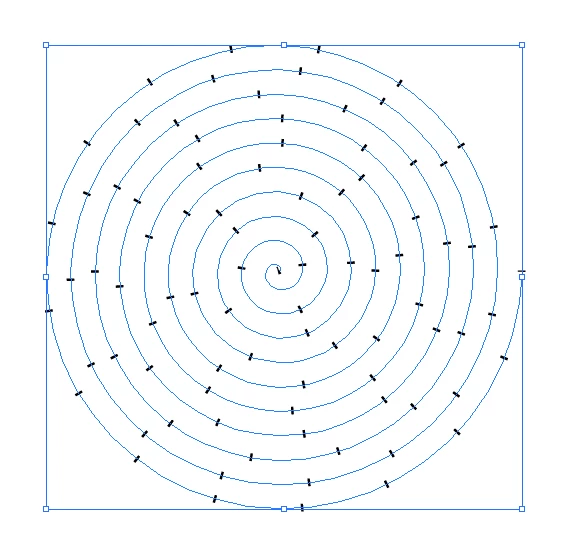
I can't begin to figure out an answer to the anchor point distribution question, but I would say that Ray Yorkshire is correct, that this relates directly to the Sunflower problem, which I haven't thought about since that discussion five years ago. I have had an insight today which I missed then, which is that the array only requires the one shape (in this case a rotated square) and three transform effects. This description is for transformation from the outside in.
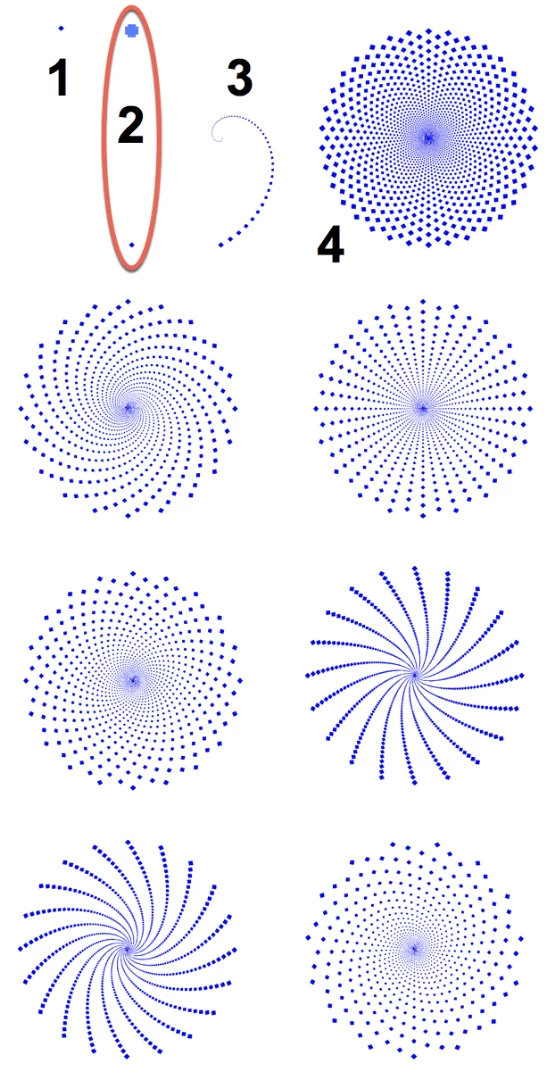
1. Draw the shape to be replicated in the array.
2. In the Appearance panel apply the transform effect Move to the Fill (or stroke) of the shape, not to the path, either vertical or horizontal, which value will define the diameter of the array.
3. In the Appearance panel apply to the Path a transform effect including scale values less than 100%, horizontal and vertical values equal; rotation angle, which determines which direction the array sweeps (my term); and the number of instances of the shape there will be along one inward sweep.
4. In the Appearance panel apply to the Path a transform effect of the number of sweeps (from 3) and their incremental rotation, presumably a factor of 360°.
All the variants below, and many more, are formed by changing the angle entered in step 3. Of course, changing any value in any transformation will alter appearance. Requirements of the task, math, and experimentation will determine values. I hope this is of some use to you; it's certainly fun to play with.
Peter

 AdChoices