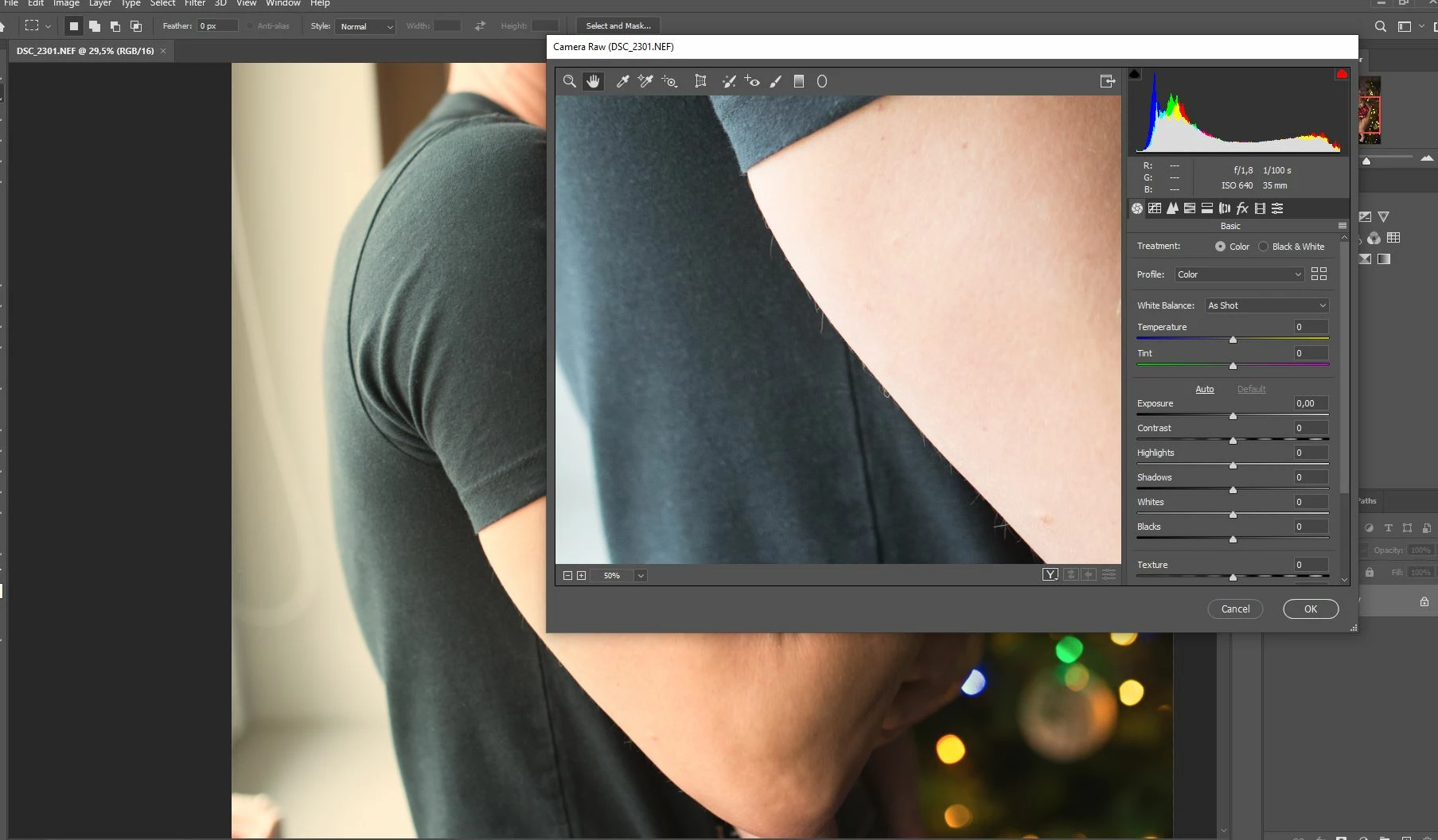
The yellow cast is caused by a defective monitor profile.
Setting the monitor profile to sRGB (use Adobe RGB if you have a wide gamut monitor) should fix the issue.
This may or may not be accurate enough, depending on the characteristics of your monitor, and your requirements.
For best accuracy, you should calibrate the monitor with a hardware calibrator, which will also create and install a custom monitor profile that describes your monitor accurately.
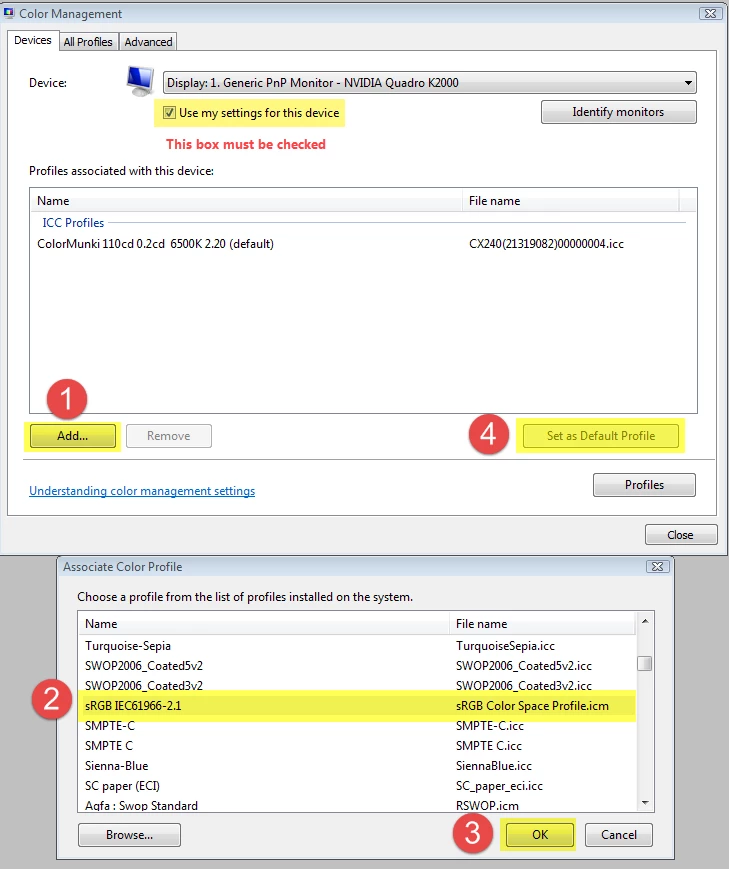
To set the monitor profile to sRGB:
Close Photoshop, then press the Windows key + R, type colorcpl in the box and press Enter.
Add the sRGB profile, and set it as default.
The monitor profile is an important part of the color management chain, and is (ideally) an accurate description of how your monitor displays colors.
When you open an image in a color managed application (like Photoshop), the colors of the image are converted from the document profile to the monitor profile, which ensures that the colors you see on screen are correct.
This happens behind the scenes, without any action on your part.
A sound monitor profile can become corrupted, but the most common cause of monitor profile problems on Windows 10 is that it will install low quality profiles from monitor manufacturers when doing updates. These profiles are surprisingly often defective out of the box. When a defective profile causes a color cast, you can often see this cast in the interface as well.
A defective monitor profile can affect some color managed applications, and not others. Note that ACR and PS are two different applications.
Native Windows applications (like Photos, Paint, Edge, File Explorer) are not color managed. They do not use the monitor profile, and send uncorrected colors to the screen.
The reason sRGB works is that standard gamut monitors have a color gamut that's roughly equivalent to sRGB.
And wide gamut monitors have a color gamut that's roughly equivalent to Adobe RGB.
Monitors can also have a color gamut anywhere between sRGB and Adobe RGB.

 AdChoices