


How Geezers Used to Edit
Hey there,
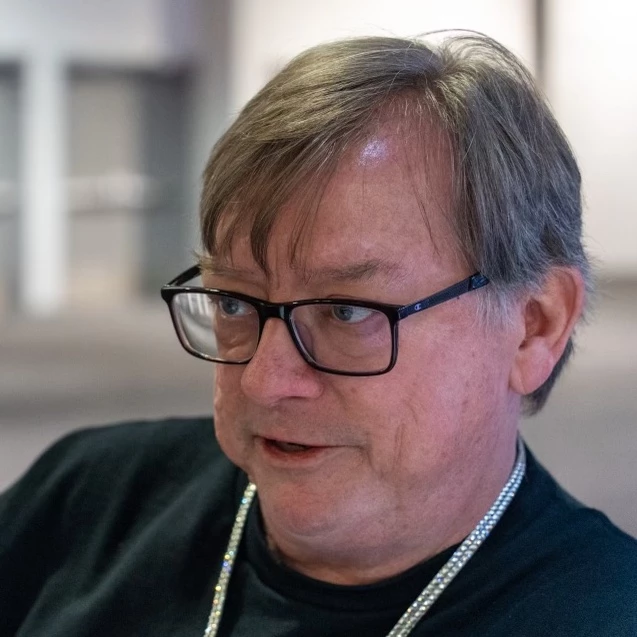
I'm in my mid-50s. I'm pretty old school in the editing game, as are some on this board. As I was writing about my past experience in a post, I decided to put my thoughts down here instead.
Moviola
I was talking to Walter Murch over lunch one day (great day!) and he remarked that he was only a handful of people in the entire world that still knows how to cut on Moviola.
As an aside, I just hosted a SF Cutters User Group meeting where Janice Engel was also talking about cutting celluloid on Moviola. She did this little "toe tap" kind of motion or dance. You could tell this was ingrained into her rote memory, as it is in Walter's.
I know that Walter is somewhat interested in doing a short film or doc about those that are still alive that still have some connection to cutting on Moviola. Sounds cool to me! I wonder how many folks reading this post ever cut on a Moviola or Steenbeck?
Super 8mm
The first film I got to cut was in junior college in the early 80s. Just a little flatbed and viewer, no sound. Quite fun, though, actually. We shot with these Super 8mm Bolex cameras. Very cool. Very punk rock.
Digital Disk Recorder
When I was working in college radio in the early 80s in the Silicon Valley, our station (KFJC) sometimes got technology companies that wanted our feedback around audio and video recording devices. It was around this time, after cutting countless radio spots by splicing together bits of analog tape by hand (splicing block-china marker-tape-reel to reel-old mixing board), I saw early digital audio disk recorders. One of which, drew a waveform on the station's Mac SE. I gasped upon viewing this, as I knew immediately what it was. This was the very dawn of DAW workstations.
It was only months earlier that I discovered a computer's power in content creation with word processing. This after writing a 100 page screenplay on an IBM Selectric Typewriter.
Linear Tape Editing
In college in the mid to late 80s, I got up on this tech and edting tape to tape offline with RM-440 controllers and edit decks. We also had a switcher, decks, which was basically setup for live to tape shows, etc. Early in my career, I edited some real estate video shows at this rather fly by night operation. It did give some good experience in linear tape editing, however, where I learned how to operate a Grass Valley Switcher, CMX, Chyron, and outboard gear: TBCs, Vectorscopes, Waveform Monitors, etc. Of course, nothing was ever connected together correctly and things broke down a lot. Like, the CMX gizmo never worked.
Early NLE
I haven't seen him in awhile, but I do know Michael Rubin, who is one of the few folks that cut on Coppola's "EditDroid" which, I believe, used video discs in order to provide random access to scenes, just like we see as "normal" NLE editing. At the time it completely blew some minds. I recommend you check out Rubin's book. It's pretty interesting considering the era. I was exposed to Avid Media Composer in the early to mid 90s at a production company where I freelanced quite a lot. I am not sure why I didn't "volunteer" my services to learn that tool. After all, I had actual editing experience in broadcast already. My time would come. First, I would throw out my back on a Robin Williams film and took a break to get some surgery and rest.
Modern NLE
I learned Avid Media Composer in around 1997. A little late to the game, actually, but I made it happen by going to tech school after being injured as a lighting tech, as I just mentioned. I also learned Media 100 at the time. Couple the M100 with After Effects, and you've got some horsepower there. I learned both at the time, along with "Photoshop for Video." I hung out at tech school way too long and got some great chops.
Ah! The mid 90s, when editors used to capture our clips from videotape. Formats like Digital Betacam, Betacam SP, and D2 formats forced editors to edit with low resolution proxies as a rule, not as an exception. It was even more cumbersome for us, as we had to "redigitize" media as uncompressed and perform an "Edit to Tape" which is 60x as harrowing as any "Error Compiling Movie" troubleshooting issue.
Even worse? We delivered an "EDL" to an online suite which conformed our shows based on an offline edit. I am thankful that even I didn't have too many of those harrowing jobs.
Then came the "DV Revolution" which was a triumverate of technologies: Apple Final Cut Pro, FireWire based camcorders, and the Internet (where NLE secrets could finally be shared).
As an early adopter of Apple FCP, I also was one of the very few people that had an offline/online workflow with a Targa 2000 Pro video card. This was like an early version of a BlackMagic Design or AJA capture card that could digitize. Some of my colleagues go even further back with NLE. I got a lot of weird reactions to my Targa 2K setup, though. After all, I had a Mac G3 Yosemite with freakin' built in FireWire ports!
I spent the latter half of my career editing on FCP, teaching FCP, writing books about it, starting the first FCP user group, and I even worked at Apple as an internal contractor on FCP a couple of times, etc.
It wasn't until I was hired by Adobe that I began edting with Premiere Pro. I have actually never launched FCP X. I still edit, and I do all my editing in Premiere Pro. Love it. No more capturing or editing back to tape! However, we have new challenges with computers that are not powerful enough for increasingly compressed media and mind blowing resolutions. More and more people are getting into video editing nowadays, and YouTube channels and viewership is ever expanding. What's next?
OK Boomer. You GenX types. You GenY and younger folks: Let's hear your "early tech" war stories. 😉
 AdChoices