


Frame.io now supports 3D assets—see how it fits into your workflows
Hey all—
Wanted to flag something that might be relevant depending on the kind of work you’re doing:
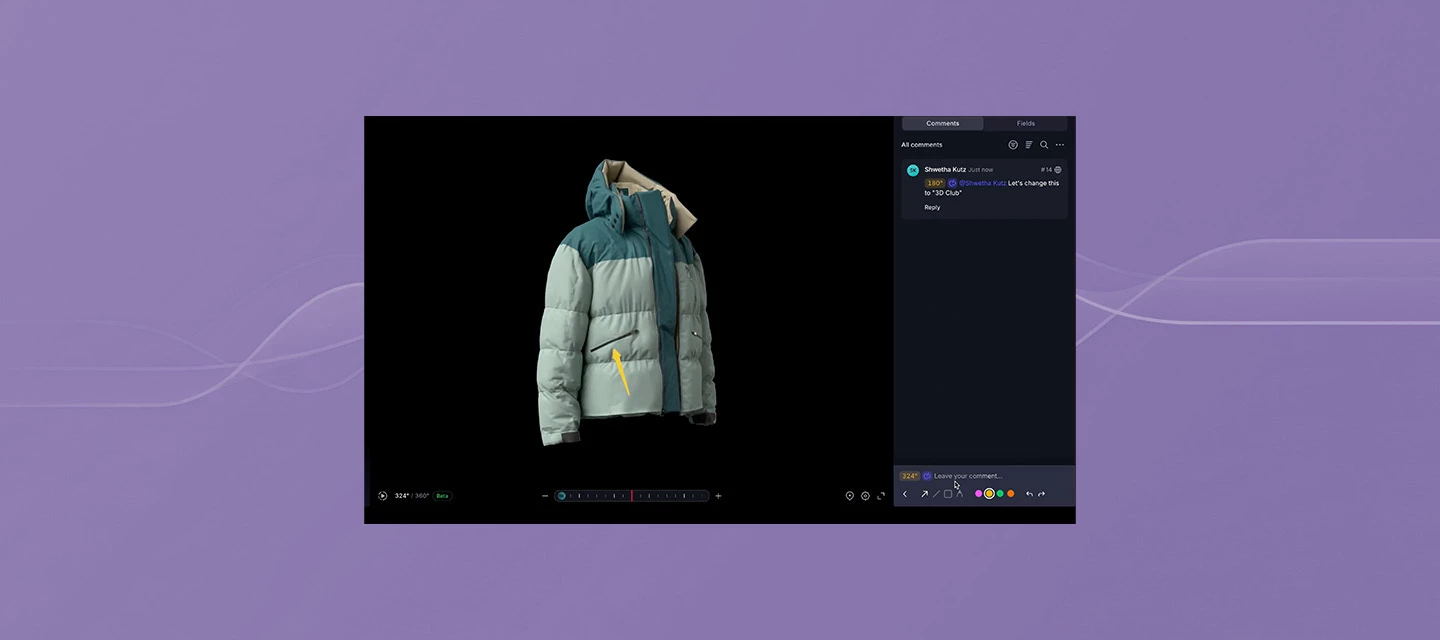
Frame.io now supports 3D assets directly in the player, which is a pretty meaningful expansion beyond video and design files.
At a high level, you can now upload, view, and collaborate on 3D models in the same way you would any other asset. (help.frame.io)
What this actually looks like in practice
Once a 3D file is uploaded, it behaves pretty similarly to other media in Frame.io—but with a dedicated viewer:
-
You can rotate and inspect the model interactively (click + drag, zoom, etc.)
-
There’s a turntable-style control for reviewing all angles
-
Comments and feedback stay tied directly to the asset
-
You can version, share, and manage it like anything else in your project (help.frame.io)
So instead of exporting stills or screen recordings for review, you’re working with the actual object.
Supported formats (and what that really means)
There’s pretty broad format support here, including things like:
-
USD / USDZ
-
GLB / GLTF
-
FBX, OBJ, STL, STEP, and others (help.frame.io)
A few formats are only partially supported, and some won’t render in the viewer at all—but can still be stored.
The practical takeaway:
If you want a smooth review experience, you’ll likely standardize around a couple of “safe” formats (USDZ / GLB feel like the obvious ones).
Metadata is actually useful here
This part stood out to me more than I expected.
3D assets now include metadata like:
-
Polygon count
-
Mesh count
-
Texture/material counts
-
Physical size (help.frame.io)
That starts to make Frame.io feel less like “just a viewer” and more like a lightweight way to track complexity and readiness—especially across teams.
Where this could matter
A few scenarios where this feels immediately useful:
-
Product / industrial design reviews (instead of static renders)
-
Motion + 3D pipelines where assets move between teams
-
Marketing / brand teams reviewing 3D deliverables without specialized tools
-
Client reviews where “seeing the object” matters more than a flat image
It also continues the broader shift of Frame.io becoming less video-specific and more of a central place for all creative assets. (Adobe Help Center)
A couple things I’m curious about
This is where I’d love to hear how others are thinking about it:
-
Does this replace external 3D review tools for you—or just complement them?
-
How important is format standardization in your current pipeline?
-
Are clients actually comfortable reviewing 3D interactively, or do they still prefer renders?
-
Where does this break down (large scenes, heavy textures, etc.)?
Feels like a small feature on the surface, but potentially a bigger shift if you’re working across 2D + 3D workflows.
Curious how (or if) people are planning to use this 👇


 AdChoices