


Inspiring
May 11, 2012

P: PDF import show edge artifacts on tiled PDF images (bug in PDF creation)

  • May 11, 2012
  • 262 replies
  • 4156 views

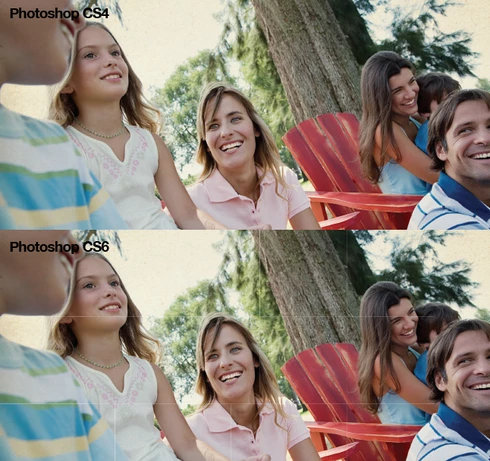
When importing a PDF with images, Photoshop CS6 adds faint outlines to the PDF image segments in the file. Prior versions of Photoshop render the PDF correctly. See the attached image for an example.
This topic has been closed for replies.

262 replies

Participating Frequently
February 18, 2013
You are right, the PDF creation process with flattening is really complicated, but since it is an every-day used function for years it shoud be well-engeneered. And it is so, every print shop I work with uses this kind of file and the process works. But the type how the PDF is produced is not the question here. The question is, if the new rendereing process in Photoshop can handle this type of PDF correctly, that means, in the way how the old rendering process has done it. When the new rendering process is not able to do this, then the renderer is working incorrect and has to be fixed. Newer PDF Versions could render in the new way and get all advantages from the new technology.
Inspiring
February 18, 2013
The flattened PDFs end up with tiled images - images that barely overlap at the seams. Those tiles cannot be rasterized without artifacts except at resolutions equal to or greater than the original image resolution. This works when you're going to print (usually), but fails when you want to rasterize that PDF at lower resolutions.

I've said many times here: Older versions made the artifacts visible less often, but they still occurred - they were just obvious at different resolutions (and subtly visible even at the same resolutions). Photoshop CS6 changed to a higher quality rasterization system that unfortunately made the flawed PDFs more obvious.

Go look for reports of lines in CS5 rasterization of PDF and AI artwork -- there were plenty (more than this topic). Again, I've spent considerable time investigating this, and can reproduce artifacts in older versions fairly easily (now that I know what to look for).

Yes, the tiling of images in flattened PDFs is fundamentally flawed. And our PDF experts really don't know why it is being done. Only the flattener team can answer that, or fix it.

The Photoshop and rasterization teams have not ignored this issue -- but the teams responsible for creating the bad PDFs are not exactly enthusiastic about examining the issue. We will continue to pursue this and try to get it fixed.
Inspiring
February 18, 2013
Hey guys,

please read the older posts, too.
There you can see, that the reason is the improved (and more precise) rendering process of Photoshop CS6.
When you say "go back to the old rasterizer" you loose all the benefits of the improved version in the same time.
Fact is (if Chris is right, of course), that the whole PDF creation process has to be questioned - especially when it comes to flattening.

@ Chris: I understand, that such a fundamental change like rethink the PDF creation process isn't easy.
But think about us (your customers): what do you think I should tell my customers? I think they don't want to hear anything of Adobe staff, which ignores my pleading.

Regards,

Markus Wolf
Participating Frequently
February 18, 2013
Nope! Opening the PDF in Illustrator works just fine. The File is tiled as it should and zooming in to 6400 % all tiles are matching together perfectly without any artifacts. When artifacts were part of the file, they MUST enlarge in the same way the picture enlarges. When the artifacts still stay i.e. one pixel wide when zooming in, the artifacts couldn't be part of the file.
Participating Frequently
February 18, 2013
3 minutes before you said nobody is being ignored - now youre telling us were being ignored. Great!
Participating Frequently
February 18, 2013
You keep steering around the main point: It has worked in every version before CS 6 and now it doesn't work anymore. You are claiming the error has existed before - but it seems noone on the Internet has ever written anything about this happening. Since CS6 there are hundreds of people having this problem. Heres your solution: Go back to the old rasterizer or give people the option to choose between the two.

And that you are already admitting that more or less everyone at Adobe is ignoring it is a slap in the face of paying customers.
Participating Frequently
February 18, 2013
What I don't understand is, that flattened PDFs cause that problem, regardless with which application they were produced. And this problem only occurs in CS6, the older versions are working fine. We know, that Acrobat ever displayed the artifacts but that was only a display error, the artifacts weren't part of the PDF file since further processing of that files (for printing i.e.) never was a problem. But In this case the artifacts are rendered into the picture the first time ever.
Inspiring
February 18, 2013
We don't have any updates at this time. We're trying to get the other teams involved, but they seem to be trying to ignore it (and us).
Inspiring
February 18, 2013
As explained above, the bug is not in Photoshop - it really is in the PDF data (open one of the files in AI and look at the tiled images).

Without the flattening, the image data isn't tiled, and isn't a problem.
The tiled images in the PDF are the problem.
Inspiring
February 18, 2013
No, it is a problem in the PDF files. Older versions still showed artifacts, and other applications can show artifacts. They just show artifacts at different sizes/resolutions depending on the exact rasterization strategy involved.

Also, I've spent weeks trying to work out the problems and brainstorm with our rasterization teams to come up with a solution on the rasterization side - and so far we can't. The files are designed to work at a specific resolution or higher (print) and cannot be rasterized correctly at lower resolutions.

Nobody is being ignored -- we are trying to get this fixed. Unfortunately we cannot fix it on the Photoshop side, this is a problem in the way the PDF files are flattened and the image data is created.