


Inspiring
May 11, 2012

P: PDF import show edge artifacts on tiled PDF images (bug in PDF creation)

  • May 11, 2012
  • 262 replies
  • 4156 views

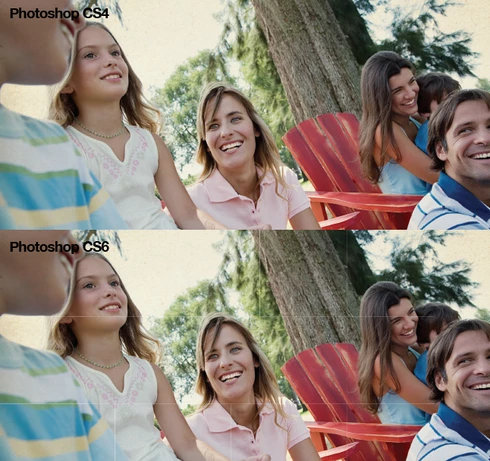
When importing a PDF with images, Photoshop CS6 adds faint outlines to the PDF image segments in the file. Prior versions of Photoshop render the PDF correctly. See the attached image for an example.
This topic has been closed for replies.

262 replies

Participant
May 13, 2014
Since months this case is a constant source of trouble for my work as a grafic designer. Meanwhile I can confirm that the main problem is on the side of pdf-generating (for example: InDesign-generated 60 square meters of digital print ended up in the trash). So, Chris, I have two questions.:

1. Can you give me a threat, where I can talk to somebody, who can do something about this problem? Where I can hopefully find ways of solving this problem for daily work? Where I can see, that Adobe is working on this problem?

2. If this problem, which is in the way PDF files are written, is a given thing (as it looks like after there is no change after months): Wouldn’t it be great to have a photoshop-rendering engine, which can handle this problem? This is, what a good software should do: give reasonable results under difficult conditions.

Thank you, Chris
Inspiring
May 13, 2014
Again, the error is in the software that created the PDF files, not in Photoshop.
And switching back to the old render settings means worse quality antialiasing, and just moves the artifacts around, but can't eliminate them.
Inspiring
May 13, 2014
a switch back to the old render engine is no option?
at least until the error has been fixed?
Participant
January 21, 2014


If I export am pdf-x3-file from InDesignCC and import this file into Photoshop CS5 the document just looks like it has to look. If I import this file to Photoshop CC the doc has a lot of defect lines in areas of transparencies. Does anybody has the same problem?
Participant
December 4, 2013
PDF 1.3 is based really near on PostScript level 3. Therin it is not possible to define x and y coordinates in pixels. They are always defined in pt.
Inspiring
December 4, 2013
No, it's not the dimension conversions - even if the layout is specified in pixels, it still fails. The problem is that the tiled images are done in such a way that they don't work with antialiasing or resampling, unless they're rasterized at exactly their original resolution (must match the pixel grid exactly).
Participant
December 4, 2013
Maybe there is a fault in translation of the dimensions. In PostScript there are only pt dimensions used and when they are translated into pixel dimensions through the rendering process there maybe are rounding differencies which show up in 1 pixel wide spaces. This could explain the fact, that the problem is resolution-dependent. And it could explain the fact, that no one feels responsible for this, because it is a matter of opinion, which part is named faulty. It's not a bug, it's a feature!?
Inspiring
December 4, 2013
We're still working on the details: is it really a fault in the PDF/X spec, or just the implementations? But so far we can't get the parties together to discuss it.
Participant
December 4, 2013
Chris, never thougt about, that the way how PDF 1.3 is built isn't a mistake in the application but rather an inadequateness in the specification of PDF 1.3 or PostScript? Do you really know every detail of the Adobe graphic model, especially the older versions? And did the guys, who built the new rendering process in Photoshop concern about it? And if there is an inadequateness in the specification of PDF, don't you agree, that a rendering process, built from the same company has to be able to deal with it?
Inspiring
December 4, 2013
Thanks. We are still trying to get this solved, but it has been incredibly difficult to get the PDF folks responsible to sit down and talk about their mistake in tiling images and how to solve it.