


Participating Frequently
Oct 30, 2026 3:06 AM UTC
Question

does Adobe's AI get confused by adjacent subjects

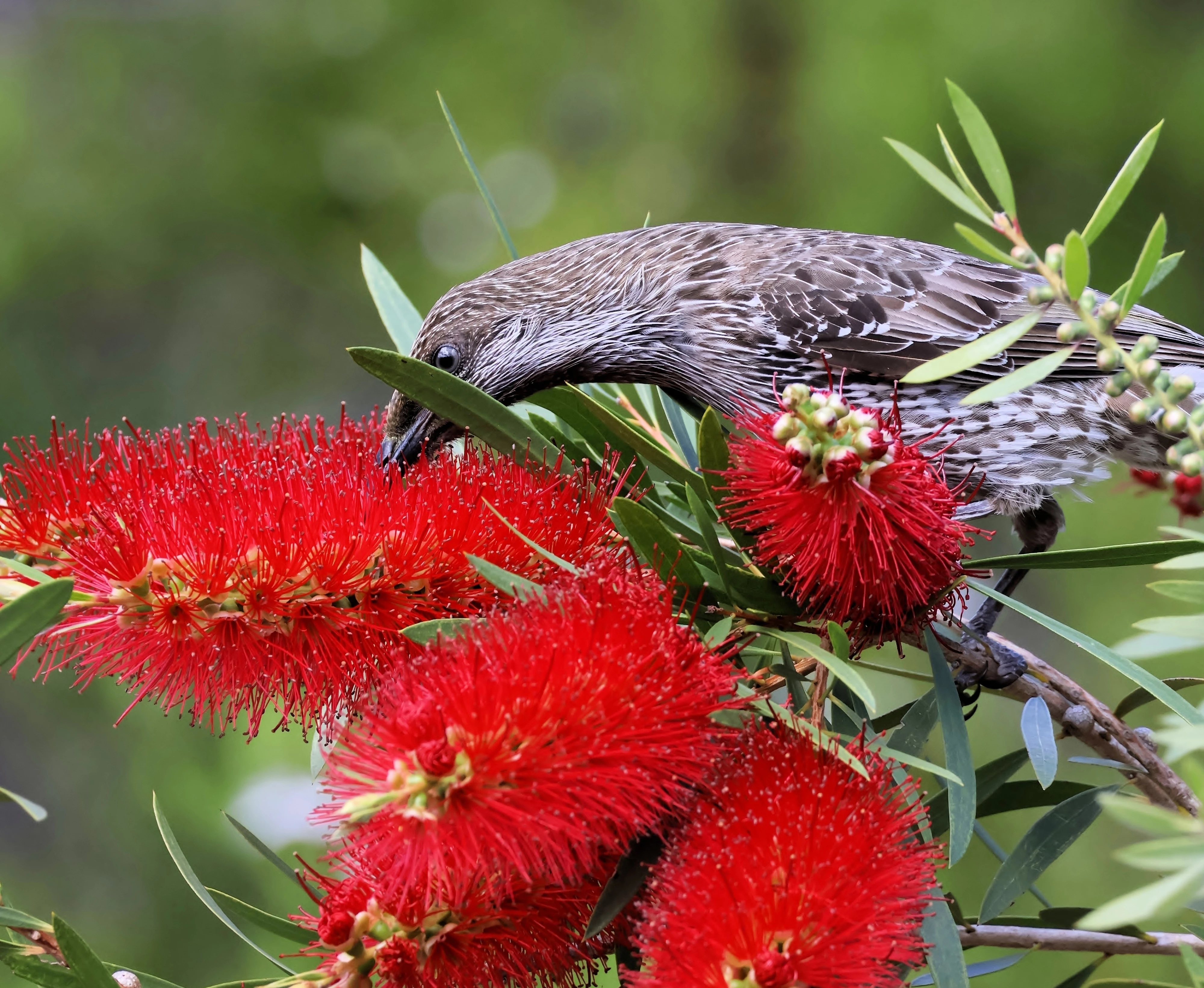
As I have over 2000 images accepted by Adobe I don’t get bothered much by rejections (unlike in the early days hehe). I just look at them, fix them, bin them or submit elsewhere. Lately though I have had two images rejected for quality reasons - they were instantly rejected so it would have been AI - and I suspect that the problem lies with AI rather than the image, either conflating/confusing what it’s looking at or appraising the wrong subject. (I am happy to be wrong, btw, as that would mean I have a chance of fixing things, whereas I have no chance against a dodgy AI). Both images are macro shots, one a bee on a flower, one a bird on a flower and described as such. The image here has been cropped from 4000 x 6000 down to 4000x3284 to fit under 5mg. The inflorescence pointing toward the camera is out of focus but it is a photo of the bird. Your constructive feedback, please.
 

    6 replies

    Participating Frequently
    Oct 30, 2026 11:00 PM UTC

    Hi Nancy - thank you for replying and providing links for comparison. Well I would be happy had I captured such lovely photos of a hummingbird hovering in front of a flower - unfortunately there are no wild ones in Australia. The bird in my image is a Little Wattlebird and there are only 83 images listed on Adobe - some of them are mine. You might compare the image in this thread with this one by another contributor: 

    File #:  550753633
    Little Wattlebird in the bottlebrush tree 

    I do have some understanding of reasons for rejection but in these days of AI those reasons can be complicated by the way AI ‘works’ when it examines an image as it can get confused in several ways, for example:

    Depth Disparity on a Identical Subject Type:

    False Focal Plane Confusion:

    I’m interested to hear if others have had images rejected that had two competing dominant elements - in my case the bird and the flower - where the subject element was in good focus.

    By the way, last night I had two images accepted less than 3 hours after submission. This convinces me that images go to AI first. AI does ‘yes’ or ‘no’ - the ‘maybe’ goes to a human (and sits in our ‘in review’ box waiting for a human to be available).

    Translate
    Nancy OShea
    Community Expert
    Community Expert
    Oct 30, 2026 9:42 PM UTC

    Assets may have multiple reasons for refusal but only one refusal reason is given per submission.

    The exam ends at problem #1. 


    Common reasons for refusal:

    https://helpx.adobe.com/stock/contributor/content-moderation/common-reasons-content-refusal.html


    This is what you’re competing with in Stock inventory:

    https://stock.adobe.com/search?k=hummingbird+at+flower

    https://stock.adobe.com/search?k=hummingbird

    https://stock.adobe.com/search?k=bottlebrush+flower

    https://stock.adobe.com/search?k=bottlebrush+flower+hummingbird


    Metadata is also considered in “similar content.” Try re-arranging your keywords.


    Hope that helps.


    Translate
    Nancy O'Shea— Product User & Community Expert
    Participating Frequently
    Oct 30, 2026 5:13 AM UTC

    I wouldn’t like to say anything with great confidence when it comes to AI systems but it seems possible that AI looked at the quality first and rejected - next time it got past the quality filter and hit a ‘similar content’ wall. This is possible because modern machine learning pipelines don't work like a single-lane toll road.

    Instead, multiple models run simultaneously or asynchronously in parallel the moment a file hits the server:

    1. The Technical/Quality Model evaluates sharpness, noise, and pixels.

    2. The Metadata/Content Vector Model runs embeddings on the image and text to check against the database for similarity.

    If both models fire at once, but the quality model runs slightly faster or has a hard veto threshold that trips milliseconds before the similarity score finishes calculating, the system logs the first failure it hits or prioritises the technical rejection.

    Anyhow, all jargon aside, I am pretty certain that it all goes to AI first - the influx of images is way too much for a reasonable, affordable human workforce to manage and it makes sense to me that the chaff is first separated from the wheat. Unfortunately some of the wheat can get lost in that process.

    Translate
    Participating Frequently
    Oct 30, 2026 3:58 AM UTC

    Thank you for your reply. I do appreciate your making the effort to provide feedback. I realise that parts of the flowers are out of focus but the subject is a bird. So I suppose the question then, is, is that enough to make the image commercially non-viable?

    Are you sure about the review process? That’s not my understanding, although I could be wrong, but I am of the belief that every major microstock platform (including Adobe Stock, Shutterstock, and Getty/iStock) processes incoming files through a tiered moderation pipeline:

    1. Automated Algorithmic Pre-Screening (Instant Gate): The moment you hit upload, automated computer vision models and metadata checkers scan the file. This layer instantly weeds out technical failures (corrupt files, extreme under/overexposure, obvious compression artifacts, incorrect dimensions) and copyright/IP violations, alongside checking for "similar content" saturation against their massive database. If a file trips these automated hard thresholds, it is rejected instantly without ever entering a human queue.

    2. The Human Review Queue: Files that pass the automated technical and similarity filters successfully are then queued for human moderators to evaluate subjective criteria—such as commercial viability, fine aesthetic details, proper composition, and nuanced focus tracking.

    So the files that sit waiting ages for review have passed the AI ‘gate’ and are waiting for human eyes. An ‘instant’ rejection (with a few hours) means that it didn’t get as far as a human. Be interested to hear from anyone that know the process with certainty.

    Translate
    daniellei4510
    Community Expert
    Community Expert
    Oct 30, 2026 4:13 AM UTC

    Point 1: Then explain why I can have an asset rejected for quality issues (rightfully so), and I correct the asset, submit again, and the asset is rejected for similar content? If AI is checking for similar content when first submitted, why make me waste my time correcting quality issues?

    Point 2: That makes sense, but as per my comment above, I believe this is done in reverse order.

    And no, no one, at least no one on this forum, knows anything of certainty about the review process as it stands today compared to two or so years ago. What I believe we do know is that assets that would have been accepted in the past are being reviewed with tighter requirements today, if only because Adobe can afford to do so, given that it has nearly 1 billion assets in their database.


    Translate
    Adobe Community Expert | I have miles to go before I sleep, but I'm all done on this end.
    daniellei4510
    Community Expert
    Community Expert
    Oct 30, 2026 3:20 AM UTC

    A possible issue is the lack of detail in the highly saturated red flowers and the areas that are out of focus. Yes, the bird appears sharp, but low depth of field may have been considered an issue. To the best of our knowledge, moderation by AI only steps in when assets are rejected for similar content. The speed at which an asset is reviewed is irrelevant, given that many contributors have had assets sitting in the queue for weeks or even months. That wouldn’t be the case if everything was being reviewed by AI. 


    Translate
    Adobe Community Expert | I have miles to go before I sleep, but I'm all done on this end.