Participant
October 23, 2021
Answered

Rejected

  • October 23, 2021
  • 5 replies
  • 1166 views

I would like to know the reason for Rejection for the attached 3  photos.

This topic has been closed for replies.
Correct answer Abambo

You know the reason for the rejection: technical issues, but you can't allocate the diverse possible faults to your pictures, I suppose.


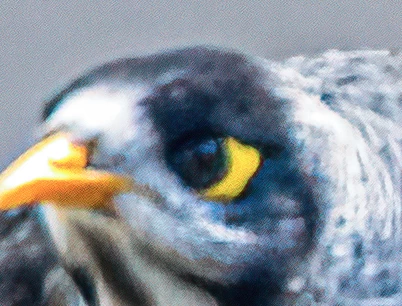
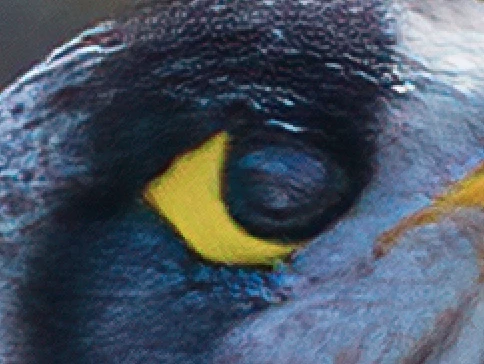
First: Portraits (including animals), need to be crisp sharp around the eye area. For most portraits, I shoot multiple pictures, just to get the eye right, as even the smallest movement or focussing error will bring the eye out of focus. I select those that with the initial processing don't need additional sharpening for the eyes. The smaller the DOF is, the most important this is.


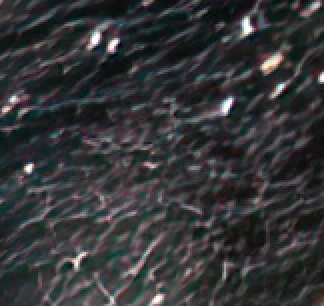
Second: If you go high in ISO, and I know that wildlife photographers are going high on ISO, pictures get more and more out of focus, probably because of two factors: the inability of the camera's autofocus system to work under low light conditions and the noise affecting by definition the apparent sharpness. So, you should be at the lowest possible ISO. This helps also to address the noise level (luminance and colour noise) as stock assets need to be “clinically” free of noise.


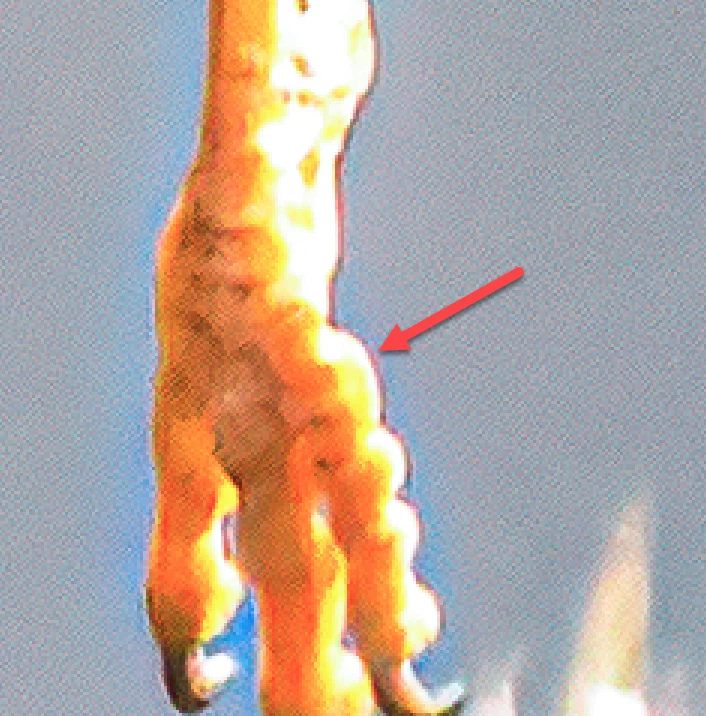
Third: You absolutely need to address optical errors that are present in all lenses, even the best. The easiest to address, but also the most forgotten, is chromatic aberration, especially if you are photographing trees and bushes against sunlight. Also, when you shoot against the sun, you have lens flare, which can add to the mood, but if it hits your main subject (swan), it's getting disturbing.


Chromatic aberration (arrow) and noise:
Colour noise:
Sharpness, noise:
 

I think you have the right camera and lens and a good eye. You still need to take pictures at lower ISO using all possible tricks like image stabilization and mono- and tripods. Stock is very demanding on image quality, and some of the best photographers would not be able to contribute their award-winning pictures here. So getting a refusal says very often nothing about your photography qualities. Examine your pictures at 100% and 200%, and try to limit the post-processing to the minimum.


If you are new to stock, you should consider these resources: https://helpx.adobe.com/stock/contributor/tutorials.html
Please read the contributor user manual for more information on Adobe stock contributions: https://helpx.adobe.com/stock/contributor/user-guide.html
See here for rejection reasons: https://helpx.adobe.com/stock/contributor/help/reasons-for-content-rejection.html
and especially quality and technical issues: https://helpx.adobe.com/stock/contributor/help/quality-and-technical-issues.html


5 replies

Ricky336
Community Expert
Community Expert
October 25, 2021

Hello, for a 4th opinion, yeah, focus. It's just not sharp enough! 😞

RALPH_L
Community Expert
Community Expert
October 25, 2021

Photo 1,2,3 focus

Photo2 underexposed

Abambo
Community Expert
AbamboCommunity ExpertCorrect answer
Community Expert
October 24, 2021

You know the reason for the rejection: technical issues, but you can't allocate the diverse possible faults to your pictures, I suppose.


First: Portraits (including animals), need to be crisp sharp around the eye area. For most portraits, I shoot multiple pictures, just to get the eye right, as even the smallest movement or focussing error will bring the eye out of focus. I select those that with the initial processing don't need additional sharpening for the eyes. The smaller the DOF is, the most important this is.


Second: If you go high in ISO, and I know that wildlife photographers are going high on ISO, pictures get more and more out of focus, probably because of two factors: the inability of the camera's autofocus system to work under low light conditions and the noise affecting by definition the apparent sharpness. So, you should be at the lowest possible ISO. This helps also to address the noise level (luminance and colour noise) as stock assets need to be “clinically” free of noise.


Third: You absolutely need to address optical errors that are present in all lenses, even the best. The easiest to address, but also the most forgotten, is chromatic aberration, especially if you are photographing trees and bushes against sunlight. Also, when you shoot against the sun, you have lens flare, which can add to the mood, but if it hits your main subject (swan), it's getting disturbing.


Chromatic aberration (arrow) and noise:

Colour noise:

Sharpness, noise:
 

I think you have the right camera and lens and a good eye. You still need to take pictures at lower ISO using all possible tricks like image stabilization and mono- and tripods. Stock is very demanding on image quality, and some of the best photographers would not be able to contribute their award-winning pictures here. So getting a refusal says very often nothing about your photography qualities. Examine your pictures at 100% and 200%, and try to limit the post-processing to the minimum.


If you are new to stock, you should consider these resources: https://helpx.adobe.com/stock/contributor/tutorials.html
Please read the contributor user manual for more information on Adobe stock contributions: https://helpx.adobe.com/stock/contributor/user-guide.html
See here for rejection reasons: https://helpx.adobe.com/stock/contributor/help/reasons-for-content-rejection.html
and especially quality and technical issues: https://helpx.adobe.com/stock/contributor/help/quality-and-technical-issues.html


ABAMBO | Hard- and Software Engineer | Photographer
Jill_C
Community Expert
Community Expert
October 23, 2021

The light and composition in each of these is quite lovely. Sadly, the birds are just not in sharp enough focus. The first image in particular looks quite over-processed, with halos around many edges which makes make it look more like an illustration than a photo.

Jill C., Forum Volunteer
George_F
Community Expert
Community Expert
October 23, 2021

These are awesome photos!  Unfortunately they aren't technically sound.  On examination around 100% they are noisy and the focus was a tad off.  


With a 600mm lens, and if all my assumptions and math is correct, then you had about 22 inches of DoF to work with.  These are challenging photos to take, but I suspect Adobe wants technically perfect photos regardless.


I hope this helps!


George F, Photographer & Forum Volunteer
