

Feature Focus: Text animator support for bidirectional text
Text Animation by Character and Word has been Left to Right (Roman)-centric since the beginning and consequently in the case of Right to Left languages such as Hebrew and Arabic it was 100% wrong (unless your content was a single character or single word!)
Essentially the code assumed that the order the glyphs appear on the screen is the same as the character order but that is only true for Left to Right. For a line of Hebrew text, for example, the glyph on the left is actually the last character and the glyph on the right is the first character.
Consider with the following Text Animation settings:
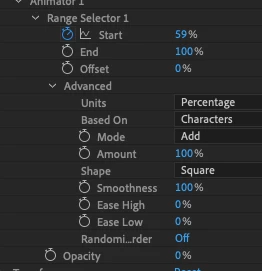
With Roman text it looks correct as we scrub about half way - first character in the Story is the "R":
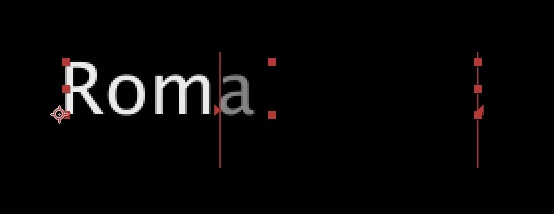
But not so good with Hebrew text where the first character in the Story is on the far right. See how the left glyphs have been exposed before the right most ones? Bad.
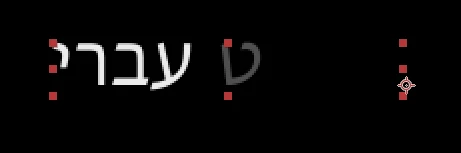
With Beta build 22.3.0 (89) this has now been addressed and After Effects is properly iterating the Story in true character order wherever the glyphs end up. See how the right most glyph is exposed before the left most glyph? Ah, that is better:
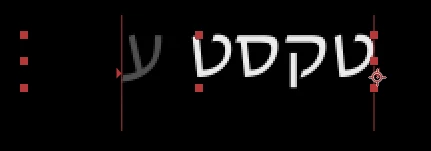
Now, a note about that though - this can lead to some surprising visual jumps in the case of mixed Roman and Hebrew text in the same line. In this example the text (in story order) is "Hebrew Text Roman" but when it gets composed it looks like this:

We have scrubbed though all of the Hebrew text and are now on the first character of "Roman" and so it is exposed - but there is this visual gap!
Remember Text Animation is defined here in character order so wherever the composer puts the glyphs of those characters is where we are going to animate them without regard to any other considerations.
A number of people have found this surprising when they first see it because I think we expect animation to be in a visual order, with neighboring glyphs, but of course that is not how the feature is defined although it does behave that way when the writing direction is the same in a paragraph.
While investigating this I realized that we are also failing, but in a different way, with languages which use what are called combining characters, such as Hindi. There we have two more characters which are actually composed on top of each other thus appearing as they were a single character.
So what you might ask? Internally we are assuming that every character in the Story is an animatable element which is causing us to effectively split these characters which should be working together:
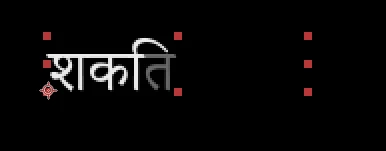
The glyph which is just being exposed is actually supposed to be associated with the beautiful swooping glyph just to the left of it - they should be animated together as one unit instead of two.
So we have more to do here in this area which is where we could really use the help of our diverse community to look for cases where our Text Animation handling of particular language issues is flawed and point it out to us - help us help your own workflow.
Finally, a big shout out to forum member Roei Tzoref who filed the triggering bug and patiently explained to me the subtlety of right to left composition when I reach out to him. It all seems so obvious now but it was not when I started to look at it!
Douglas Waterfall
After Effect Engineering


 AdChoices