" it's meant to be the lowercase 'd'. "
No. Ascent is the designed distance from the baseline to the top of any potential glyphs (accents, etc). Yes, in the old days, ascents were based on the tallest ascender (and any accented glyphs were placed above this line). Nowadays, the ascent is much larger to enclose these glyphs, and have become even bigger as fonts are getting more glyph support; they increase the ascent to accomoodate the new glyphs above the ascenders. Open source fonts are especially bad at this as they keep "tinkering" with the offsets, so the, say, Open Sans you used 2 years ago can be quite different than the one you can download today. This is troublesome for InDesign documents composed based on Ascent if they are opened by somoen using differently designed fonts.
Baselines are also all over the map due to the design of the font, so yes, in the traditional EM square sense, a font with larger descenders will have a higher baseline relative to a font with shorter descenders.
> Nowadays, the ascent is much larger to enclose these glyphs, and have become even bigger as fonts are getting more glyph support; they increase the ascent to accomoodate the new glyphs above the ascenders.
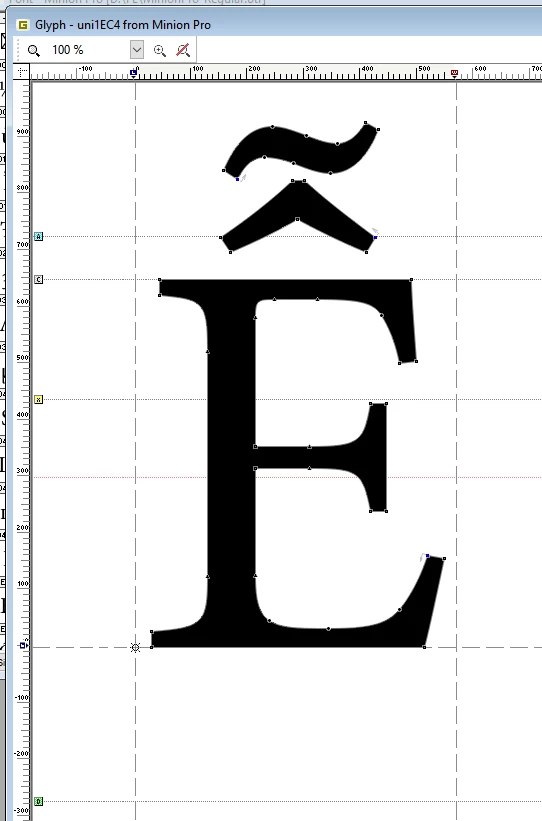
Not exactly. In most fonts (that I have seen) some diacritics, especially complex ones, are above the font's ascender value:



 AdChoices