Participant
August 11, 2026
Answered

Lightroom Classic Chinese UI is garbled, but Photoshop works perfectly — Windows 11

  • August 11, 2026
  • 3 replies
  • 52 views

 Hi everyone,

First, ChatGPT helped writing this post since i have been talking with it about this question yesterday the whole day. now the question below:

I'm having a really weird problem with Lightroom Classic and I'm running out of things to try.

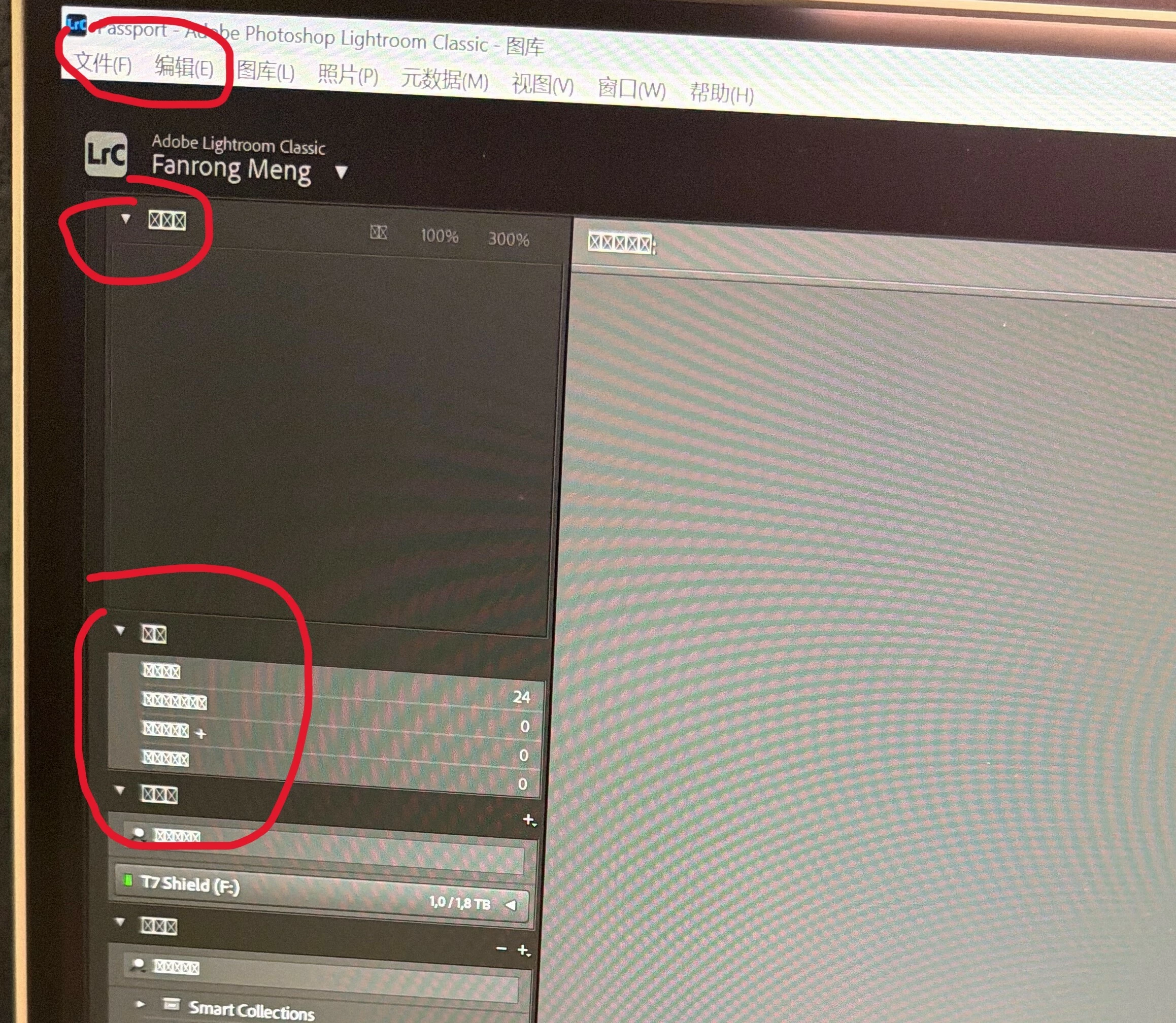
When I switch Lightroom Classic to Chinese, most of the UI becomes garbled/unreadable. The really strange part is that the top menu bar displays Chinese normally, while most of the rest of the Lightroom interface is messed up.

Even stranger: Photoshop on the same PC displays Chinese perfectly.

So I'm starting to think this might be something specific to Lightroom's UI/text rendering rather than a general Windows Chinese-font problem.

System

  • Windows 11
  • Build: 10.0.26200.8875
  • Lightroom Classic 15.5
  • Windows display language: English (United States)
  • Display scaling: 150%
  • Lightroom scaling: Auto
  • Chinese fonts: Microsoft YaHei installed

Things I've already tried

I've gone pretty far down the troubleshooting rabbit hole:

  • Uninstalled and reinstalled Lightroom Classic
  • Reinstalled it through Adobe Creative Cloud with Chinese selected
  • Tried another version of Lightroom — same problem
  • Reset Lightroom preferences
  • Tested with another Windows user account — same problem
  • Switched between my local Windows account and my Microsoft/Office account — same problem
  • Restarted Windows
  • Checked intl.cpl
  • System locale is English (United States)
  • "Beta: Use Unicode UTF-8 for worldwide language support" is OFF
  • Ran sfc /scannow
    • No integrity violations found
  • Checked the Windows font files and registry
  • Confirmed that msyh.ttc, msyhbd.ttc and msyhl.ttc are present in C:\Windows\Fonts
  • Confirmed that Microsoft YaHei is correctly registered in the Windows font registry
  • Checked FontLink\SystemLink
  • Confirmed C:\Windows\System32\fontsub.dll exists

I also noticed something interesting: some Chinese text in Lightroom's Preferences can display correctly, while other parts of the UI are still garbled.

At this point I'm pretty sure this isn't simply "Chinese fonts aren't installed."

What I'm wondering

Could this be related to Lightroom Classic's UI rendering rather than the Windows font system?

I'm wondering about things like:

  • DirectWrite / Windows text rendering
  • Lightroom's UI framework
  • Adobe CEF/UXP components
  • DPI scaling (150%)
  • Lightroom-specific font fallback
  • An incompatibility with this particular Windows 11 build

Has anyone seen anything like this with Lightroom Classic?

What would you check next?

I'm happy to provide screenshots or any other diagnostic information that might help.

Thanks!
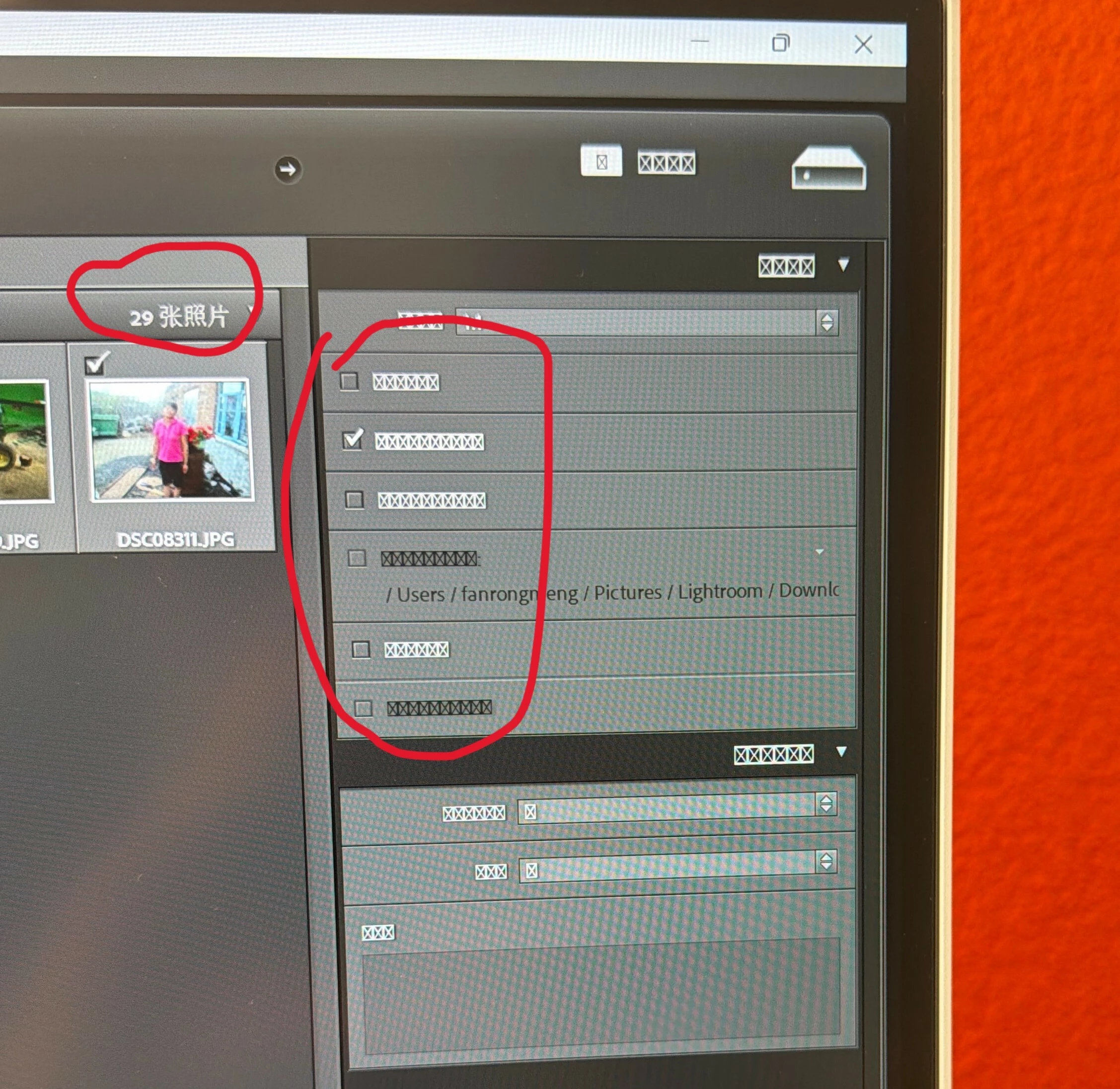
 

part of Chinese are shown, and most is garbled
part of Chinese are shown in menu tab, and most is garbled


    Correct answer fr_meng92

    Update on solution, from Gemini, solved. Chinese below 中文在下方
     

    Here is a summary of your issue and the solution, formatted professionally and concisely for the Adobe Community forums.


    English Version

    Title: [Solved] Lightroom Classic Chinese UI Showing "Tofu" Boxes (Garbled Text) on English Windows 11


    Problem Description:

    When switching Lightroom Classic’s interface to Chinese on an English (US) Windows 11 system, the majority of the UI displays "tofu" boxes (missing glyphs/squares).


    • The top Windows native menu bar renders Chinese correctly.

    • Photoshop renders Chinese perfectly on the same system.

    • The issue persists after reinstalling, resetting preferences, and checking font files.

    Root Cause:

    The issue stems from a conflict within the Windows Registry regarding Font Fallback (FontLink) priorities. Lightroom Classic’s custom UI framework relies on DirectWrite and defaults to Segoe UI on English systems. If the registry prioritizes tahoma over Microsoft YaHei for fallback mapping, the rendering engine fails to display Chinese characters, resulting in blank squares.


    Solution:

    The fix requires adjusting the registry font fallback order and clearing the system font cache.


    Step 1: Adjust FontLink Registry Priority


    • Press Win + R, type regedit, and press Enter.

    • Navigate to: HKEY_LOCAL_MACHINE\SOFTWARE\Microsoft\Windows NT\CurrentVersion\FontLink\SystemLink

    • In the right pane, double-click the Segoe UI entry.

    • Move the Microsoft YaHei entries to the very top of the value data list, placing them directly above tahoma.ttf,tahoma. The top of the list should look exactly like this:

       
      • MSYH.TTC,Microsoft YaHei UI,128,96

      • MSYH.TTC,Microsoft YaHei

      • tahoma.ttf,tahoma

    • Click OK and save.

    Step 2: Clear Windows Font Cache


    • Open the Start menu, search for services.msc, and hit Enter.

    • Locate the Windows Font Cache Service, right-click it, and select Stop.

    • Open File Explorer and navigate to: C:\Windows\ServiceProfiles\LocalService\AppData\Local\FontCache

    • Delete all files and folders in this directory. (If a prompt says a file is in use, check "Do this for all current items" and click Skip).

    Step 3: Restart System


    • Restart your computer to force Windows to rebuild the font cache with the corrected fallback priorities. You can safely keep your Windows System Locale set to "English (United States)".

    中文版本 (Chinese Version)

    标题:[已解决] 英文版 Windows 11 下 Lightroom Classic 中文界面出现“豆腐块”乱码


    问题描述:

    在系统语言为英语(美国)的 Windows 11 电脑上,将 Lightroom Classic 的界面语言切换为中文时,绝大部分 UI 会显示为“豆腐块”(方块乱码)。


    • 顶部 Windows 原生菜单栏可以正常显示中文。

    • 同一台电脑上的 Photoshop 中文显示完全正常。

    • 重装软件、重置首选项以及确认中文字体文件完整均无法解决该问题。

    根本原因:

    该问题源于 Windows 注册表中的字体回退(FontLink)优先级设置错误。Lightroom Classic 的自定义 UI 框架依赖 DirectWrite,在英文系统中默认使用 Segoe UI 字体。如果注册表中 tahoma 的回退优先级高于微软雅黑(Microsoft YaHei),渲染引擎在遇到中文字符时将映射失败,从而输出空白方块。


    解决方案:

    解决此问题需要调整注册表的字体回退顺序,并清理系统字体缓存。


    步骤 1:调整注册表 FontLink 优先级


    • Win + R 键,输入 regedit 并回车。

    • 导航至以下路径:HKEY_LOCAL_MACHINE\SOFTWARE\Microsoft\Windows NT\CurrentVersion\FontLink\SystemLink

    • 在右侧窗格中,双击 Segoe UI 项。

    • 将与微软雅黑相关的两行数据移动到数值数据列表的最顶部,必须置于 tahoma.ttf,tahoma 之上。调整后的顶部顺序应严格如下:

       
      • MSYH.TTC,Microsoft YaHei UI,128,96

      • MSYH.TTC,Microsoft YaHei

      • tahoma.ttf,tahoma

    • 点击确定保存。

    步骤 2:清除 Windows 字体缓存


    • 打开开始菜单,搜索 services.msc 并回车。

    • 找到 Windows Font Cache Service 服务,右键点击并选择停止

    • 打开文件资源管理器,导航至:C:\Windows\ServiceProfiles\LocalService\AppData\Local\FontCache

    • 删除该目录下的所有文件和文件夹。(如果提示文件正在使用,勾选“为所有当前项目执行此操作”,然后点击跳过)。

    步骤 3:重启系统


    • 重启计算机以强制 Windows 应用新的注册表优先级并重建字体缓存。您可以放心地将 Windows 系统区域(System Locale)保持为“英语(美国)”。

    3 replies

    fr_meng92AuthorCorrect answer
    Participant
    August 17, 2026

    Update on solution, from Gemini, solved. Chinese below 中文在下方
     

    Here is a summary of your issue and the solution, formatted professionally and concisely for the Adobe Community forums.


    English Version

    Title: [Solved] Lightroom Classic Chinese UI Showing "Tofu" Boxes (Garbled Text) on English Windows 11


    Problem Description:

    When switching Lightroom Classic’s interface to Chinese on an English (US) Windows 11 system, the majority of the UI displays "tofu" boxes (missing glyphs/squares).


    • The top Windows native menu bar renders Chinese correctly.

    • Photoshop renders Chinese perfectly on the same system.

    • The issue persists after reinstalling, resetting preferences, and checking font files.

    Root Cause:

    The issue stems from a conflict within the Windows Registry regarding Font Fallback (FontLink) priorities. Lightroom Classic’s custom UI framework relies on DirectWrite and defaults to Segoe UI on English systems. If the registry prioritizes tahoma over Microsoft YaHei for fallback mapping, the rendering engine fails to display Chinese characters, resulting in blank squares.


    Solution:

    The fix requires adjusting the registry font fallback order and clearing the system font cache.


    Step 1: Adjust FontLink Registry Priority


    • Press Win + R, type regedit, and press Enter.

    • Navigate to: HKEY_LOCAL_MACHINE\SOFTWARE\Microsoft\Windows NT\CurrentVersion\FontLink\SystemLink

    • In the right pane, double-click the Segoe UI entry.

    • Move the Microsoft YaHei entries to the very top of the value data list, placing them directly above tahoma.ttf,tahoma. The top of the list should look exactly like this:

       
      • MSYH.TTC,Microsoft YaHei UI,128,96

      • MSYH.TTC,Microsoft YaHei

      • tahoma.ttf,tahoma

    • Click OK and save.

    Step 2: Clear Windows Font Cache


    • Open the Start menu, search for services.msc, and hit Enter.

    • Locate the Windows Font Cache Service, right-click it, and select Stop.

    • Open File Explorer and navigate to: C:\Windows\ServiceProfiles\LocalService\AppData\Local\FontCache

    • Delete all files and folders in this directory. (If a prompt says a file is in use, check "Do this for all current items" and click Skip).

    Step 3: Restart System


    • Restart your computer to force Windows to rebuild the font cache with the corrected fallback priorities. You can safely keep your Windows System Locale set to "English (United States)".

    中文版本 (Chinese Version)

    标题:[已解决] 英文版 Windows 11 下 Lightroom Classic 中文界面出现“豆腐块”乱码


    问题描述:

    在系统语言为英语(美国)的 Windows 11 电脑上,将 Lightroom Classic 的界面语言切换为中文时,绝大部分 UI 会显示为“豆腐块”(方块乱码)。


    • 顶部 Windows 原生菜单栏可以正常显示中文。

    • 同一台电脑上的 Photoshop 中文显示完全正常。

    • 重装软件、重置首选项以及确认中文字体文件完整均无法解决该问题。

    根本原因:

    该问题源于 Windows 注册表中的字体回退(FontLink)优先级设置错误。Lightroom Classic 的自定义 UI 框架依赖 DirectWrite,在英文系统中默认使用 Segoe UI 字体。如果注册表中 tahoma 的回退优先级高于微软雅黑(Microsoft YaHei),渲染引擎在遇到中文字符时将映射失败,从而输出空白方块。


    解决方案:

    解决此问题需要调整注册表的字体回退顺序,并清理系统字体缓存。


    步骤 1:调整注册表 FontLink 优先级


    • Win + R 键,输入 regedit 并回车。

    • 导航至以下路径:HKEY_LOCAL_MACHINE\SOFTWARE\Microsoft\Windows NT\CurrentVersion\FontLink\SystemLink

    • 在右侧窗格中,双击 Segoe UI 项。

    • 将与微软雅黑相关的两行数据移动到数值数据列表的最顶部,必须置于 tahoma.ttf,tahoma 之上。调整后的顶部顺序应严格如下:

       
      • MSYH.TTC,Microsoft YaHei UI,128,96

      • MSYH.TTC,Microsoft YaHei

      • tahoma.ttf,tahoma

    • 点击确定保存。

    步骤 2:清除 Windows 字体缓存


    • 打开开始菜单,搜索 services.msc 并回车。

    • 找到 Windows Font Cache Service 服务,右键点击并选择停止

    • 打开文件资源管理器,导航至:C:\Windows\ServiceProfiles\LocalService\AppData\Local\FontCache

    • 删除该目录下的所有文件和文件夹。(如果提示文件正在使用,勾选“为所有当前项目执行此操作”,然后点击跳过)。

    步骤 3:重启系统


    • 重启计算机以强制 Windows 应用新的注册表优先级并重建字体缓存。您可以放心地将 Windows 系统区域(System Locale)保持为“英语(美国)”。

    Sameer K
    Community Manager
    Community Manager
    August 11, 2026

    Hey, @Fanrong334425425ey6. Welcome to the Lightroom Community. I'll help you figure this out.

    I couldn't recreate this with both the supported Chinese locales.


    Try these steps:

    1 - In Creative Cloud > Uninstall Lightroom Classic

    2 - Go to Preferences > Language > Set the default language to English.

    3 - Restart the machine.

    4 - Follow the Manual method to remove exisiting preferences for Lightroom Classic: https://adobe.ly/4xwws01

    5 - Once the preferences are removed, install Lightroom Classic again.

    6 - After installing Lightroom Classic, launch it once and exit.

    7 - Change the preferred language in Creative Cloud, and install the language pack again for Lightroom Classic.

    8 - Open Lightroom Classic > Preferences > General > change the language & restart Lightroom Classic.


    Let me know how it goes.
    Thanks!
    Sameer K
    (Type '@' and type my name to mention me when you reply)

    fr_meng92Author
    Participant
    August 11, 2026

    Dear Sameer, thanks for your reply. I tried as you described, strictly. Unfortunately, the problem remains. In the green part, the Chinese are shown normally, but in the red squares, there is garbled text again. In the cloud setting, there is also an option default installed language, should it be English or Chinese, i actually tried both, but it remained garbled text.