Although I’ve seen problems with Modern User Interface and have reported them to Adobe, overall Modern User Interface shows signs of being a step in the right direction that just hasn’t been completely debugged yet. And I don’t mean just in the cosmetic sense, but in a functional sense. For example…
For many years I’ve been frustrated that Photoshop is one of the few Mac applications that doesn’t fully support the macOS option Keyboard Navigation (in System Settings > Keyboard). Sometimes it’s faster for me to Tab through a dialog box to select and toggle options, and for some with disabilities this feature is essential. This works fine in Windows Photoshop, but not in many areas of macOS Photoshop…until recently.
Photoshop dialog boxes upgraded to Modern User Interface respond to the Keyboard Navigation option more readily than older dialog boxes. Whatever the technical reason (moving to more standard, less proprietary dialog box widgets maybe?), this is evidence of a good thing, functionally speaking.
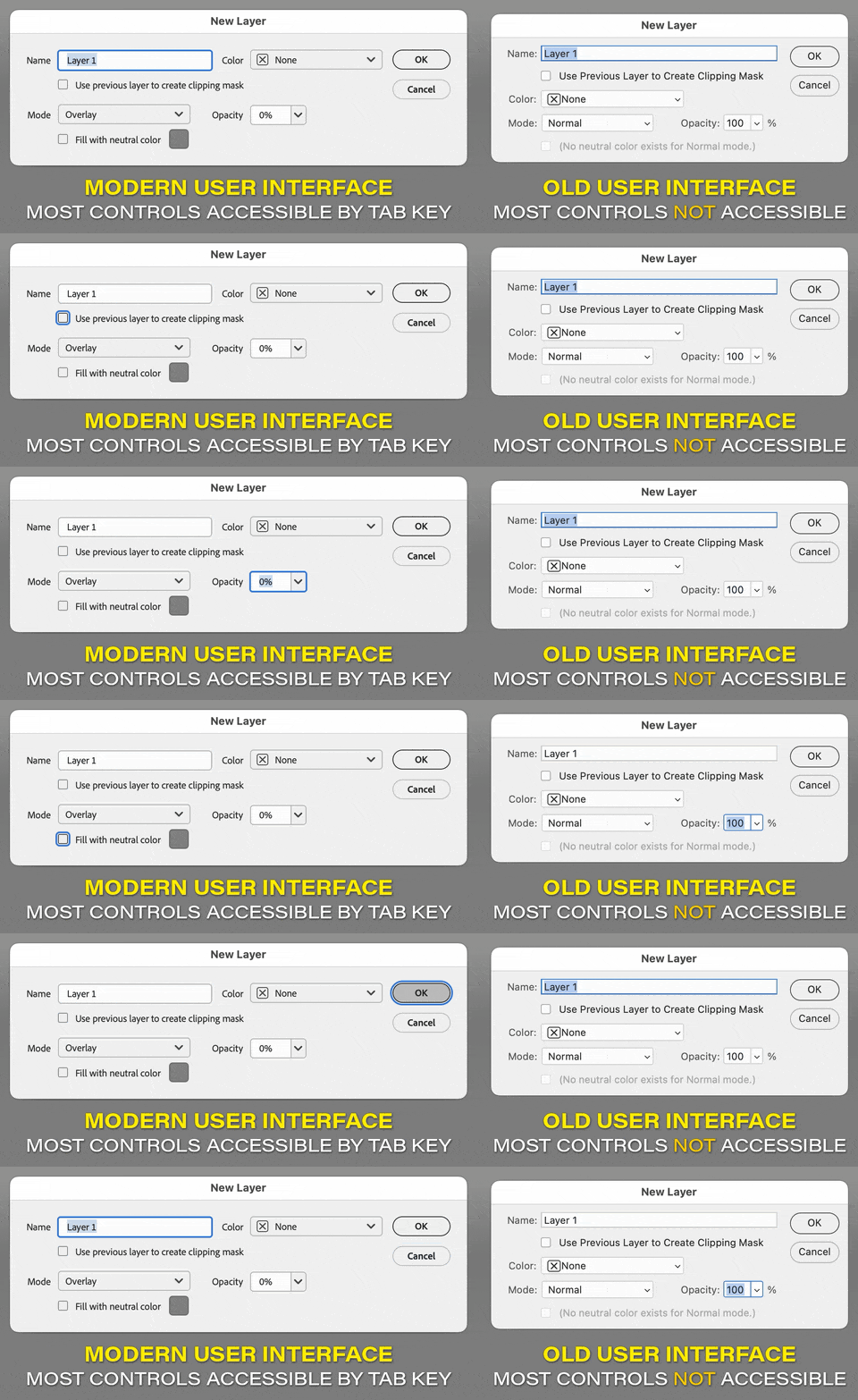
Not all parts of Photoshop have been converted yet, and this may be because Adobe converted a few areas just to help flush out the bugs in Modern User Interface.
I don’t specifically know what other functional advantages there are to Modern User Interface, only that this is an improvement I’ve noticed and can definitely point to. It would be good for Adobe to be more publicly specific about why Modern User Interface is functionally better.
I hate to sound like one of those guys, but, if it ain't broke, don't fix it.
By @Semaphoric
Many users (of Adobe and non-Adobe software) have posted that after a change that’s perceived to be unnecessary, but often the developer has actually been trying to fix something that’s always been broken but that many users aren’t aware of. Many Mac users didn’t notice that the old interface was less functional because they’re generally less likely to Tab through a dialog box than a Windows user, but it was in fact broken on the Mac.
All this work does respond to a widespread perception that Photoshop is old code from the 1990s that, in the opinion of some, (people seem to say this a lot) “needs a total rewrite.” In some ways that kind of rewrite of Photoshop foundations has been going on recently. We’ve seen it in rewrites like Multithreaded Compositing and GPU Compositing, the Unified Type Engine, upgrades to HDR display, and now upgrades to user interface widgets. None of these updates have been perfect and they’ve required rounds of bug fixing, but they did need to update that code for kinds of CPUs and GPUs and international, mobile/desktop users that exist now. To help them get it right, we do need to send in bug reports when we notice anything about the new code that isn’t working properly.
I don’t really know much about Adobe Spectrum other than what the Adobe Spectrum website says. I didn’t run into the word “joyful” on that website (it doesn’t even turn up in a search), but it’s a design system that appears to be intended to (among other things) result in…
…better legibility and easier UI interactions to set a foundation for consistent experiences across devices…Spectrum is designed to be clearly readable, intuitive to use, and mindful of those who use alternative input peripherals or screen readers. Everything in our system — from color and type to interaction and language — is built to be compliant with industry standards.
And so although the short-term solution to problems is to disable Modern User Interface, the long-term solution is to tell Adobe what’s broken, so that Modern User Interface and Spectrum can succeed at their goals of being up-to-date (modernized) in terms of cross-device, cross-platform, cross-language, scalable, accessible usability. Because much of what is still in Photoshop from the 1990s is clearly not all that.




 AdChoices