
Answered
How do you understand that ((^\s)*)(abc) has 3 groups and abc is $3?
((^\s)*)(abc)I originally thought that with one set of brackets, abc should be $2.
But in fact, abc is $3
But the expression:
([,,\h]*)(abc) Here abc is $2.

((^\s)*)(abc)I originally thought that with one set of brackets, abc should be $2.
But in fact, abc is $3
But the expression:
([,,\h]*)(abc) Here abc is $2.
Well, yes, once for each found instance.
Try this experiment, using text frame with "abcdefghijklmnopqrstuvwxyz".
1. findWhat:
(abc)(def(ghi)jkl)(mno)2. changeTo:
0 = $0\r1 = $1\r2 = $2\r3= $3\r4 = $4\r\rnot captured =
So start with this: 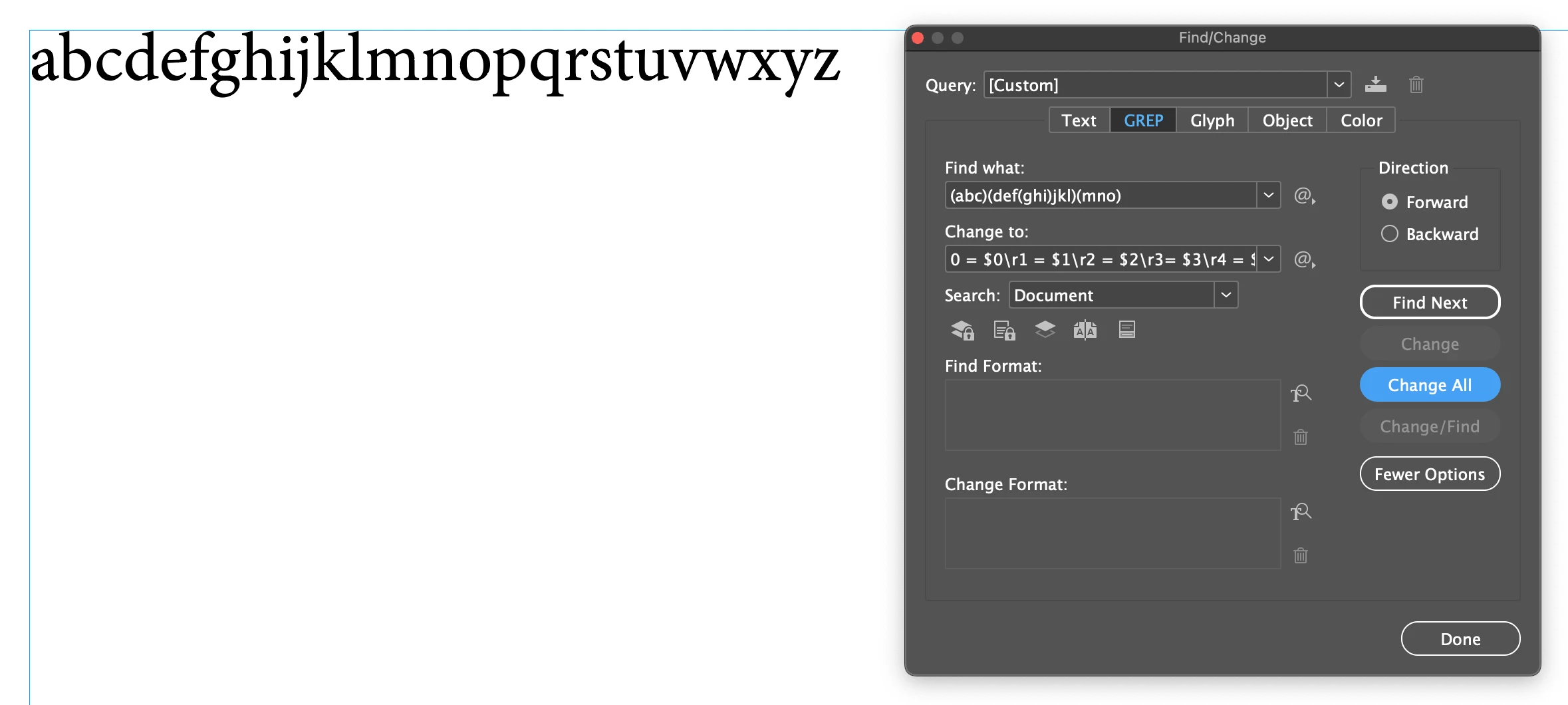
Then perform the find/change on the text. You will see this:
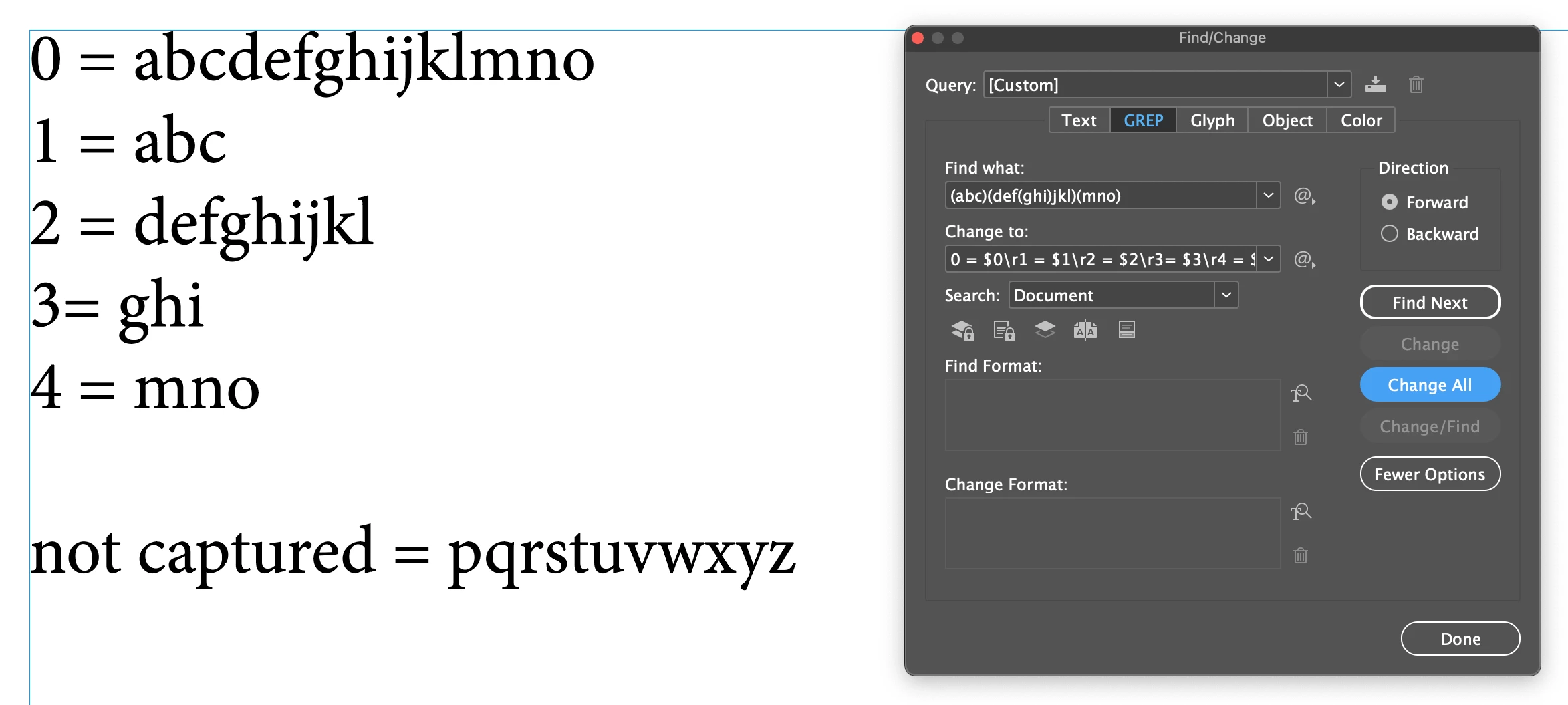
We have split up the capture groups and shown them with the index. Maybe it will help you to look carefully at what is going on here, especially the nested group that captures "ghi".
- Mark
Already have an account? Login
Enter your E-mail address. We'll send you an e-mail with instructions to reset your password.
 AdChoices