
Dan Greyhound
Inspiring
August 17, 2022
Question

Re: indd > epub all line breaks (carriage returns) removed

  • August 17, 2022
  • 1 reply
  • 6869 views

I'm having exactly the same problem. Did anyone find an answer?
    This topic has been closed for replies.

    1 reply

    Legend
    August 17, 2022

    Try this: 

    Instead of using an empty paragraph to add space, use the built-in Space Before or Space After paragraph settings to create the gap. Double returns for spacing is not a recommended method.

    Also, use line breaks instead of paragraph returns for the lines that should not have space after them.


    James Gifford—NitroPress
    Legend
    August 17, 2022

    This is really the correct answer: don't use soft returns (by any name) in documents meant for EPUB export.


    However, there is a specific setting in reflowable export, whether to leave them or strip them (the latter being the standard-based alternative):

    Check this, and soft returns will be stripped. Uncheck it, and they will (usually) remain.


    But the real solution is to use styles to manage line spacing and paragraphs, not line breaks by any name.


    Participating Frequently
    September 5, 2023

    Yes, it was! Two returns are only acceptable with a typewriter, not in a page layout application or in HTML!


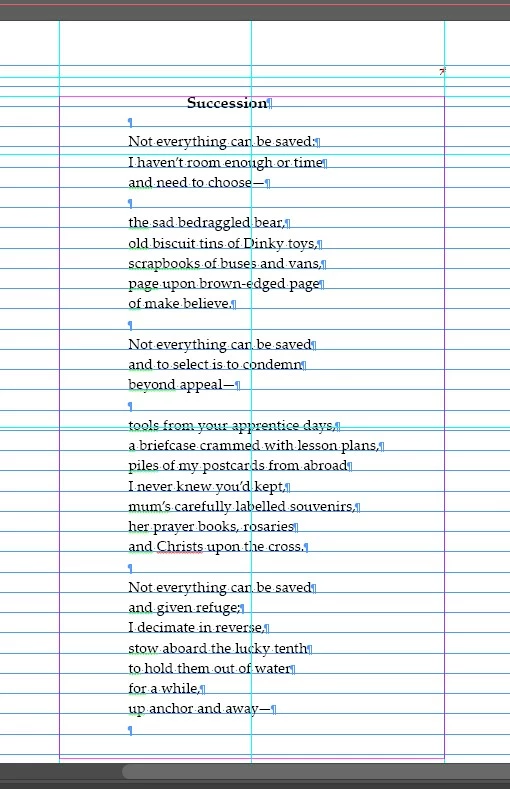
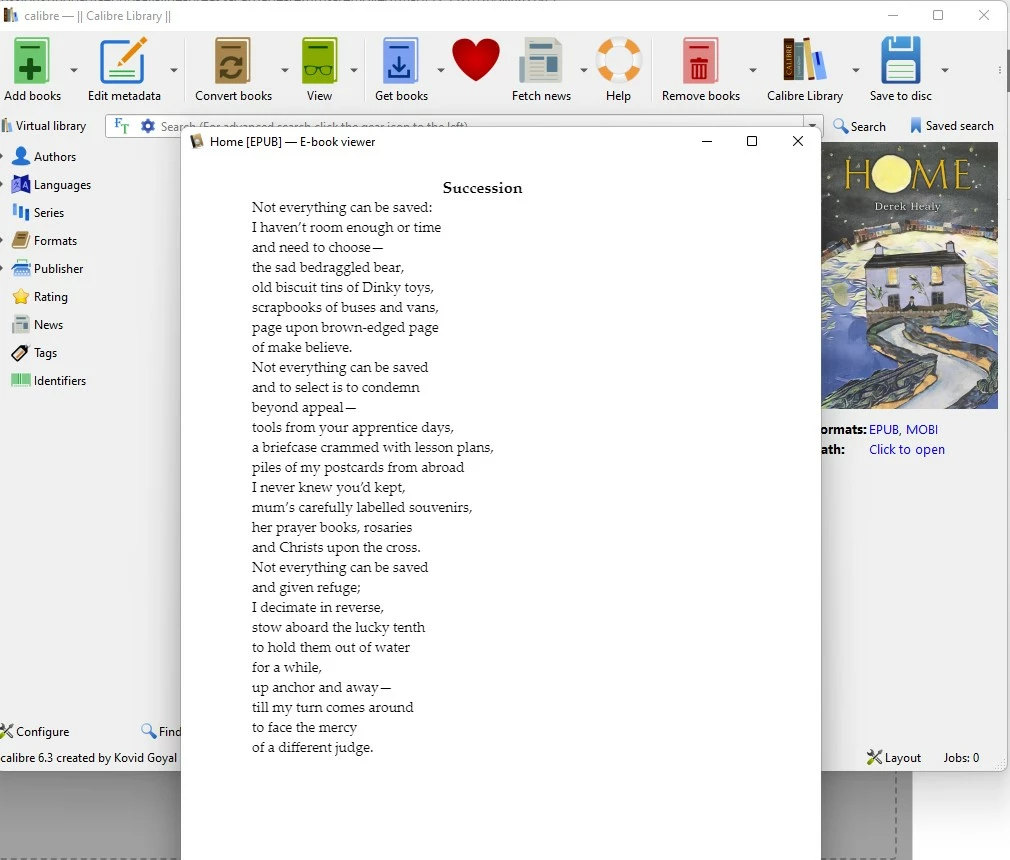
    You guys are honestly living on another planet. The practical reality is that all across the world, writers of poetry press return once for a line break, return twice for a stanza break. They do this because it's a much easier and more intuitive system than holding shift + return for a line break and pressing return for a stanza break. It doesn't require them to go on any training course. It's the same way you handle spacing in an email, or while using social media, in a simple text editor or coding platform. They also do it because sometimes, as a special effect, you might want to add even more space, in which case you can just press enter again. They compose in Word or Google Docs, and then they send these files to their editors and publishers, who import them into InDesign for typesetting ebooks.

    My options as a typesetter are currently either (a) a hacky workaround, (b) lose all the stanza spacing in the document that's been sent to me, or (c) devote my life to somehow convincing all the world's writers to use a less intuitive approach to composition -- one which will require them to set up a new style if they ever want to use additional vertical spacing -- just so that a few guys in the Adobe fanbase don't have to admit that InDesign suffers from an easily fixable lack of basic functionality when it comes to producing .epub files.


    I mean, obviously I've picked number (1) and am currently using the hacky workaround, but it's amazing that this conversation still mostly consists of people insisting that a majority of writers need to change the way they work to accommodate the removal of a feature in a piece of software.
