
Legend
December 3, 2018

P: Strange white balance for overlayed NEF

  • December 3, 2018
  • 21 replies
  • 1526 views

Many Nikon DSLR's have an overlay function which combines (overlays) two NEF images to produce a third NEF image in-camera. The source images don't have to be different, so an image can be combined with itself, which is what I did for this example.

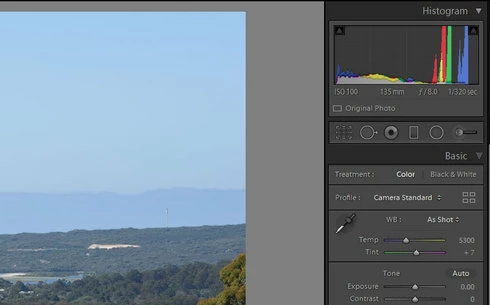
I have noticed that for such combined images, the WB for As Shot has Temp: 2880 and Tint: -119, regardless of the WB camera setting of the original images. In this example, I shot an image with my D750's WB set to Daylight. Importing the original image into Lr Classic 8.0 gives the As Shot WB as Temp: 5300 Tint: +7, which is always the value for this WB setting. See the screen-shot below:


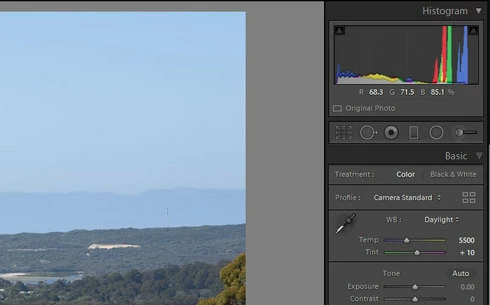
If I change the WB from As Shot to Daylight, the values change slightly to Temp: 5500 Tint: +10, as shown:


Combining this image with itself using 0.5 for the contribution of both source images to make a new overlayed NEF and importing into Lr, in develop I see this:
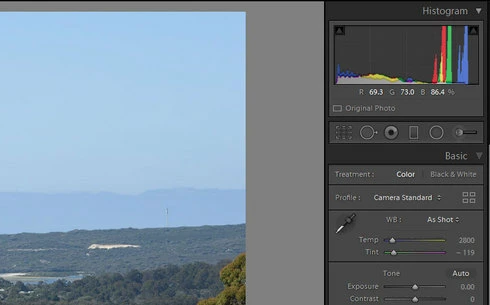


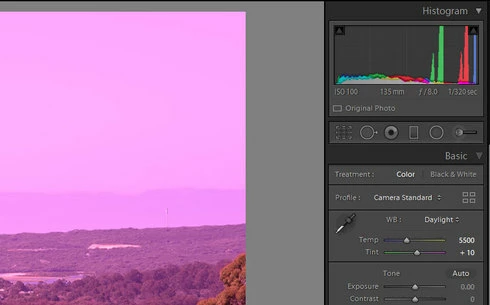
White balance for the image looks fine, but the settings aren't right for the WB camera setting. Changing the WB from As Shot to Daylight shows how incorrect Lr has got the WB:


For comparison, Nikon's Capture NX-D gives the 'As Shot' WB settings Temp: 5209 Tint: 0 for both the original and the combined (overlayed) images. Changing settings to Direct Sunlight changes Temp: 5200 Tint: 0 in both cases without drastically changing the images' appearance.

The overlay camera function takes its settings from the first image selected for the overlay. So if overlaying two different images that were shot with different WB settings, the combined image has the WB settings for the first image. Capture NX-D reflects this - first image Daylight, second image Shade, the combined image has Temp: 5209 Tint: 0. First image Shade, second image Daylight, the combined image has Temp: 8006 Tint: 0. For Lr, either combined image has Temp: 2880 Tint: -119.

This topic has been closed for replies.

21 replies

Todd Shaner
Legend
November 17, 2020
drtonybAuthor
Legend
June 24, 2020
Thanks Todd and Rikk. Just confirming Todd's reply that ACR is the same as LrC.
Todd Shaner
Legend
June 24, 2020
Good to hear–Thanks Rikk!
Rikk Flohr_Photography
Community Manager
Community Manager
June 24, 2020
Super. the Camera Raw team is working on it now. Thanks for all the extra information!
Rikk Flohr: Adobe Photography Org
Todd Shaner
Legend
June 24, 2020
Yes, ACR 12.3 exhibits the same incorrect As Shot WB settings with the D750 (and earlier models) image overlay NEf files.
Rikk Flohr_Photography
Community Manager
Community Manager
June 24, 2020
It seems like I ask this question a lot but just to be clear: Is ACR behaving the same or differently as Lightroom Classic behaves on these files? 
Rikk Flohr: Adobe Photography Org
Todd Shaner
Legend
June 24, 2020
So in conclusion–I think this answers my last question.

Normally, the only images that will have WB_RBLevels = 1 1 1 1 are the overlay raw files from Nikon cameras and the algorithm used for the D850 appears to work for these images. If the same algorithm could be used for all Nikon cameras, including the D750, then I think the problem would be solved.
LR is not properly calculating the WB for image overlay files shot with D750 and earlier camera models. It is simply reading the the WB_RBLevels 1 1 1 1 value, which is Temp 2880 and Tint -119. The algorithm used for calculating WB in image overlay files for D850 and later models needs to be applied to the D750 and earlier model cameras.
I think that's pretty clear.
drtonybAuthor
Legend
June 24, 2020
Hi Todd,

Are you saying that the D750 and earlier Nikon models have image overlay WB_RBLevels set to 1 1 1 1, but the D850 and later model image overlay files have normal WB_RBLevels (such as 1.94921875 1.34375 1 1)?

No, I'm not saying that. Overlay images from the D850 and other models later than the D750, such as the D810, also have WB_RBLevels set to 1 1 1 1 out of the camera and the raw pixel data has the WB_RBLevels from the original shots applied, just as the D750 does. Hence the WB_RBLevels are being normalised to  1 1 1 1 in the overlay images from all Nikon cameras.

What I am trying to say is that if I manually (Exiftool) set the WB_RBLevels value to 1 1 1 1 in the original raw files (not the overlay files), then in LrC for the D750 I see a WB As Shot Temperature 2800/Tint -119 and a green colour cast. This indicates to me that LrC is using the WB_RBLevels to apply the As Shot white balance and using it to calculate the Temp/Tint values.


If I select WB Daylight in LrC, then I get a Temperature 5500/Tint +10 and a normal looking white balance. In this case, I assume LrC is applying its own WB_RBLevels to the raw pixel data.


For the D850 original raw file with the WB_RBLevels manually set to 1 1 1 1, LrC gives a WB As Shot Temperature 5500/Tint +10 and the image has a green colour cast. What puzzles me here is where did LrC get the Temperature 5500/Tint +10 from? This is the same Temp/Tint values that LrC determines for its own WB Daylight setting, but somehow LrC has come up with these when it sees 1 1 1 1 for the WB_RBLevels in the exif data.


Now for an added twist, selecting the WB Daylight setting in LrC when the D850's WB_RBLevels is set to 1 1 1 1, I get a Temperature 5500/Tint +10, but the image has a green colour cast!


If I change the D850's WB_RBLevels to 0.999 1 1 1, LrC now reports WB As Shot Temperature 3100 /Tint -116 with a green colour cast.


Selecting WB Daylight then gives the Temperature 5500/Tint +10 and a normal looking image.

If I set the WB_RBLevels to 0.999 1 1 1 in the D750 original image, then I get the same results as if it were 1 1 1 1.

So, it appears to me that for a D850 image, having WB_RBLevels = 1 1 1 1 is triggering a different white balance algorithm in LrC than the one being used for the D750 with WB_RBLevels = 1 1 1 1.

Normally, the only images that will have WB_RBLevels = 1 1 1 1 are the overlay raw files from Nikon cameras and the algorithm used for the D850 appears to work for these images. If the same algorithm could be used for all Nikon cameras, including the D750, then I think the problem would be solved.

Todd Shaner
Legend
June 23, 2020
Anthony, can you please clarify what you mean by, "any NEF from these earlier Nikon DSLRs that has WB_RBLevels set to 1 1 1 1 (which is normally only the overlay files)."


Are you saying that the D750 and earlier Nikon models have image overlay WB_RBLevels set to 1 1 1 1, but the D850 and later model image overlay files have normal WB_RBLevels (such as 1.94921875 1.34375 1 1)?
drtonybAuthor
Legend
June 23, 2020
Thanks again Todd for your input.

It's not just the D750, it also applies at least to the D90 overlay NEF files too, or as my tests showed, any NEF from these earlier Nikon DSLRs that has WB_RBLevels set to 1 1 1 1 (which is normally only the overlay files).

Looking forward to an answer, if Pavan or someone else from Adobe ever provides one.