I think you may have a hard time getting neutral B&W from Blurb. They apparently use the same CMYK icc profile for every type of paper, and the profile should be optimized for the ink/paper combination. One size doesn't fit all here.
How to get neutral results when printing B&W images in CMYK has puzzled me for years, but through a book I am about to print soon with an extremely knowledgeable printer, I have learned a little about it.
First of all, the printing equipment has to be well calibrated. That includes the press itself, and the CTP (Computer To Plate) imagesetter. My printer calibrates the CTP weekly.
With proper calibration, using the correct profile, and a press operator who knows his job, you should now get neutral results when viewed by daylight (or the 5000 K light next to the printing press). When viewed in artificial light, there will be a magenta cast, which is caused by the way the ink absorbs and reflects colors when a different light source is used.
This color shift can be reduced (but not completely eliminated) by using a custom CMYK setup in Photoshop.
(There is no way to do this with Lightroom, since it only works in RGB.)
Open the CMYK file in Photoshop, then go to Edit > Convert to profile, and choose Custom CMYK, which will open this dialog.
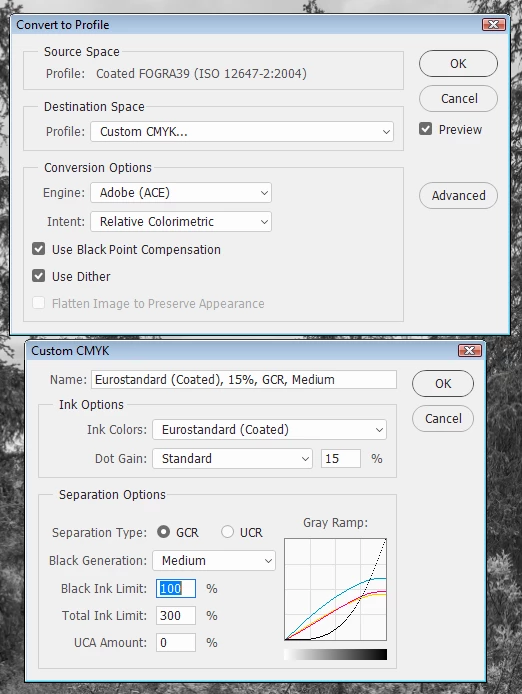
By default, the GCR (Gray component replacement) is set to Medium.
Changing the GCR to Heavy, uses less CMY and more black ink, as you can see from the curves.
With less colored ink, the magenta cast will be reduced when viewing in artificial light.
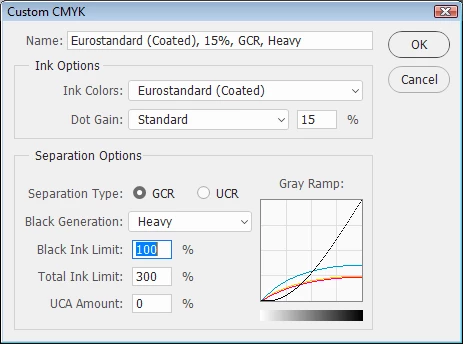
Please note that the other settings in this dialog are just default settings. Using this workflow would require that you work closely with the printer, who should be able to tell you what settings to use. I guess not all printers would be willing to, or have the required knowledge to do this. And you should of course do a test run first, and also be present when the real job is done.
Using grayscale images is also an option, but the tonal scale will be reduced a great deal compared to CMYK.
Another option is to print in duotone, tritone, or even quadtone, (black plus one, two or three gray inks), but this is specialist work, and may be quite expensive.

 AdChoices