Known Participant
February 8, 2019
Answered

Declined for a missing release for an antique engraving?

  • February 8, 2019
  • 5 replies
  • 3351 views

I uploaded antique engravings of several objects against white. About half were accepted and the other half were put in a reminder state marked "Property Release Missing." The problem is, there are no properties displayed in these images. Or people. Or anything else that'd warrant a release. I thought maybe I had mis-categorized the images as needing a release, so I double-checked and re-submitted them. Now they've been declined with no further transparency is offered. I'm completely baffled at the seeming randomness.

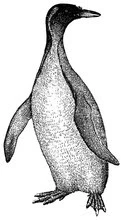
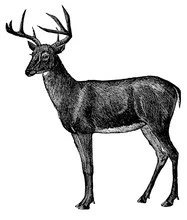
Accepted:

Rejected:

Why?

This topic has been closed for replies.
Correct answer Abambo

joerivera  wrote

Why?

Because of 2 different moderators.

joerivera  wrote

I thought maybe I had mis-categorized the images as needing a release, so I double-checked and re-submitted them. Now they've been declined with no further transparency is offered. I'm completely baffled at the seeming randomness.

If a release has been asked it is required (in the eyes of the moderator). It's not what you think what is needed but what the moderator thinks what is needed. Resubmitting without property release results in a refusal. At least that part of the operation is transparent.

Now concerning (c): If you scanned from the original book and the book has been published before a certain date (something around 1900), it is clear that there is no (c) on the published data any more. Artwork after that data is protected for 70 years after the death of the original creator (not the book publisher or the book author). So currently all artwork of a creator who died in 1949 or before is in the public domain. As Dave Merchant​ points out, that may not be the case for derived work.

Now the moderator has no chance to see if the (c) did effectively run out or not. However, my understanding is, that if your work is considerably more than scanning, you could propose that work as derived art and you may claim (c) on that work. But it's complicated and it is a very complex issue. I suppose, however, that the pictures have been fallen into public domain and that uploading them to a site like Adobe Stock could be considered as a misappropriation of (c) where (c) is no more available. If you want to make the illustrations available to the public, I suggest you upload them at one of the sites offering free pictures.

As there is no mainstreamed appeal process, either you take your chance and continue submitting, hopping that the next moderator does not refuse your pictures or you stop submitting to Adobe stock...

5 replies

Participating Frequently
March 11, 2019

This is an important topic, and I think Adobe needs to clear up it's policy.  On further reading in another post on this subject I saw Adobe reply that they do not accept public domain images, and that the person who is submitting needs to be the original photographer. I believe this means that while they may not accept public domain images, they do accept images of public domains images. It's a subtle difference but an important distinction and may explain why I have seen some contributors accounts full of images of public domain works (search: woodcut facsimile illustration).

Is that right? Taking a public domain photo from the library of congress website (you didn't take the photo), vs taking a photo of an illumination in a medieval manuscript (you took the photo).

I've been a photographer specializing in making facsimiles of rare books and manuscripts for over 15 years, and have been doing this full time for 10 years. Usually I work in Special Collection libraries, archives or museums, and I'm specifically asked to make a *facsimile*. It isn't as easy as it might seem, you can't put a 500 year old book on a flatbed scanner.

Just want to define here that a facsimile is specifically clear of all subjective elements and only the clearest possible reproduction of the work. FADGI guidelines have been established on facsimile creation. There is no way to claim copyright on a facsimile for anyone, even the photographer. There is no ability to claim copyright on a photographic facsimile or the data it is presenting.

But making a clear, high resolution facsimile from a rare or antique book is not easy, and it's that skillset that I derive profit from as a photographer, and why images of public domain material should be permitted on Adobe stock. Finding the material, getting permission to photograph it, handling it and photographing it safely, and at the correct resolution, color temperature, etc. is all more than "scanning an old book". These old volumes are so incredibly rich in beautiful material, it's a shame they get caught up in questions of ownership or permission.

I don't really know the answer to this, because Adobe could easily be overwhelmed with people submitting all sorts of things. Maybe a Facsimile section with a certain standard or other arrangement. Maybe a way of submitting the source material?

Abambo
Community Expert
Community Expert
March 12, 2019

CL_110  wrote

This is an important topic, and I think Adobe needs to clear up it's policy.  On further reading in another post on this subject I saw Adobe reply that they do not accept public domain images, and that the person who is submitting needs to be the original photographer. I believe this means that while they may not accept public domain images, they do accept images of public domains images.

No. If there are images in the database that are public domain, they have been entered before Adobe took over or they have been accepted on error.

ABAMBO | Hard- and Software Engineer | Photographer
Participating Frequently
March 12, 2019

File 129811096 is a good example of a facsimile of a public domain image. This contributor has many images...that must have been entered before Adobe took over, or are accepted in error? If they were entered before Adobe took over, and they constitute unacceptable material, why do they remain available while I'm not able to contribute similar material? File 158484478 is another good example. Since they aren't color correct, does that somehow separate them and make them acceptable? Just trying to sort this out. Thanks.

joeriveraAuthor
Known Participant
February 9, 2019

Thanks, all, for the helpful insight. It sounds like Adobe Stock may just not be right for my purposes.

Legend
February 10, 2019

I don't think any agencies will accept public domain images. I can't understand you had som accepted here.

Legend
February 8, 2019

Bear in mind that you are also in a catch-22 situation because you cannot sell public domain works on Stock. Prove the engravings are in copyright and you need a property release. Prove they are not, and you can't submit them.

Abambo
Community Expert
Community Expert
February 8, 2019

https://forums.adobe.com/people/Dave+Merchant  wrote

Bear in mind that you are also in a catch-22 situation because you cannot sell public domain works on Stock. Prove the engravings are in copyright and you need a property release. Prove they are not, and you can't submit them.

I suppose you hit the point. Either the work OP did to the art data justifies a (c) on the modified data or it cannot be sold on stock (you still can sell a printed collection of the data...).

ABAMBO | Hard- and Software Engineer | Photographer
joanH
Inspiring
February 8, 2019

Dave Merchant, Earlier - a few years ago - I published a book and so connected with the Library of Congress. They were very helpful regarding copyright laws. I asked if I could re-register expired copyright on something and they told me in great detail what it would take and cost of doing it. This is often done on expired copyright on songs, poetry and other printed things.

So, I wonder if joeriveria might file for new copyright on the book he owns so that he can post and sell the text and engravings as the registered new owner of the work. Just call the LOC and ask about expired copyrights content and ownership. They will also help you search for items listed with the LOC and the current status on the items. Yes, there are fees involved. Best regards, JH

Abambo
Community Expert
AbamboCommunity ExpertCorrect answer
Community Expert
February 8, 2019

joerivera  wrote

Why?

Because of 2 different moderators.

joerivera  wrote

I thought maybe I had mis-categorized the images as needing a release, so I double-checked and re-submitted them. Now they've been declined with no further transparency is offered. I'm completely baffled at the seeming randomness.

If a release has been asked it is required (in the eyes of the moderator). It's not what you think what is needed but what the moderator thinks what is needed. Resubmitting without property release results in a refusal. At least that part of the operation is transparent.

Now concerning (c): If you scanned from the original book and the book has been published before a certain date (something around 1900), it is clear that there is no (c) on the published data any more. Artwork after that data is protected for 70 years after the death of the original creator (not the book publisher or the book author). So currently all artwork of a creator who died in 1949 or before is in the public domain. As Dave Merchant​ points out, that may not be the case for derived work.

Now the moderator has no chance to see if the (c) did effectively run out or not. However, my understanding is, that if your work is considerably more than scanning, you could propose that work as derived art and you may claim (c) on that work. But it's complicated and it is a very complex issue. I suppose, however, that the pictures have been fallen into public domain and that uploading them to a site like Adobe Stock could be considered as a misappropriation of (c) where (c) is no more available. If you want to make the illustrations available to the public, I suggest you upload them at one of the sites offering free pictures.

As there is no mainstreamed appeal process, either you take your chance and continue submitting, hopping that the next moderator does not refuse your pictures or you stop submitting to Adobe stock...
ABAMBO | Hard- and Software Engineer | Photographer
Legend
February 8, 2019

The property in question is the book that these engravings came from. See https://helpx.adobe.com/stock/contributor/help/property-release.html

As to it being bafflingly random, yes it is. What happens to an image depends entirely on which moderator sees it, since all the "guidelines" are subjective.

joeriveraAuthor
Known Participant
February 8, 2019

I considered that, but since the guidelines say “Copyrighted works like art, books, maps, fictional characters” and since we’re talking about an illustration from a tattered old book from the late 1700’s, published by people and companies long dead, and waaaaay out of copyright, I can’t imagine what action Adobe would expect me to take.

Perhaps I’ll try and track down a relative of the deer who posed for this engraver.

Its a shame, I collect these old books and lovingly scan and restore the engravings as a hobby. Would love to share them with other artists on here, but not if it’s going to be a crapshoot without clearly defined moderation.

Legend
February 8, 2019

Copyright in printed works is complicated. While an original work may have fallen out of copyright, if it was reprinted with modifications then those reprints can remain in copyright - depending on the countries it was sold in and the wording of the new publisher's claim of right. The moderator has no way to verify where your image came from, only that it was not your work. Quite frankly if you'd said it was your own drawing and signed your own release, nobody would have batted an eyelid.

It's one of the many drawbacks of microstock; the rules are made so a handful of people can sift through thousands of images a day, clicking YES/NO as fast as they possibly can. They simply do not have the time or inclination to do background checks like a proper picture library. For every saleable image they throw out, another ten will arrive before you can say "profit margin".