
Participating Frequently
November 9, 2022
Answered

Rejected photo

  • November 9, 2022
  • 5 replies
  • 1628 views

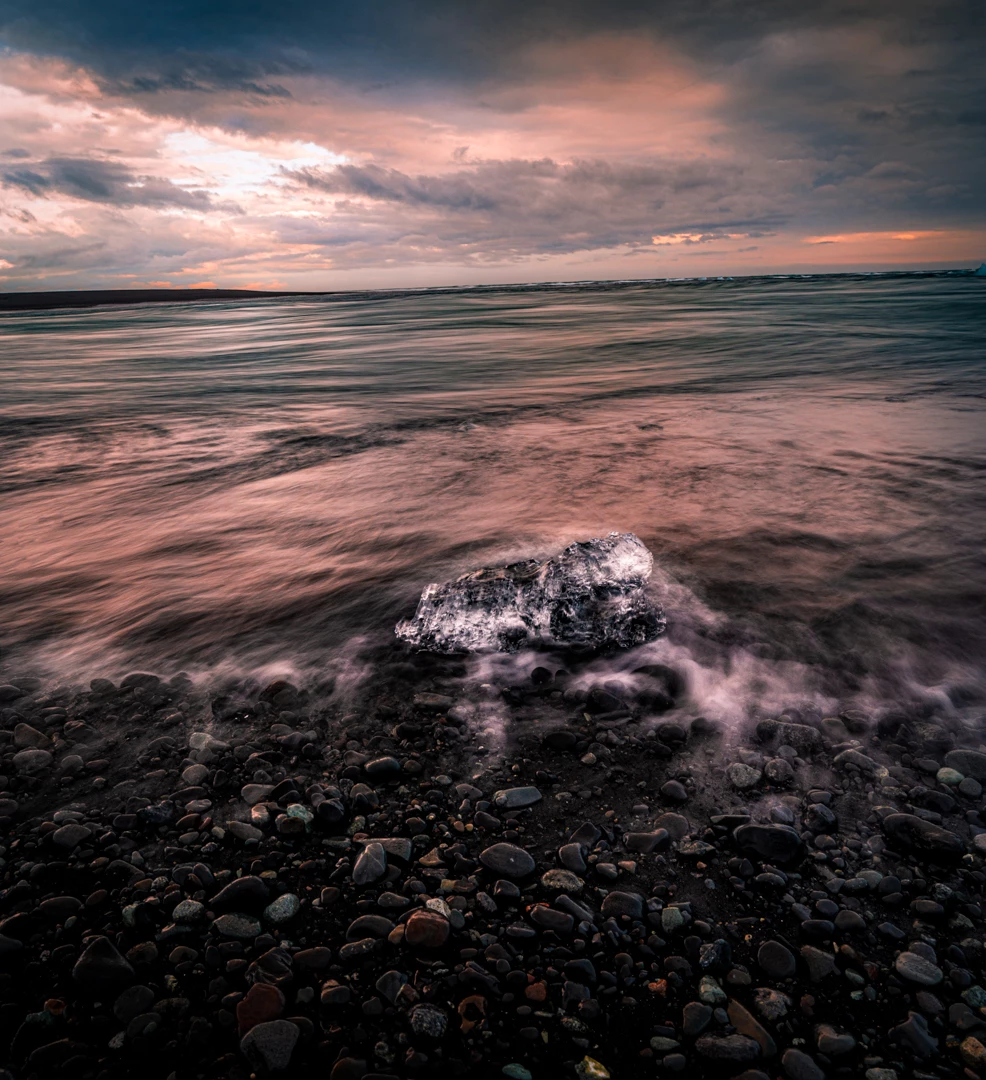
Hi, the following photo got rejected for Quality Issue, I am wondering why? I assume it's probably due to the darkness (under exposure)? but what if this is the style I want the photo to be? does this type of photo get dislike by the adobe stock in general? 

I've submitted a couple of photo in similar style but some got accepted while others not, didn't see a pattern here.

Any suggestion/explanation will be appreciated!
 

This topic has been closed for replies.
Correct answer Jill_C

It is important to remember that we are not providing "subjective art" to Adobe Stock. We are providing useable high quality images for marketing and advertising and publication on websites. If you want to sell art, there are other venues for doing that, including your own website. 

5 replies

jacquelingphoto2017
Community Expert
Community Expert
November 10, 2022

Hi @Yan22576927drve 

The photo is underexposed in the shadows. There is what appears to be a halo across the top to the horizon. Please zoom in to 200% to see this.

Best wishes

Jacquelin

Participating Frequently
November 10, 2022

Thanks, the halo was there naturally, I mean it's not due to any post-processing, and most likely it's because the sunlight came from a very low angle --- Will that be one of the standard thing to remove in Adobe Stock? I prefer not to since it's "against" the nature 🙂

jacquelingphoto2017
Community Expert
Community Expert
November 10, 2022

Hi @Yan22576927drve,

No, the halo is not natural. It is one of the issues requiring correction even as color fringing does.


Take a look at the the Adobe Stock Contributor Learn and Support, Create Better Photos For Adobe Stock and  these other tips to get your files accepted.


Best wishes

Jacquelin

Inspiring
November 9, 2022

5. It is also not clear what kind of light object is in the foreground and why it is brighter than the foam next to it.

Participating Frequently
November 10, 2022

Yea, that's a big block of ice 🙂

Inspiring
November 9, 2022

1. Too dark
2. In the sky where the sun is overexposure
3. Where the pebbles are in the foreground - the loss of detail in the shadows
4. It is hard to see on a non-full-scale image, but most likely there is a lot of noise in the photo.

Participating Frequently
November 10, 2022

Thanks but I believe the noise level is acceptable since other platforms do accept it.

jacquelingphoto2017
Community Expert
Community Expert
November 10, 2022

Hi @Yan22576927drve ,

Each platform has its own policies and level of tolerance Noise does not print well and Adobe prefer photos to be noise free.

Best wishes

Jacquelin

Jill_C
Community Expert
Community Expert
November 9, 2022

As John indicated, the leaning horizon is quite noticeable. I think you can retain the overall dark, moody look and merely lift the shadows, or use a Brush in Lightroom Classic to lighten the exposure on the foreground rocks. Doing so reveals how colorful and textured the rocks are. In your version, the foreground rocks are somewhat of a "black hole". That blownout area in the sky is probably another reason for rejection. You could use the Clone Stamp to repair that area.

Jill C., Forum Volunteer
Participating Frequently
November 10, 2022

Thanks for the reply. I do realize different people has different taste about how they want to demostrate their photo and I think it is fine as long as there is a reason behind it, since art is subjective. I am just wondering if it's a standard of Adobe Stock that anything that is too dark or too bright will be considered as "Quality Issues"? Don't they have any customer look for special taste comparing to making everything clear and sharp? If so, I am totally fine with it, but just want to confirm 🙂

jacquelingphoto2017
Community Expert
Community Expert
November 10, 2022

Hi @Yan22576927drve ,

Your photos should be standard. The customers will determine if they want the photo darker or brighter. Standard here is what it would look like if you were looking at the subject in reality. Therefore you should not set your camera to underexpose or overexpose when taking your shots. 


You also will want to take into consideration what your image would look like in print. On paper white do not print. Therefore overexposed subject will not come out well. Underexposed without details will just print as black without details.


Best wishes

Jacquelin

Inspiring
November 9, 2022

Hi, the horizon is not level.  That is a big problem.  Regarding the exposure, I get the style you're going for but I still think it's a bit dark.  You could bump up the shadows to reveal the rocks in the forground without altering the overall mood.

Also, is it a composite of two or more photos?  The appearance is a bit odd because some of the water is smoothed, presumably by a longer exposure, and some is not.  Is that a wave crashing in the middle, or a rock?  It's hard to tell.

Best regards, John

Participating Frequently
November 10, 2022

Hi, thanks for the input. It's not a composition, it's a single long exposure shoot, and the main object in the middle is a big block of ice, and the wave was coming through it. It's not at the best timing so I understand it may be hard to tell what is going on. Anyway, I will def adjust the level, but actually nothing is in a real dark (based on the histogram), but I will try adjust the shadows a bit too, see if it can go through this time.

Legend
November 10, 2022

"It's not a composition" I recommend you take some classes. All photos have composition. It refers to the choice of what you photograph. Composition includes everything you see, to make it pleasing, or not. For example, if you photograph a nice sunset and there is the corner of a car at the edge, this is part of the composition, and it will be rejected. In the same way, keeping the camera level is part of the composition. Adobe specifically list a bad horizon (not level) in their list of quality rules, which you need to follow closely. Adobe are NOT looking for art. They are looking for perfect pictures; if you can make them art as well as being perfect, they might sell well.