
Answered
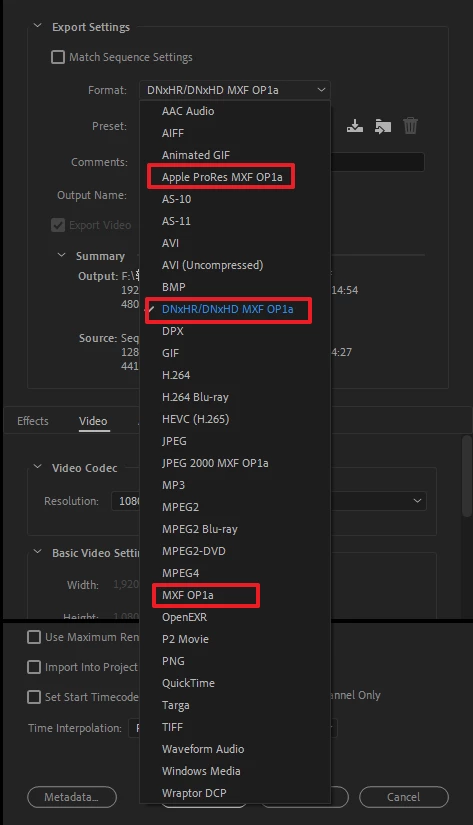
What's the difference between "Apple ProRes MXF OP1a" 、 “DNxHR/DNxHD MXF OP1a” 、 "MXF OP1a"?
What's the difference between "Apple ProRes MXF OP1a" 、 “DNxHR/DNxHD MXF OP1a” 、 "MXF OP1a"?

What's the difference between "Apple ProRes MXF OP1a" 、 “DNxHR/DNxHD MXF OP1a” 、 "MXF OP1a"?
It's formats and codecs ... MXF OP1a is a format, and formats are often called "wrappers". They are a format to contain other data ... in the form of codecs. Many formats can "wrap" several different codecs.
ProRes and DNxHD/R are codecs. A codec is a specific schema for encoding video or audio data. Cineform is also a high-quality intraframe codec like ProRes and DNxHD/R. Meaning that all frames are complete data-sets for that frame.
As opposed to say the long-GOP (group of pictures) format H.264/H.265, where there are only complete or " i-frames " every 9-30 (or even more) frames of media. In between are simple data sets of pixels that 1) have changed since the last i-frame; 2) will change before the next i-frame; or ... 3) both. Long-GOP media is fast to write to card in-camera because of the specialized chips included to do that parsing of data. They are Hades on computers for playback because of the demands on the CPU/RAM subsystems.
Learning about formats ... and codecs ... is really necessary to understand how to work and delivery the appropriate quality image.
Neil
Already have an account? Login
Enter your E-mail address. We'll send you an e-mail with instructions to reset your password.
 AdChoices