

What's the math behind speed graphs?
I used After Effects recently to design easing for objects in an interactive web graphic I'll be programming. For example, I animated a square's position and mask using the standard eases in the graph editor. Below shows the mask's speed graph which I'm interested in reproducing.
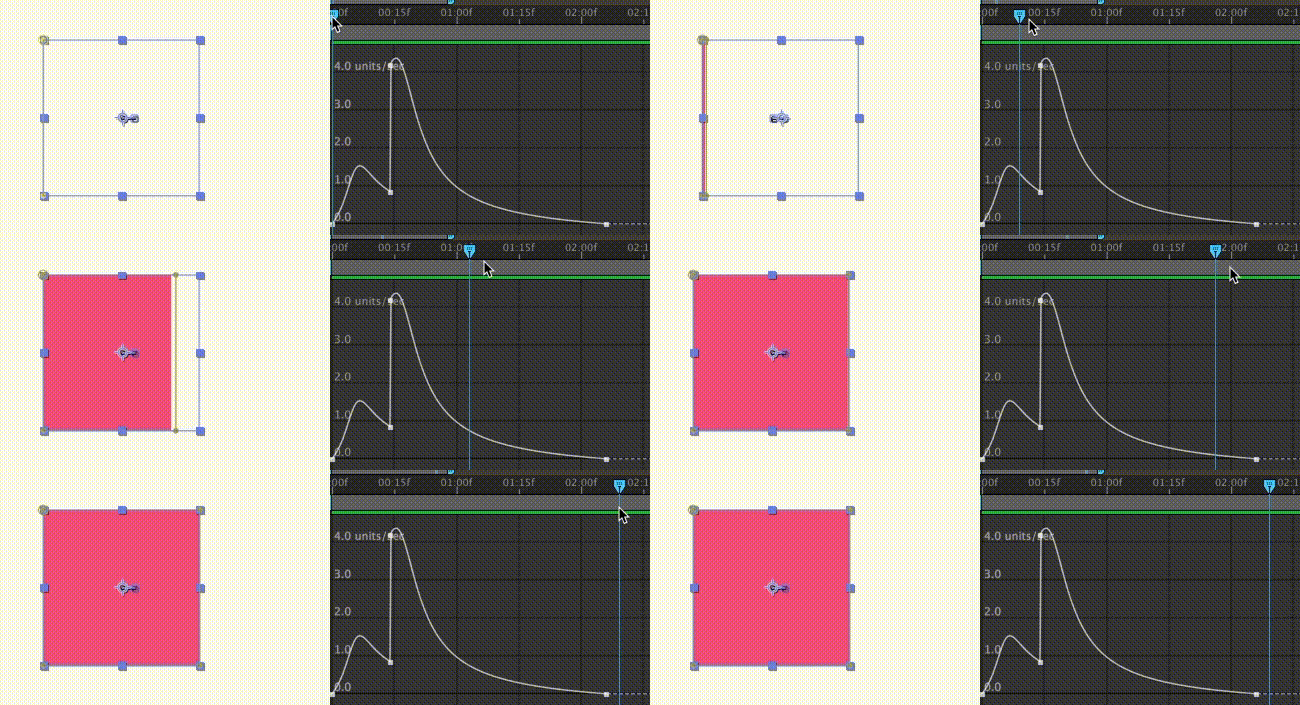
I'm fairly confident that eases on value graphs (e.g. position) are standard cubic Bezier curves, so position is a piece of cake. However, speed graphs behave differently: pushing both keyframes to zero makes a bell-shaped speed curve, not zero. It needs to do this preserve the total amount of change (the integral), which means that it is not a cubic Bezier curve, not directly anyways. I've had to hack together something that resembles the speed curve with some unsavory functions, and I'd prefer to match it exactly. Does anyone know how the curves in speed graphs work mathematically?
 AdChoices